


Xeroderma Pigmentosum group D suppresses proliferation and promotes apoptosis of HepG2 cells by downregulating ERG expression via the PPARγ pathway
- PMID: 33993564
- PMCID: PMC8139378
- DOI: 10.1111/iep.12396
Xeroderma Pigmentosum group D suppresses proliferation and promotes apoptosis of HepG2 cells by downregulating ERG expression via the PPARγ pathway
Abstract
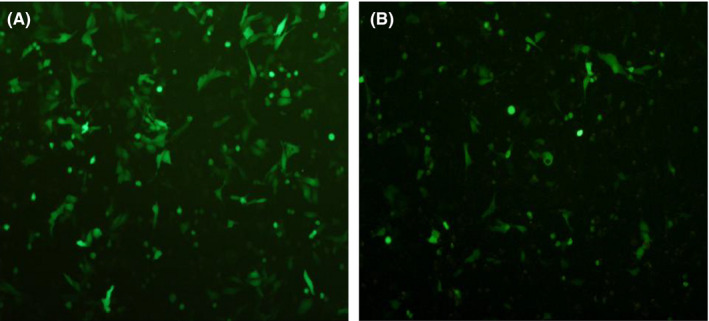
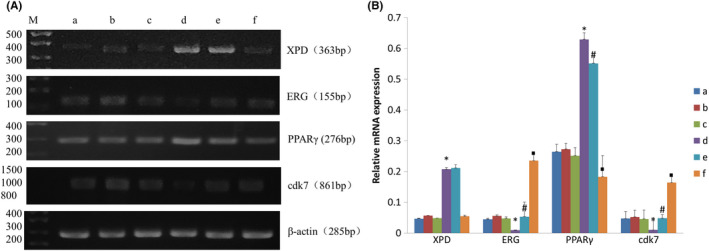
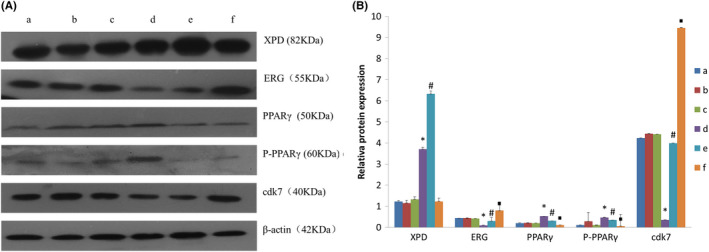
Xeroderma Pigmentosum group D (XPD) gene has been shown to suppress hepatocellular carcinoma (HCC) progression, but its mechanism remains not fully understood. ETS-related gene (ERG) is generally known as an oncogenic gene. This study aimed to explore whether XPD regulated HCC cell proliferation, apoptosis and cell cycle by inhibiting ERG expression via the PPARγ pathway. The human hepatoma cells (HepG2) were transfected with the XPD overexpression vector (pEGFP-N2/XPD) or empty vector (pEGFP-N2). The PPARγ inhibitor GW9662 was used to determine whether XPD effects were mediated by activation of PPARγ pathway. Cell cycle and apoptosis were ascertained by flow cytometry, and cell viability was measured by MTT assay. Reverse transcription-polymerase chain reaction and Western blot were performed to determine the mRNA and protein levels. Overexpression of XPD significantly enhanced the expression of PPARγ and p-PPARγ, whereas it downregulated that of ERG and cdk7. Furthermore, XPD overexpression notably inhibited proliferation, promoted apoptosis and decreased the percentage of cells in the S + G2 phase of HepG2 cells. However, these effects of XPD overexpression were abrogated by GW9662. Collectively, XPD suppresses proliferation and promotes apoptosis of HepG2 cells by downregulating ERG expression via activation of the PPARγ pathway.
Keywords: ERG; PPARγ; XPD; apoptosis; proliferation.
© 2021 Company of the International Journal of Experimental Pathology (CIJEP).
Conflict of interest statement
The authors declare no conflicts of interest.
Figures
References
-
- Hartke J, Johnson M, Ghabril M. The diagnosis and treatment of hepatocellular carcinoma. Semin Diagn Pathol. 2017;34(2):153–159.. - PubMed
-
- Coin F, Marinoni JC, Rodolfo C, Fribourg S, Pedrini AM, Egly JM. Mutations in the XPD helicase gene result in XP and TTD phenotypes, preventing interaction between XPD and the p44 subunit of TFIIH. Nat Genet. 1998;20(2):184–188.. - PubMed
Publication types
MeSH terms
Substances
LinkOut - more resources
Full Text Sources
Other Literature Sources
Medical
Research Materials
