


Coordination of iron homeostasis by bone morphogenetic proteins: Current understanding and unanswered questions
- PMID: 33993583
- PMCID: PMC8594283
- DOI: 10.1002/dvdy.372
Coordination of iron homeostasis by bone morphogenetic proteins: Current understanding and unanswered questions
Abstract
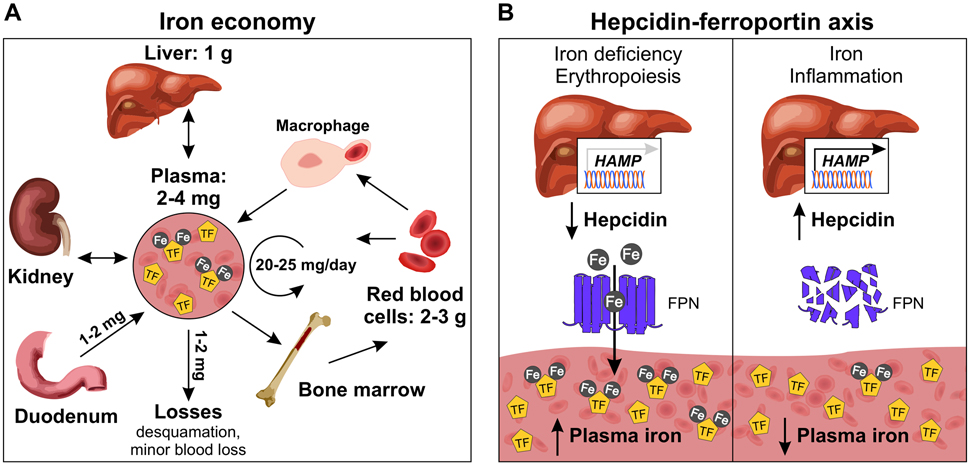
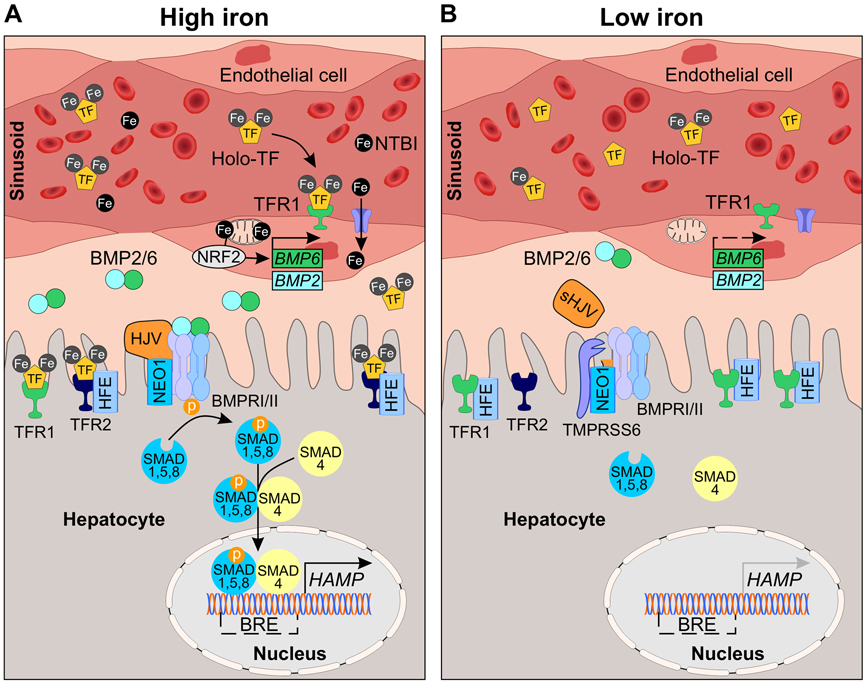
Iron homeostasis is tightly regulated to balance the iron requirement for erythropoiesis and other vital cellular functions, while preventing cellular injury from iron excess. The liver hormone hepcidin is the master regulator of systemic iron balance by controlling the degradation and function of the sole known mammalian iron exporter ferroportin. Liver hepcidin expression is coordinately regulated by several signals that indicate the need for more or less iron, including plasma and tissue iron levels, inflammation, and erythropoietic drive. Most of these signals regulate hepcidin expression by modulating the activity of the bone morphogenetic protein (BMP)-SMAD pathway, which controls hepcidin transcription. Genetic disorders of iron overload and iron deficiency have identified several hepatocyte membrane proteins that play a critical role in mediating the BMP-SMAD and hepcidin regulatory response to iron. However, the precise molecular mechanisms by which serum and tissue iron levels are sensed to regulate BMP ligand production and promote the physical and/or functional interaction of these proteins to modulate SMAD signaling and hepcidin expression remain uncertain. This critical commentary will focus on the current understanding and key unanswered questions regarding how the liver senses iron levels to regulate BMP-SMAD signaling and thereby hepcidin expression to control systemic iron homeostasis.
Keywords: BMP; anemia; hemochromatosis; hepcidin; iron sensing; liver.
© 2021 American Association for Anatomy.
Conflict of interest statement
Conflict of interest disclosures
JLB has been a consultant for Disc Medicine, Incyte Corporation, and Alnylam Pharmaceuticals, and owns equity in Ferrumax Pharmaceuticals, a company focused on targeting RGM proteins (including hemojuvelin) and bone morphogenetic protein (BMP/TGF-beta) superfamily signaling as hepcidin modulating agents for the treatment of anemia and other iron disorders. Dr. Babitt’s interests were reviewed and are managed by Massachusetts General Hospital and Mass General Brigham in accordance with their conflict-of-interest policies. ALF declares no conflict of interest.
Figures
References
Publication types
MeSH terms
Substances
Grants and funding
LinkOut - more resources
Full Text Sources
Other Literature Sources
