


Redox regulation of immunity and the role of small molecular weight thiols
- PMID: 33994345
- PMCID: PMC8212150
- DOI: 10.1016/j.redox.2021.102001
Redox regulation of immunity and the role of small molecular weight thiols
Abstract
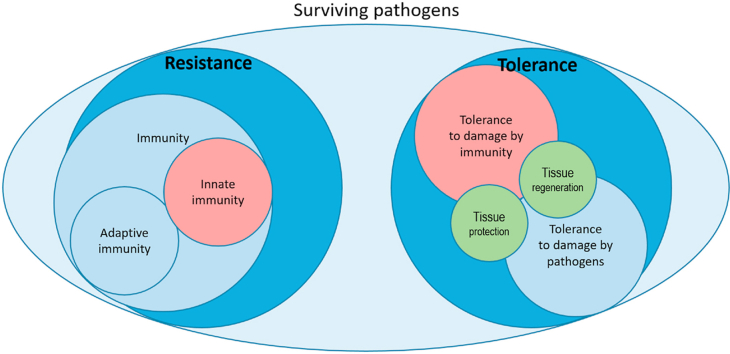
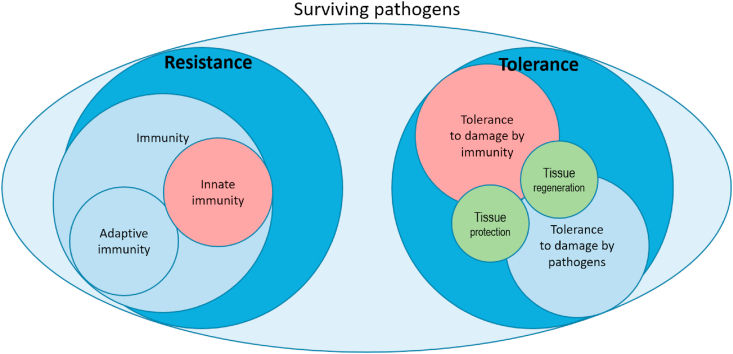
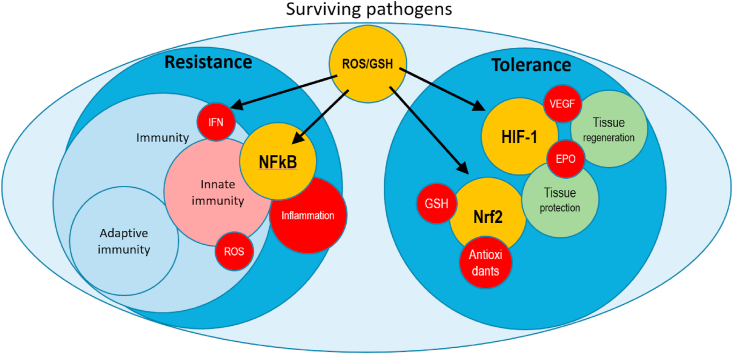
It is thought that excessive production of reactive oxygen species (ROS) can be a causal component in many diseases, some of which have an inflammatory component. This led to an oversimplification whereby ROS are seen as inflammatory and antioxidants anti-inflammatory. This paper aims at reviewing some of the literature on thiols in host defense. The review will first summarize the mechanisms by which we survive infections by pathogens. Then we will consider how the redox field evolved from the concept of oxidative stress to that of redox regulation and how it intersects the field of innate immunity. A third section will analyze how an oversimplified oxidative stress theory of disease led to a hypothesis on the role of ROS and glutathione (GSH) in immunity, respectively as pro- and anti-inflammatory mediators. Finally, we will discuss some recent research and how to think out of the box of that oversimplification and link the role of thiols in redox regulation to the mechanisms by which we survive an infection outlined in the first section.
Keywords: Glutathione; HIF-1α; Inflammation; Innate immunity; NF-kB; Nrf2.
Copyright © 2021 The Author(s). Published by Elsevier B.V. All rights reserved.
Conflict of interest statement
The authors declare that they have no known competing financial interests or personal relationships that could have appeared to influence the work reported in this paper.
Figures
References
-
- Murphy K., Weaver C. Garland science; 2016. Janeway's Immunobiology.
-
- Caldwell R.M., Schafer J.F., Compton L.E., Patterson F.L. Tolerance to cereal leaf rusts. Science. 1958;128(3326):714–715. - PubMed
MeSH terms
Substances
LinkOut - more resources
Full Text Sources
Other Literature Sources
