


Fatigue risk management based on self-reported fatigue: Expanding a biomathematical model of fatigue-related performance deficits to also predict subjective sleepiness
- PMID: 33994837
- PMCID: PMC8117424
- DOI: 10.1016/j.trf.2021.04.006
Fatigue risk management based on self-reported fatigue: Expanding a biomathematical model of fatigue-related performance deficits to also predict subjective sleepiness
Abstract
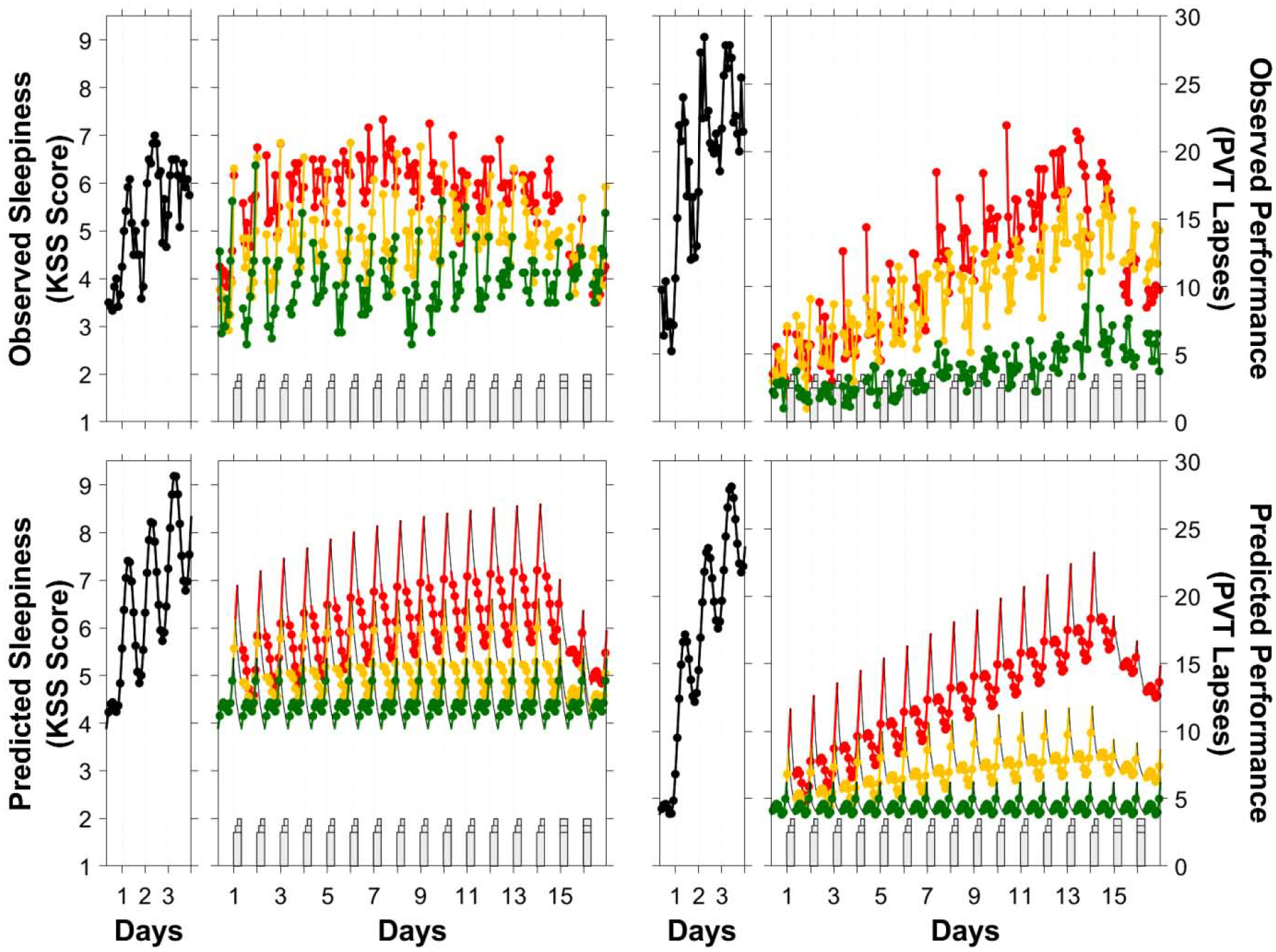
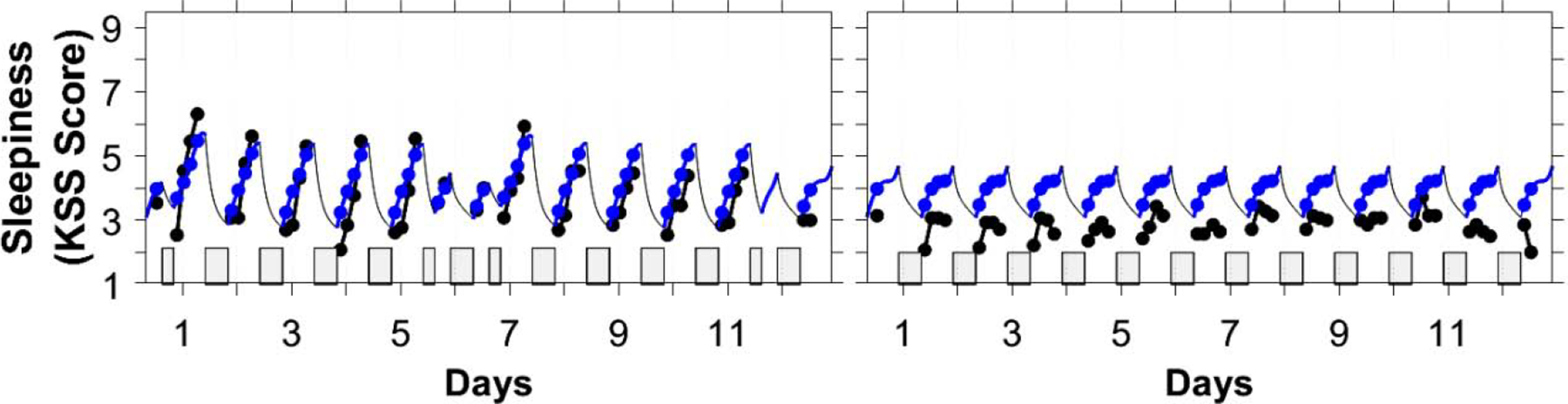
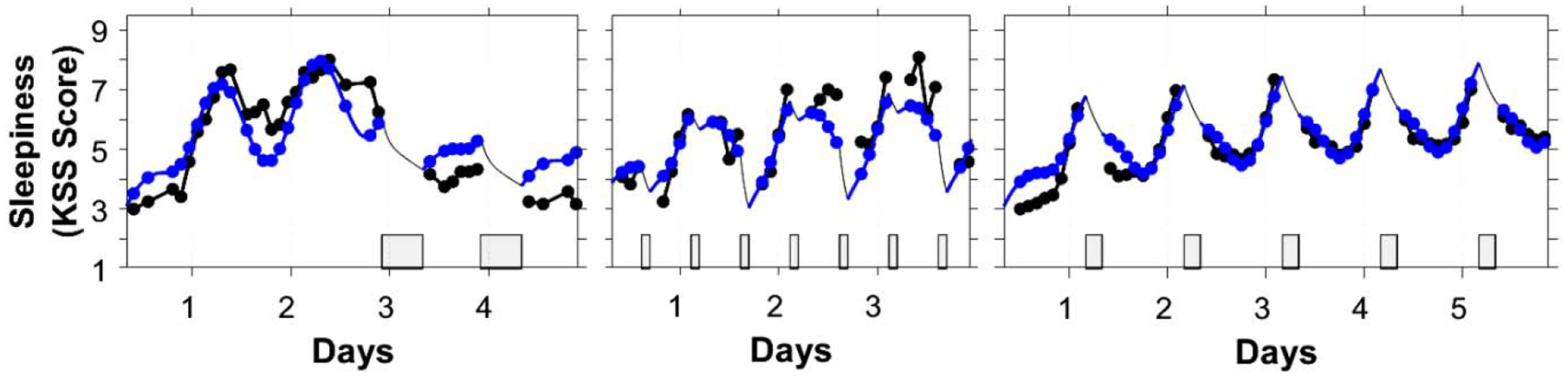
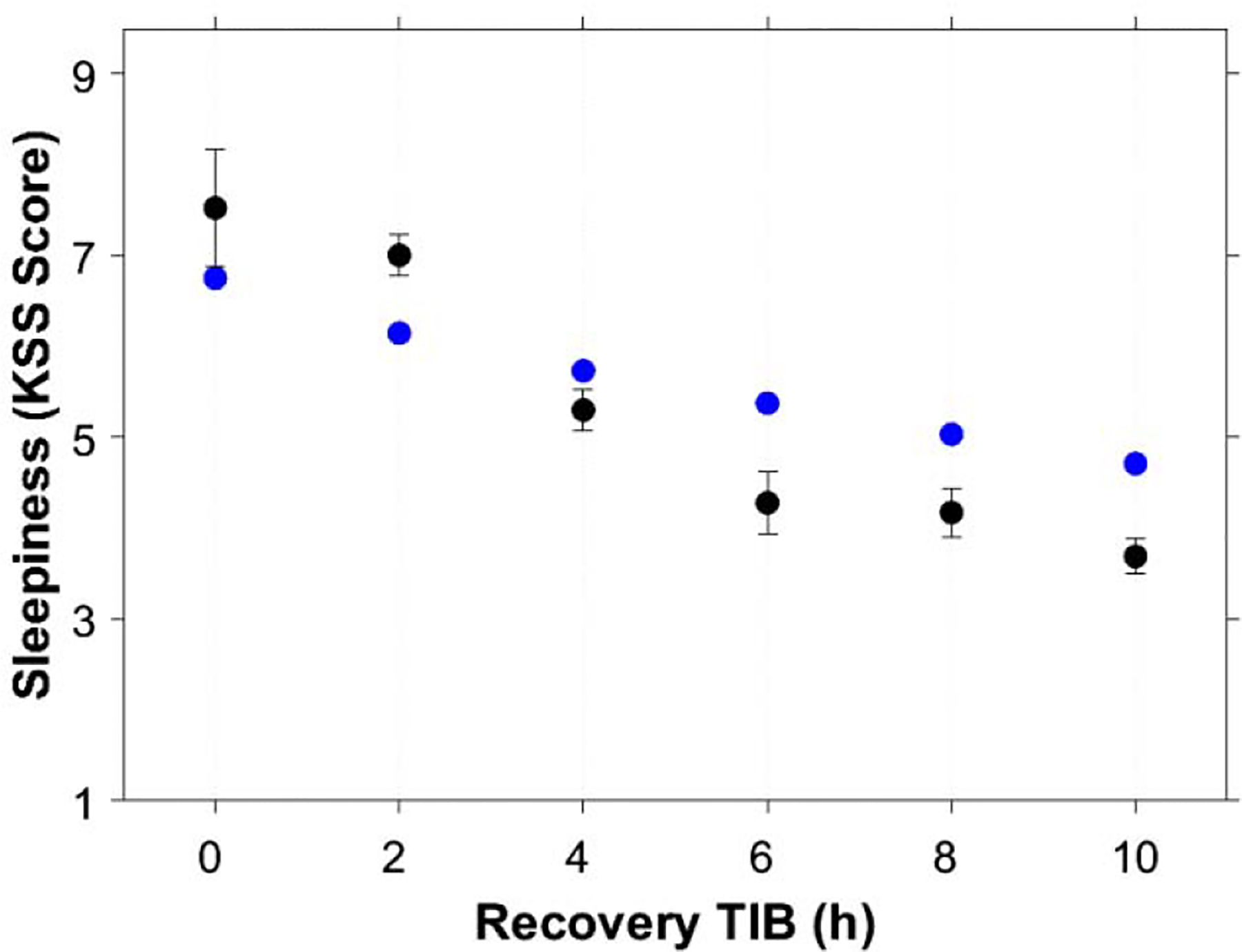
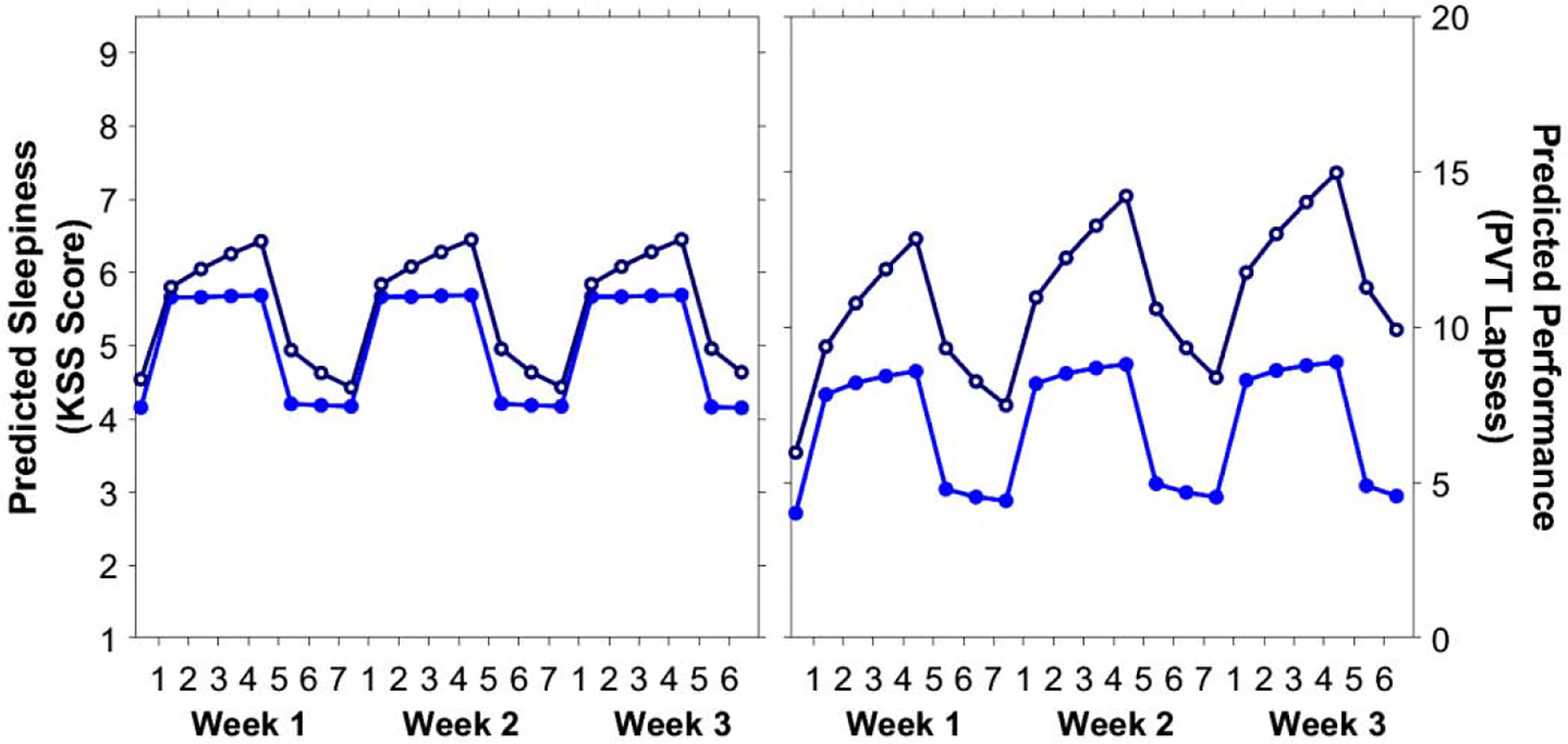
Biomathematical models of fatigue can be used to predict neurobehavioral deficits during sleep/wake or work/rest schedules. Current models make predictions for objective performance deficits and/or subjective sleepiness, but known differences in the temporal dynamics of objective versus subjective outcomes have not been addressed. We expanded a biomathematical model of fatigue previously developed to predict objective performance deficits as measured on the Psychomotor Vigilance Test (PVT) to also predict subjective sleepiness as self-reported on the Karolinska Sleepiness Scale (KSS). Four model parameters were re-estimated to capture the distinct dynamics of the KSS and account for the scale difference between KSS and PVT. Two separate ensembles of datasets - drawn from laboratory studies of sleep deprivation, sleep restriction, simulated night work, napping, and recovery sleep - were used for calibration and subsequent validation of the model for subjective sleepiness. The expanded model was found to exhibit high prediction accuracy for subjective sleepiness, while retaining high prediction accuracy for objective performance deficits. Application of the validated model to an example scenario based on cargo aviation operations revealed divergence between predictions for objective and subjective outcomes, with subjective sleepiness substantially underestimating accumulating objective impairment, which has important real-world implications. In safety-sensitive operations such as commercial aviation, where self-ratings of sleepiness are used as part of fatigue risk management, the systematic differences in the temporal dynamics of objective versus subjective measures of functional impairment point to a potentially significant risk evaluation sensitivity gap. The expanded biomathematical model of fatigue presented here provides a useful quantitative tool to bridge this previously unrecognized gap.
Keywords: Alertness; Fatigue and performance models; Fatigue risk management; Karolinska Sleepiness Scale; Psychomotor Vigilance Test; Self-rated sleepiness.
Figures
References
-
- Ahlström C, Anund A, Fors C, Åkerstedt T. The effect of daylight versus darkness on driver sleepiness: a driving simulator study. J Sleep Res. 2018; 27:e12642. - PubMed
-
- Åkerstedt T, Anund A, Axelsson J, Kecklund G. Subjective sleepiness is a sensitive indicator of insufficient sleep and impaired waking function. J Sleep Res. 2014; 23:242–254. - PubMed
-
- Åkerstedt T, Gillberg M. Subjective and objective sleepiness in the active individual. Int J Neurosci. 1990; 52:29–37. - PubMed
-
- Belenky G, Wesensten NJ, Thorne DR, Thomas ML, Sing HC, Redmond DP, Russo MB, Balkin TJ. Patterns of performance degradation and restoration during sleep restriction and subsequent recovery: a sleep dose-response study. J Sleep Res. 2003; 12:1–12. - PubMed
Grants and funding
LinkOut - more resources
Full Text Sources
Other Literature Sources
Miscellaneous