


Biomechanical In Vitro Study on the Stability of Patient-Specific CAD/CAM Mandibular Reconstruction Plates: A Comparison Between Selective Laser Melted, Milled, and Hand-Bent Plates
- PMID: 33995834
- PMCID: PMC8108099
- DOI: 10.1177/1943387520952684
Biomechanical In Vitro Study on the Stability of Patient-Specific CAD/CAM Mandibular Reconstruction Plates: A Comparison Between Selective Laser Melted, Milled, and Hand-Bent Plates
Abstract
Study design: An experimental in vitro study.
Objective: Plate fractures are a recurrent problem in alloplastic mandibular reconstruction. Hypothetically it can be assumed that computer-aided design (CAD)/computer-aided manufacturing (CAM) reconstruction plates have a higher stability than conventional hand-bent plates. The aim of the study was to compare additive and subtractive fabricated CAD/CAM mandibular reconstruction plates as well as conventional plates with regard to their biomechanical properties.
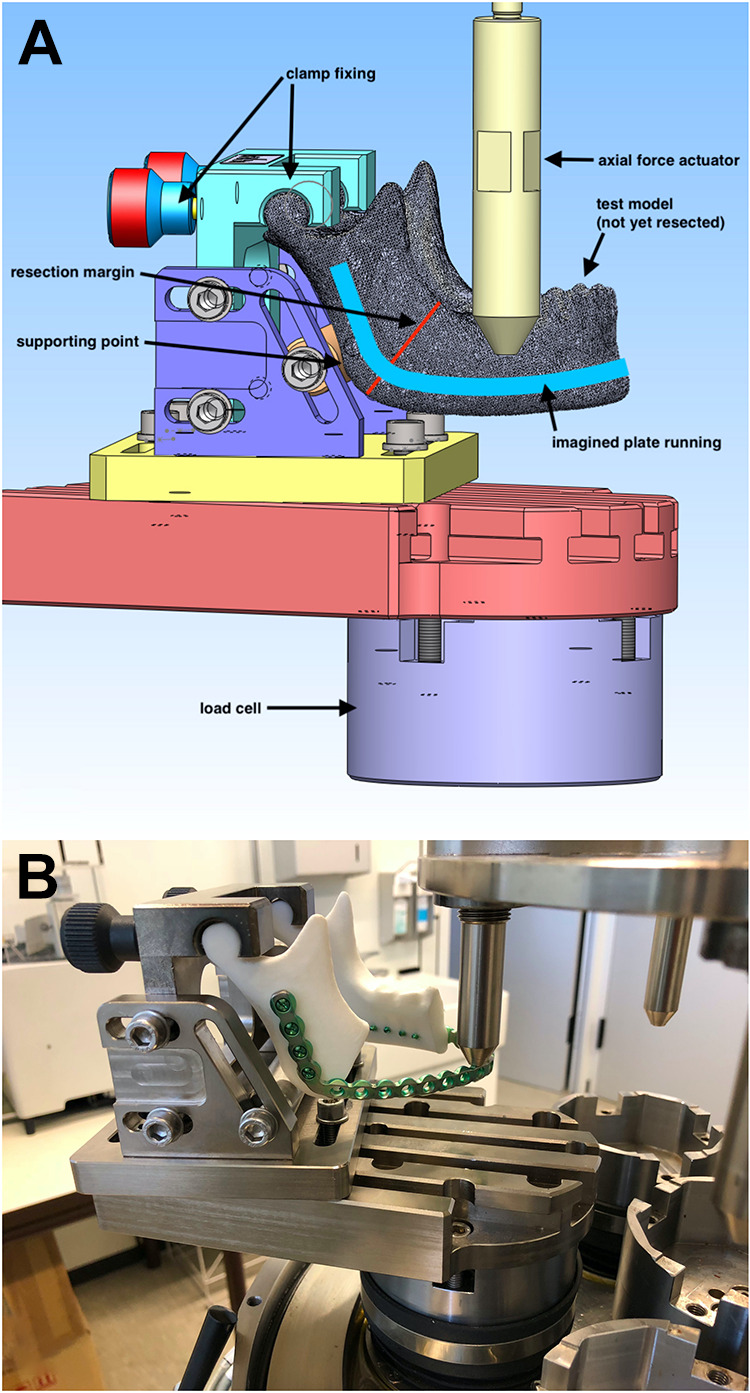
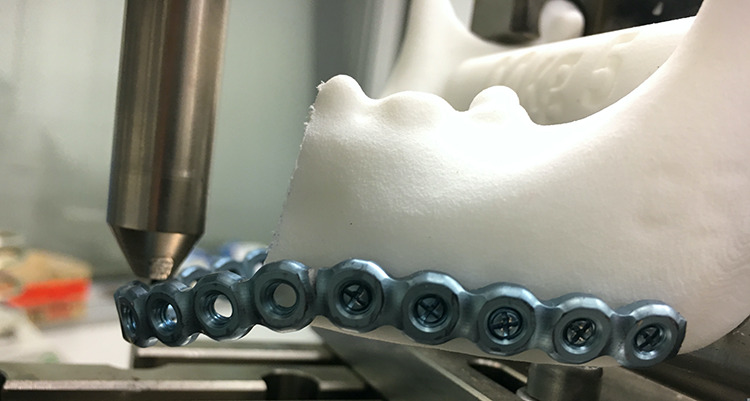
Methods: In a chewing simulator, plates of 2 conventional locking plate systems and 2 CAD/CAM-fabricated plate systems were compared. The plates were loaded in a fatigue test. The maximum number of cycles until plate fracture and the plate stiffness were compared.
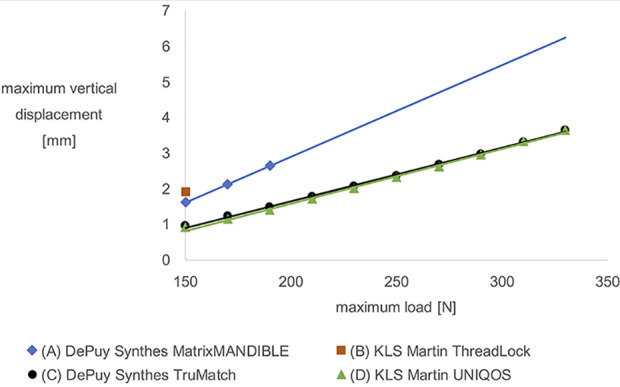
Results: While all conventional plates fractured at a maximum load between 150 and 210 N (Newton) after a number of cycles between 40 000 and 643 000, none of the CAD/CAM plates broke despite a nearly doubled load of 330 N and 2 million cycles. Both CAD/CAM systems proved to be significantly superior to the hand-bent plates. There was no difference between the 2 CAD/CAM systems.
Conclusions: Concerning the risk of plate fracture, patient-specific CAD/CAM reconstruction plates appear to have a significant advantage over conventional hand-bent plates in alloplastic mandibular reconstruction.
Keywords: CAD-CAM; biomechanics; mandibular reconstruction; patient-specific implants.
© The Author(s) 2020.
Conflict of interest statement
Declaration of Conflicting Interests: The author(s) declared no potential conflicts of interest with respect to the research, authorship, and/or publication of this article.
Figures


References
-
- Baker A, McMahon J, Parmar S. Immediate reconstruction of continuity defects of the mandible after tumor surgery. J Oral Maxillofac Surg. 2001;59(11):1333–1339. - PubMed
-
- Linsen S, Schmidt-Beer U, Grüner M, Koeck B. CMD-Beschwerden bei Patienten mit Defekten im Kieferbereich. Dtsch Zahnaerztl Z. 2005;60:376–387.
-
- Bianchi B, Ferri A, Ferrari S, et al. Reconstruction of lateral through and through oro-mandibular defects following oncological resections. Microsurgery. 2010;30(7):517–525. - PubMed
-
- van Gemert JTM, van Es RJJ, Rosenberg AJWP, van der Bilt A, Koole R, van Cann EM. Free vascularized flaps for reconstruction of the mandible: complications, success, and dental rehabilitation. J Oral Maxillofac Surg. 2012;70(7):1692–1698. - PubMed
-
- Urken ML, Buchbinder D, Weinberg H, et al. Functional evaluation following microvascular oromandibular reconstruction of the oral cancer patient: a comparative study of reconstructed and nonreconstructed patients. Laryngoscope. 2015;125(7):1512. - PubMed
LinkOut - more resources
Full Text Sources
Miscellaneous