


Treatment of Traumatic Femoral Neck Fractures with an Intramedullary Nail in Osteoporotic Bones
- PMID: 33995865
- PMCID: PMC8081773
- DOI: 10.1007/s43465-020-00292-3
Treatment of Traumatic Femoral Neck Fractures with an Intramedullary Nail in Osteoporotic Bones
Abstract
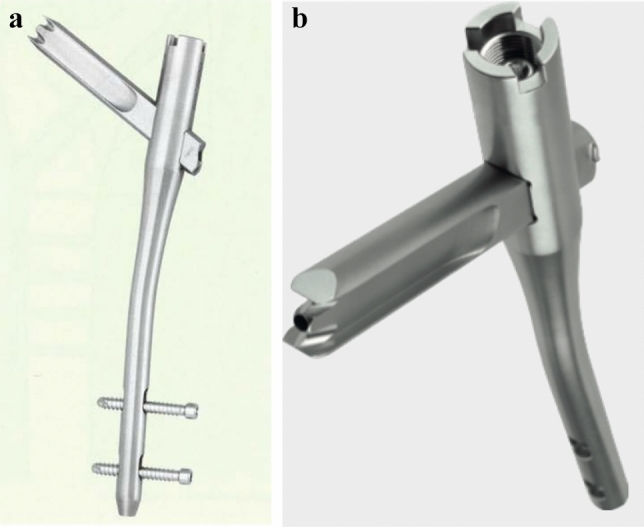
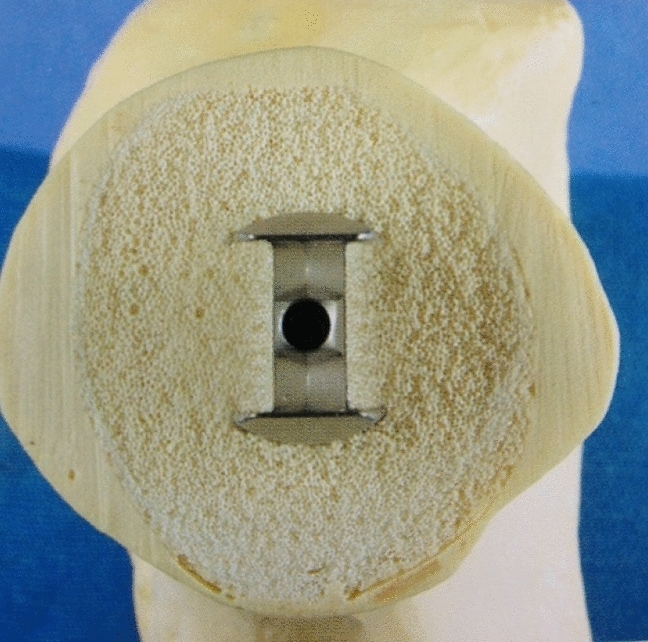
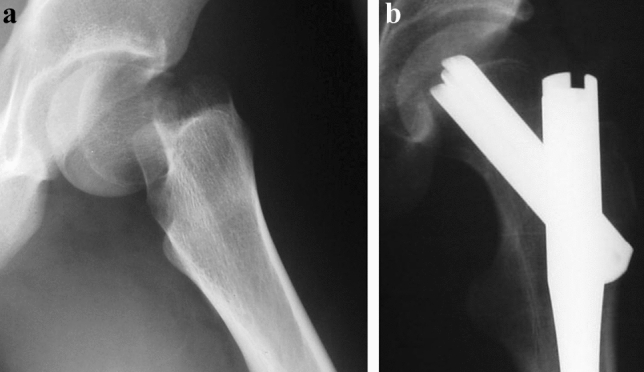
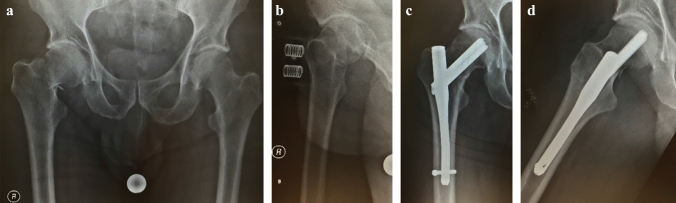
Purpose: Sufficient anchoring of intramedullary osteosynthesis in the femoral head in a femoral neck fracture is a challenge with increasing age of the patients and decreasing bone quality. For older patients with inferior bone quality, it has not been investigated whether the application of an intramedullary force carrier, as a minimally invasive and rapid intervention, can provide a considerable benefit and reduce the postoperative complication and lethality rate. This retrospective study aimed to investigate the stability and functionality after the acute treatment of a femoral neck fracture in osteoporotic bone using an intramedullary force carrier even with higher grade fracture types.
Material and methods: The retrospective analysis was based on a collective of 82 patients over 60 years of age with a femoral neck fracture treated with a gliding nail in our centre between 1999 and 2006.
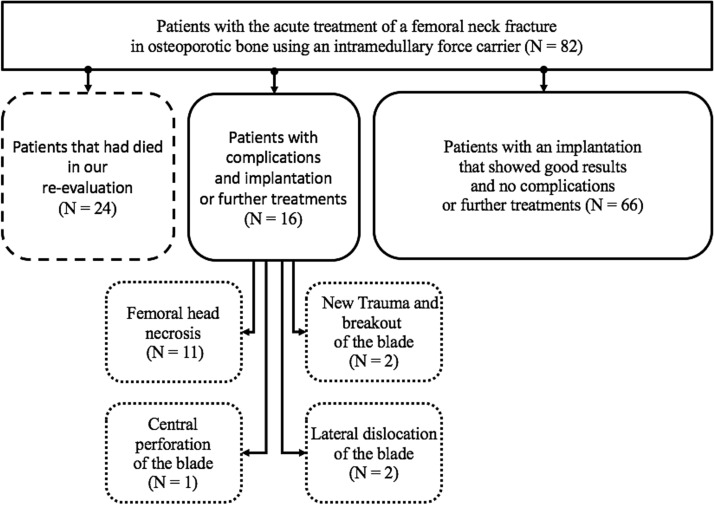
Results: The average time to follow-up was 69.05 months (median 71.0; minimum 27.0-maximum 108.0). Female patients made up more than two-thirds of the patient collective at 63 of the 82 patients (76.83%). The average age of the patients was 77.76 years (median 78.00; range 60.00-93.00).In 66 patients (80.49%), the implantation showed good results and no complications or further treatments. 24/82 patients of our collective had died in our re-evaluation. In no case, a pseudarthrosis or severe impaction with neck shortening occurred (loss of offset).11/82 patients had femoral head necrosis which led to total hip replacement in 8 cases, a hemiarthroplasty in 2 cases and in 1 case a remaining Girdlestone situation because of a deep infection. Another five patients also had to undergo a total hip replacement because of a central perforation of the blade in one case, breakout of the blade after another fall in another two cases and a lateral dislocation of the blade in two cases.
Conclusion: The use of an intramedullary force carrier in the osteoporotic bone can mean distinct advantages for the selected patient as a minimally invasive and rapid surgical method compared to extensive surgery, even in the case of severe injuries. However, the advantages and disadvantages for the patient should be considered critically.
Keywords: Femur nail; Intramedullary nail; Femoral neck fracture; Femoral neck nail; Gliding nail; Osteoporisis.
© Indian Orthopaedics Association 2021.
Conflict of interest statement
Conflict of interestDr. med. Tim Friedrich Raven and Prof. Dr. Arash Moghaddam declare that they have no conflict of interest. The presentation of the topic is independent and the presentation of the contents product-neutral. One of the authors, Prof. Dr. med. Dr. h.c. mult. Wilhelm Friedl, is the inventor of the gliding nail and works as a development consultant for Intercus GmbH.
Figures
References
LinkOut - more resources
Full Text Sources
Other Literature Sources