


Fecal microbiota transplantation as a new treatment for canine inflammatory bowel disease
- PMID: 33996366
- PMCID: PMC8099633
- DOI: 10.12938/bmfh.2020-049
Fecal microbiota transplantation as a new treatment for canine inflammatory bowel disease
Abstract
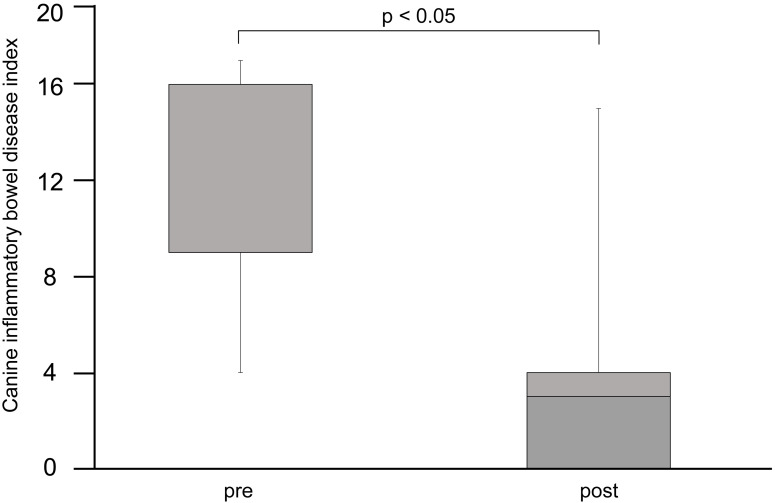
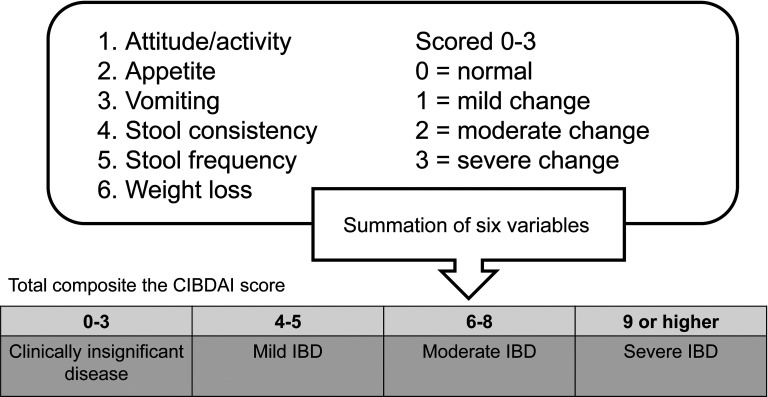
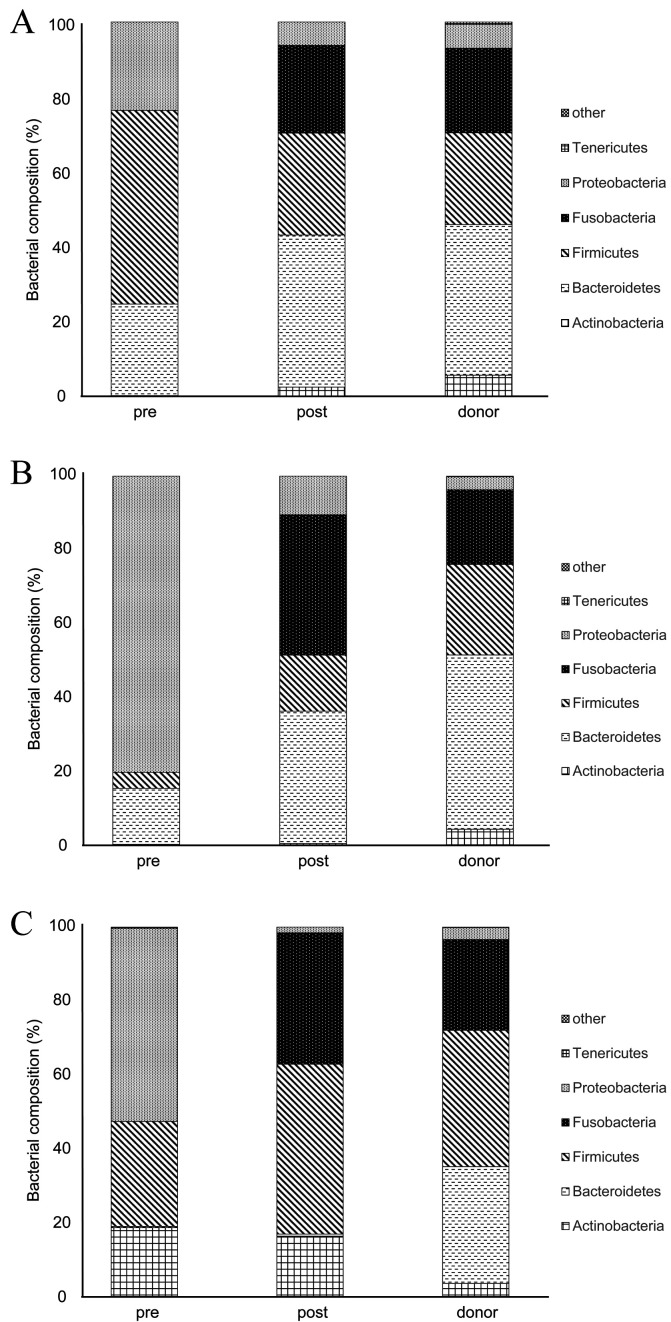
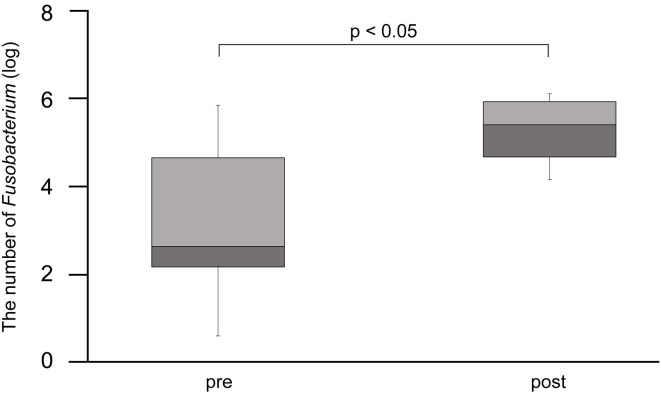
In human medicine, fecal microbiota transplantation (FMT) is an effective treatment for recurrent Clostridioides difficile infection. It has also been tested as a treatment for multiple gastrointestinal diseases, including inflammatory bowel disease (IBD). However, only a few studies have focused on the changes in the microbiome following FMT for canine IBD. Here, we performed FMT in nine dogs with IBD using the fecal matter of healthy dogs and investigated the subsequent changes in the fecal microbiome and clinical signs. In three dogs, the fecal microbiome was examined by 16S rRNA sequencing. Fusobacteria were observed at a low proportion in dogs with IBD. However, the post-FMT microbiome became diverse and showed a significant increase in Fusobacteria proportion. Fusobacterium was detected in the nine dogs by quantitative polymerase chain reaction. The proportion of Fusobacterium in the post-FMT fecal microbiome was significantly increased (p<0.05). The changes in clinical signs (e.g., vomiting, diarrhea, and weight loss) were evaluated according to the canine inflammatory bowel disease activity index. The score of this index significantly decreased in all dogs (p<0.05) with improvements in clinical signs. These improvements were related to the changes in the proportion of microbes, particularly the increase in Fusobacterium. The dogs with IBD showed a lower proportion of Fusobacterium than healthy dogs. This suggests that a low proportion of Fusobacterium is a characteristic feature of canine IBD and that Fusobacterium is involved in this disease. The results of this study may help elucidate the pathogenesis of this disease and its association with Fusobacterium.
Keywords: Fusobacterium; canine; fecal microbiota transplantation; inflammatory bowel disease; inflammatory bowel disease activity index; microbiome.
©2021 BMFH Press.
Figures
References
-
- Borody TJ, Khoruts A. 2011. Fecal microbiota transplantation and emerging applications. Nat Rev Gastroenterol Hepatol 9: 88–96. - PubMed
-
- van Nood E, Vrieze A, Nieuwdorp M, Fuentes S, Zoetendal EG, de Vos WM, Visser CE, Kuijper EJ, Bartelsman JF, Tijssen JG, Speelman P, Dijkgraaf MG, Keller JJ. 2013. Duodenal infusion of donor feces for recurrent Clostridium difficile. N Engl J Med 368: 407–415. - PubMed
LinkOut - more resources
Full Text Sources
Other Literature Sources