


Rubber dam isolation for restorative treatment in dental patients
- PMID: 33998662
- PMCID: PMC8127531
- DOI: 10.1002/14651858.CD009858.pub3
Rubber dam isolation for restorative treatment in dental patients
Abstract
Background: The effective control of moisture and microbes is necessary for the success of restoration procedures. The rubber dam, as an isolation method, has been widely used in dental restorative treatments. The effects of rubber dam usage on the longevity and quality of dental restorations still require evidence-based discussion. This review compares the effects of rubber dam with other isolation methods in dental restorative treatments. This is an update of the Cochrane Review first published in 2016.
Objectives: To assess the effects of rubber dam isolation compared with other types of isolation used for direct and indirect restorative treatments in dental patients.
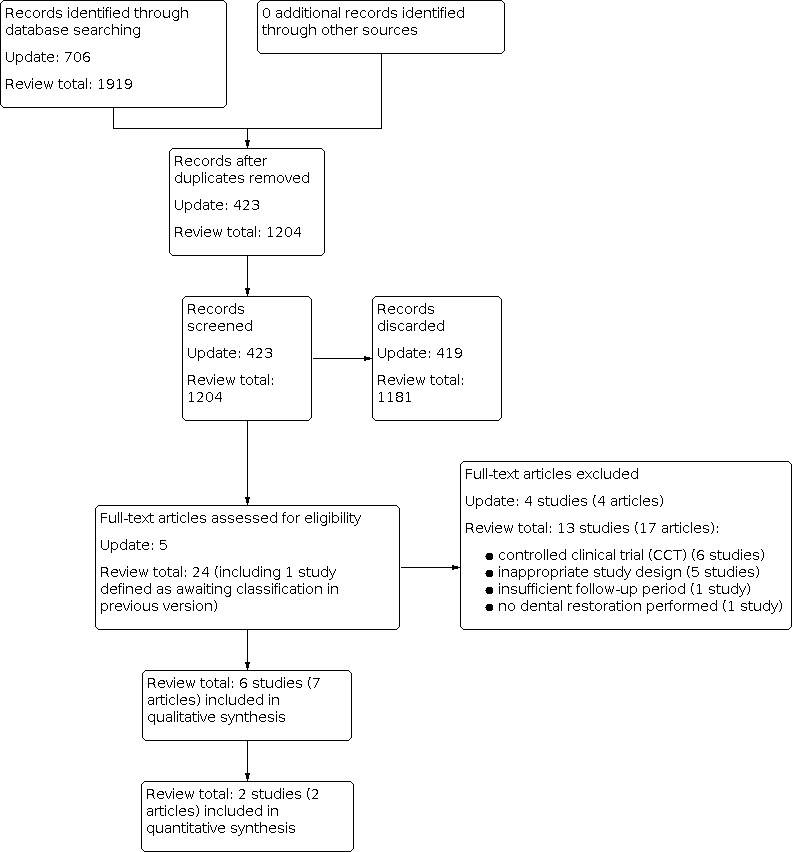
Search methods: Cochrane Oral Health's Information specialist searched the following electronic databases: Cochrane Oral Health's Trials Register (searched 13 January 2021), Cochrane Central Register of Controlled Trials (CENTRAL; 2020, Issue 12) in the Cochrane Library (searched 13 January 2021), MEDLINE Ovid (1946 to 13 January 2021), Embase Ovid (1980 to 13 January 2021), LILACS BIREME Virtual Health Library (Latin American and Caribbean Health Science Information database; 1982 to 13 January 2021), and SciELO BIREME Virtual Health Library (1998 to 13 January 2021). We also searched Chinese BioMedical Literature Database (CBM, in Chinese) (1978 to 13 January 2021), VIP database (in Chinese) (1989 to 13 January 2021), and China National Knowledge Infrastructure (CNKI, in Chinese) (1994 to 13 January 2021). We searched ClinicalTrials.gov and the World Health Organization International Clinical Trials Registry Platform, OpenGrey, and Sciencepaper Online (in Chinese) for ongoing trials. There were no restrictions on the language or date of publication when searching the electronic databases.
Selection criteria: We included randomised controlled trials (including split-mouth trials) over one month in length assessing the effects of rubber dam compared with alternative isolation methods for dental restorative treatments.
Data collection and analysis: Two review authors independently screened the results of the electronic searches, extracted data, and assessed the risk of bias of the included studies. Disagreement was resolved by discussion. We strictly followed Cochrane's statistical guidelines and assessed the certainty of the evidence using GRADE.
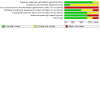
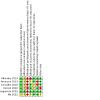
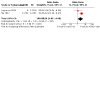
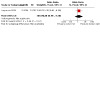
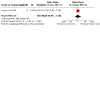
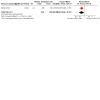
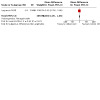
Main results: We included six studies conducted worldwide between 2010 and 2015 involving a total of 1342 participants (of which 233 participants were lost to follow-up). All the included studies were at high risk of bias. Five studies compared rubber dam with traditional cotton rolls isolation. One study was excluded from the analysis due to inconsistencies in the presented data. Of the four remaining trials, three reported survival rates of the restorations with a minimum follow-up of six months. Pooled results from two studies involving 192 participants indicated that the use of rubber dam isolation may increase the survival rates of direct composite restorations of non-carious cervical lesions (NCCLs) at six months (odds ratio (OR) 2.29, 95% confidence interval (CI) 1.05 to 4.99; low-certainty evidence). However, the use of rubber dam in NCCLs composite restorations may have little to no effect on the survival rates of the restorations compared to cotton rolls at 12 months (OR 1.38, 95% CI 0.45 to 4.28; 1 study, 30 participants; very low-certainty evidence) and at 18 months (OR 1.00, 95% CI 0.45 to 2.25; 1 study, 30 participants; very low-certainty evidence) but the evidence is very uncertain. At 24 months, the use of rubber dam may decrease the risk of failure of the restorations in children undergoing proximal atraumatic restorative treatment in primary molars but the evidence is very uncertain (hazard ratio (HR) 0.80, 95% CI 0.66 to 0.97; 1 study, 559 participants; very low-certainty evidence). None of the included studies mentioned adverse effects or reported the direct cost of the treatment.
Authors' conclusions: This review found some low-certainty evidence that the use of rubber dam in dental direct restorative treatments may lead to a lower failure rate of the restorations compared with cotton roll usage after six months. At other time points, the evidence is very uncertain. Further high-quality research evaluating the effects of rubber dam usage on different types of restorative treatments is required.
Copyright © 2021 The Cochrane Collaboration. Published by John Wiley & Sons, Ltd.
Conflict of interest statement
Cheng Miao: none known. Xiaoyu Yang: none known. May CM Wong: none known. May CM Wong is an Editor with Cochrane Oral Health. Jing Zou: none known. Xuedong Zhou: none known. Chunjie Li: none known. Yan Wang: none known.
Figures
Update of
-
Rubber dam isolation for restorative treatment in dental patients.Cochrane Database Syst Rev. 2016 Sep 20;9(9):CD009858. doi: 10.1002/14651858.CD009858.pub2. Cochrane Database Syst Rev. 2016. Update in: Cochrane Database Syst Rev. 2021 May 17;5:CD009858. doi: 10.1002/14651858.CD009858.pub3. PMID: 27648846 Free PMC article. Updated. Review.
References
References to studies included in this review
Alhareky 2014 {published data only}
-
- Alhareky MS, Mermelstein D, Finkelman M, Alhumaid J, Loo C. Efficiency and patient satisfaction with the Isolite system versus rubber dam for sealant placement in pediatric patients. Pediatric Dentistry 2014;36(5):400-4. - PubMed
Ammann 2013 {published data only}
-
- Ammann P, Kolb A, Lussi A, Seemann R. Influence of rubber dam on objective and subjective parameters of stress during dental treatment of children and adolescents - a randomized controlled clinical pilot study. International Journal of Paediatric Dentistry 2013;23(2):110-5. - PubMed
Carvalho 2010 {published data only}
-
- Carvalho TS, Sampaio FC, Diniz A, Bönecker M, Van Amerongen WE. Two years survival rate of Class II ART restorations in primary molars using two ways to avoid saliva contamination. International Journal of Paediatric Dentistry 2010;20(6):419-25. - PubMed
Kemoli 2010 {published data only}
-
- Kemoli AM, Amerongen WE, Opinya GN. Influence of the experience of operator and assistant on the survival rate of proximal ART restorations - two-year results. European Archives of Paediatric Dentistry 2009;10(4):243-8. - PubMed
-
- Kemoli AM, Amerongen WE, Opinya GN. Short communication: influence of different isolation methods on the survival of proximal ART restorations in primary molars after two years. European Archives of Paediatric Dentistry 2010;11(3):136-9. - PubMed
Loguercio 2015 {published data only}
-
- Loguercio AD, Luque-Martinez I, Lisboa AH, Higashi C, Queiroz VA, Rego RO, et al. Influence of isolation method of the operative field on gingival damage, patients' preference, and restoration retention in non-carious cervical lesions. Operative Dentistry 2015;40(6):581-93. - PubMed
Ma 2012 {published data only}
-
- Ma J. Influence of rubber dam isolation on the performance of restorations for teeth wedge-shaped defects. Chinese Community Doctors 2012;14(309):164.
References to studies excluded from this review
Al‐Amad 2017 {published data only}
-
- Al-Amad SH, Awad MA, Edher FM, Shahramian K, Omran TA. The effect of rubber dam on atmospheric bacterial aerosols during restorative dentistry. Journal of Infection and Public Health 2017;10(2):195-200. - PubMed
Daudt 2013 {published data only}
-
- Daudt E, Lopes GC, Vieira LCC. Does operatory field isolation influence the performance of direct adhesive restorations? Journal of Adhesive Dentistry 2013;15(1):27-32. - PubMed
-
- Daudt E, Lopes GC, Vieira LCC. Does the isolation method influence the performance of direct restorations? In: 89th General Session of the International Association for Dental Research; 2011 March 14-19; San Diego (CA). Alexandria (VA): International Association for Dental Research, 2011:Abstract No 1697.
Favetti 2021 {published data only}
-
- Favetti M, Montagner AF, Fontes ST, Martins TM, Masotti AS, Jardim PDS, et al. Effects of cervical restorations on the periodontal tissues: 5-year follow-up results of a randomized clinical trial. Journal of Dentistry 2021;106:103571. - PubMed
Ganss 1999 {published data only}
-
- Ganss C, Klimek J, Gleim A. One year clinical evaluation of the retention and quality of two fluoride releasing sealants. Clinical Oral Investigations 1999;3:188-93. - PubMed
Huth 2004 {published data only}
-
- Huth KC, Manhard J, Hickel R, Kunzelmann K. Three-year clinical performance of a compomer in stress-bearing restorations in permanent posterior teeth. American Journal of Dentistry 2003;16(4):255-9. - PubMed
-
- Huth KC, Manhard J, Selbertinger A, Paschos E, Kaaden C, Kunzelmann K, et al. 4-year clinical performance and survival analysis of Class I and II compomer restorations in permanent teeth. American Journal of Dentistry 2004;17(1):51-5. - PubMed
Ibrahim 2020 {published data only}
-
- Ibrahim SH, Steit SA. Assessment of tooth shade after de-and re-hydration during clinical restorative procedures: a randomized clinical trial. Egyptian Dental Journal 2020;66(4):2705-14.
Luz 2012 {published data only}
-
- Luz PB, Barata JS, Meller CR, Slavutsky SMBD, Araujo FBD. ART acceptability in children: a randomized clinical trial. Revista da Faculdade de Odontologia de Porto Alegre 2012;53(1):27-31.
NCT01506830 {unpublished data only}
-
- NCT01506830. Cervical restorations placed under two isolation methods [Influence of operatory field isolation techniques on the clinical performance of class V restorations]. clinicaltrials.gov/ct2/show/NCT01506830 (first received 10 January 2012).
Raskin 2000 {published data only}
-
- Raskin A, Setcos JC, Vreven J, Wilson NHF. Clinical evaluation of a posterior composite 10-year report. Journal of Dentistry 1999;27:13-9. - PubMed
-
- Raskin A, Setcos JC, Vreven J, Wilson NHF. Influence of the isolation method on the 10-year clinical behaviour of posterior resin composite restorations. Clinical Oral Investigations 2000;4(3):148-52. - PubMed
Sabbagh 2011 {published data only}
-
- Sabbagh J, Dagher S, El-Osta N, Souhaid P. One year clinical evaluation of vertise flow. In: 45th Meeting of the Continental European Division of the International Association for Dental Research; 2011 Aug 31- Sept 3; Budapest, Hungary. Alexandria (VA): International Association for Dental Research, 2011:Abstract No 232.
Smales 1993 {published data only}
Straffon 1985 {published data only}
-
- Straffon LH, Dennison JB, More FG. Three-year evaluation of sealant: effect of isolation on efficacy. Journal of the American Dental Association 1985;110(5):714-7. - PubMed
van Dijken 1987 {published data only}
-
- Dijken JWV, Hörstedt P. Effect of the use of rubber dam versus cotton rolls on marginal adaptation of composite resin fillings to acid-etched enamel. Acta Odontologica Scandinavica 1987;45:303-8. - PubMed
Additional references
Ahmad 2009
-
- Ahmad IA. Rubber dam usage for endodontic treatment: a review. International Endodontic Journal 2009;42(11):963-72. - PubMed
Al‐Amad 2017
-
- Al-Amad SH, Awad MA, Edher FM, Shahramian K, Omran TA. The effect of rubber dam on atmospheric bacterial aerosols during restorative dentistry. Journal of Infection and Public Health 2016;10(2):195-200. - PubMed
Atkins 2004
Begg 1994
-
- Begg CB, Mazumdar M. Operating characteristics of a rank correlation test for publication bias. Biometrics 1994;50(4):1088-101. - PubMed
Berglund 1991
-
- Berglund A, Molin M. Mercury levels in plasma and urine after removal of all amalgam restorations: the effect of using rubber dams. Dental Materials 1991;13(5):297-304. - PubMed
Bhuva 2008
-
- Bhuva B, Chong BS, Patel S. Rubber dam in clinical practice. Endodontic Practice Today 2008;2(2):131-41.
Bücher 2015
-
- Bücher K, Metz I, Pitchika V, Hickel R, Kühnisch J. Survival characteristics of composite restorations in primary teeth. Clinical Oral Investigations 2015;19(7):1653-62. - PubMed
Cajazeira 2014
-
- Cajazeira MR, De Sabóia TM, Maia LC. Influence of the operatory field isolation technique on tooth-colored direct dental restorations. American Journal of Dentistry 2014;27(3):155-9. - PubMed
Carrotte 2000
-
- Carrotte PV. Current practice in endodontics: 3. Access is success, and rubber dam is easy. Dental Update 2000;27(9):436-40. - PubMed
Carrotte 2004
-
- Carrotte P. Endodontics: Part 6. Rubber dam and access cavities. British Dental Journal 2004;197(9):527-34. - PubMed
Cochran 1989
-
- Cochran MA, Miller CH, Sheldrake MA. The efficacy of the rubber dam as a barrier to the spread of microorganisms during dental treatment. Journal of the American Dental Association 1989;119(1):141-4. - PubMed
Cohen 1987
-
- Cohen S, Schwartz S. Endodontic complications and the law. Journal of Endodontics 1987;13(4):191-7. - PubMed
Dalpian 2018
-
- Dalpian DM, Gallina CS, Nicoloso GF, Correa MB, Garcia-Godoy F, Araujo FB, et al. Patient- and treatment-related factors may influence the longevity of primary teeth restorations in high caries-risk children: a university-based retrospective study. American Journal of Dentistry 2018;31(5):261-6. - PubMed
Egger 1997
Elbourne 2002
-
- Elbourne DR, Altman DG, Higgins JP, Curtin F, Worthington HV, Vail A. Meta-analyses involving cross-over trials: methodological issues. International Journal of Epidemiology 2002;31(1):140-9. - PubMed
Elderton 1971a
-
- Elderton RJ. A modern approach to use of rubber dam. 1. Dental Practitioner and Dental Record 1971;21(6):187-93. - PubMed
Elderton 1971b
-
- Elderton RJ. A modern approach to use of rubber dam. 2. Dental Practitioner and Dental Record 1971;21(7):226-32. - PubMed
Elderton 1971c
-
- Elderton RJ. A modern approach to use of rubber dam. 3. Dental Practitioner and Dental Record 1971;21(8):267-73. - PubMed
GRADE 2004
GRADEpro GDT [Computer program]
-
- GRADEpro GDT. Version accessed 15 December 2020. Hamilton (ON): McMaster University (developed by Evidence Prime), 2015. Available at gradepro.org.
Guyatt 2008
Halbach 2008
-
- Halbach S, Vogt S, Köhler W, Felgenhauer N, Welzl G, Kremers L, et al. Blood and urine mercury levels in adult amalgam patients of a randomized controlled trial: interaction of Hg species in erythrocytes. Environmental Research 2008;107(1):69-78. - PubMed
Harrel 2004
Hickel 2007
-
- Hickel R, Roulet JF, Bayne S, Heintze SD, Mjör IA, Peters M, et al. Recommendations for conducting controlled clinical studies of dental restorative materials. Clinical Oral Investigations 2007;11(1):5-33. - PubMed
Higgins 2011
-
- Higgins JP, Green S, editor(s). Cochrane Handbook for Systematic Reviews of Interventions Version 5.1.0 (updated March 2011). The Cochrane Collaboration, 2011. Available from handbook.cochrane.org.
Higgins 2021
-
- Higgins JP, Thomas J, Chandler J, Cumpston M, Li T, Page MJ, et al, editor(s). Cochrane Handbook for Systematic Reviews of Interventions Version 6.2 (updated February 2021). Cochrane, 2021. Available from www.training.cochrane.org/handbook.
Hill 2008
-
- Hill EE, Rubel BS. Do dental educators need to improve their approach to teaching rubber dam use? Journal of Dental Education 2008;72(10):1177-81. - PubMed
Koshy 2002
-
- Koshy S, Chandler NP. Use of rubber dam and its association with other endodontic procedures in New Zealand. New Zealand Dental Journal 2002;98(431):12-6. - PubMed
Kremers 1999
-
- Kremers L, Halbach S, Willruth H, Mehl A, Welzl G, Wack FX, et al. Effect of rubber dam on mercury exposure during amalgam removal. European Journal of Oral Sciences 1999;107(3):202-7. - PubMed
Kumbargere 2020
-
- Kumbargere Nagraj S, Eachempati P, Paisi M, Nasser M, Sivaramakrishnan G, Verbeek JH. Interventions to reduce contaminated aerosols produced during dental procedures for preventing infectious diseases. Cochrane Database of Systematic Reviews 2020, Issue 10. Art. No: CD013686. [DOI: 10.1002/14651858.CD013686.pub2] - DOI - PMC - PubMed
Lynch 2003
-
- Lynch CD, McConnell RJ. The use of microabrasion to remove discolored enamel: a clinical report. Journal of Prosthetic Dentistry 2003;90:417-9. - PubMed
Lynch 2007
-
- Lynch CD, McConnell RJ. Attitudes and use of rubber dam by Irish general dental practitioners. International Endodontic Journal 2007;40(6):427-32. - PubMed
Mamoun 2002
-
- Mamoun J. A prosthesis for achieving dry-field isolation of molars with short clinical crowns. Journal of the American Dental Association 2002;133(8):1105-7. - PubMed
Mendes 2018
-
- Mendes ACB, Restrepo M, Azevedo ER, Cordeiro RCL, Santos-Pinto L, Zuanon ACC. Effect of rubber dam clamps on demineralized cervical enamel of permanent teeth. Journal of Dentistry for Children (Chicago, Ill) 2018;85(1):3-7. - PubMed
Parmar 1998
-
- Parmar MK, Torri V, Stewart L. Extracting summary statistics to perform meta-analysis of the published literature for survival endpoints. Statistics in Medicine 1998;17(24):2815-34. - PubMed
Perrine 2005
-
- Perrine GA. A simplified rubber-dam technique for preparing teeth for indirect restorations. Journal of the American Dental Association 2005;136(11):1560-1. - PubMed
Reid 1991
-
- Reid JS, Callis PD, Patterson CJW. Rubber Dam in Clinical Practice. 1st edition. London: Quintessence Publishing, 1991.
Reuter 1983
-
- Reuter JE. The isolation of teeth and the protection of patient during endodontic treatment. International Endodontic Journal 1983;16(4):173-81. - PubMed
Schuh 2019
-
- Schuh PL, Wachtel H, Bolz W, Maischberger C, Schenk A, Kühn M. "Teflon tape technique": synergy between isolation and lucidity. Quintessence International 2019;50(6):488-93. - PubMed
Stata 2017 [Computer program]
-
- Stata. Version 15. College Station, TX, USA: StataCorp, 2017. Available at www.stata.com.
Stewardson 2002
-
- Stewardson DA, McHugh ES. Patients' attitudes to rubber dam. International Endodontic Journal 2002;35(10):812-9. - PubMed
Susini 2007
-
- Susini G, Pommel L, Camps J. Accidental ingestion and aspiration of root canal instruments and other dental foreign bodies in a French population. International Endodontic Journal 2007;40(8):585-9. - PubMed
Sutton 1996
-
- Sutton J, Saunders WP. Effect of various irrigant and autoclaving regimes on the fracture resistance of rubber dam clamps. International Endodontic Journal 1996;29(5):335-43. - PubMed
Tiwana 2004
-
- Tiwana KK, Morton T, Tiwana PS. Aspiration and ingestion in dental practice: a 10-year institutional review. Journal of the American Dental Association 2004;135(9):1287-91. - PubMed
Whitworth 2000
-
- Whitworth JM, Seccombe GV, Shoker K, Steele JG. Use of rubber dam and irrigant selection in UK general dental practice. International Endodontic Journal 2000;33(5):435-41. - PubMed
References to other published versions of this review
Wang 2012
Publication types
MeSH terms
LinkOut - more resources
Full Text Sources
Other Literature Sources
