. 2021 May 17;16(5):e0251640.
doi: 10.1371/journal.pone.0251640. eCollection 2021.

Novel perspective on a conventional technique: Impact of ultra-low temperature on bacterial viability and protein extraction

Affiliations

Novel perspective on a conventional technique: Impact of ultra-low temperature on bacterial viability and protein extraction

Aditya Sarnaik et al. PLoS One. .

Abstract

Ultra-low temperature (ULT) storage of microbial biomass is routinely practiced in biological laboratories. However, there is very little insight regarding the effects of biomass storage at ULT and the structure of the cell envelope, on cell viability. Eventually, these aspects influence bacterial cell lysis which is one of the critical steps for biomolecular extraction, especially protein extraction. Therefore, we studied the effects of ULT-storage (-80°C) on three different bacterial platforms: Escherichia coli, Bacillus subtilis and the cyanobacterium Synechocystis sp. PCC 6803. By using a propidium iodide assay and a modified MTT assay we determined the impact of ULT storage on cellular viability. Subsequently, the protein extraction efficiency was determined by analyzing the amount of protein released following the storage. The results successfully established that longer the ULT-storage time lower is the cell viability and larger is the protein extraction efficiency. Interestingly, E. coli and B. subtilis exhibited significant reduction in cell viability over Synechocystis 6803. This indicates that the cell membrane structure and composition may play a major role on cell viability in ULT storage. Interestingly, E. coli exhibited concomitant increase in cell lysis efficiency resulting in a 4.5-fold increase (from 109 μg/ml of protein on day 0 to 464 μg/ml of protein on day 2) in the extracted protein titer following ULT storage. Furthermore, our investigations confirmed that the protein function, tested through the extraction of fluorescent proteins from cells stored at ULT, remained unaltered. These results established the plausibility of using ULT storage to improve protein extraction efficiency. Towards this, the impact of shorter ULT storage time was investigated to make the strategy more time efficient to be adopted into protocols. Interestingly, E. coli transformants expressing mCherry yielded 2.7-fold increase (93 μg/mL to 254 μg/mL) after 10 mins, while 4-fold increase (380 μg/mL) after 120 mins of ULT storage in the extracted soluble protein. We thereby substantiate that: (1) the storage time of bacterial cells in -80°C affect cell viability and can alter protein extraction efficiency; and (2) exercising a simple ULT-storage prior to bacterial cell lysis can improve the desired protein yield without impacting its function.


Conflict of interest statement

The authors have declared that no competing interests exist.

Figures
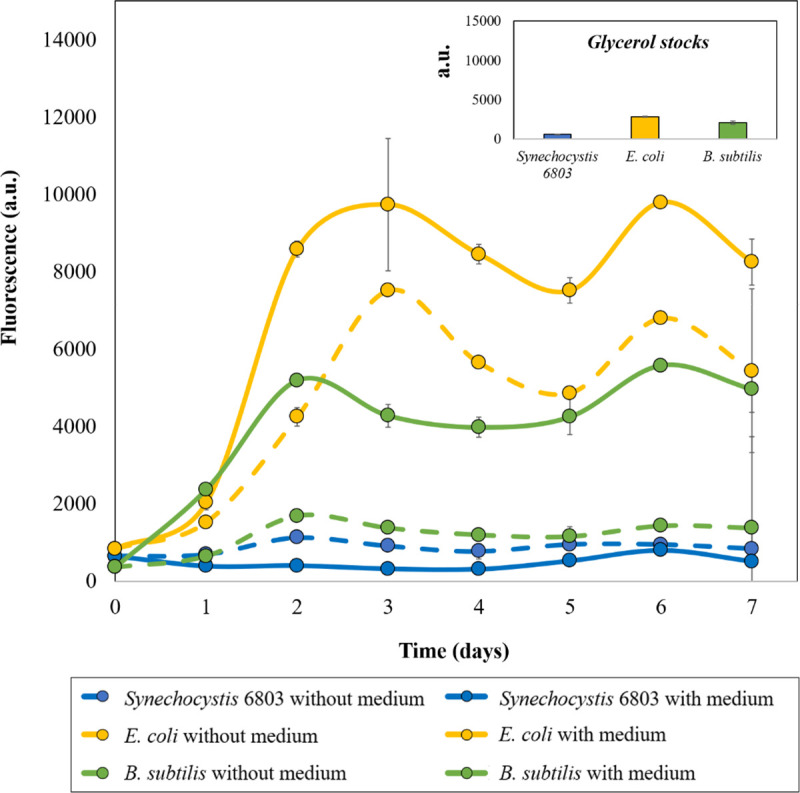
Fig 1
Fig 1. Effect of ultra-low temperature (ULT) storage on bacterial cell membrane integrity.
The cells stored over a period of 7 days at ULT were subjected to a PI assay. Actively growing bacterial cell membranes pose a barrier for PI entry within the cell, however it can penetrate through membrane compromised or dead bacterial cells and intercalate within their polynucleotides yielding active fluorescence. Our results clearly indicated that with increased storage at ULT, bacterial cell envelopes were damaged, thereby increasing PI entry within the cells and hence increased fluorescence. Highest damage was observed in E. coli cells, followed by B. subtilis and Synechocystis 6803. Also, cells stored with the medium displayed higher fluorescence than the cells stored without the culture medium. Data are shown as mean ± S.D, n = 3.
Fig 2
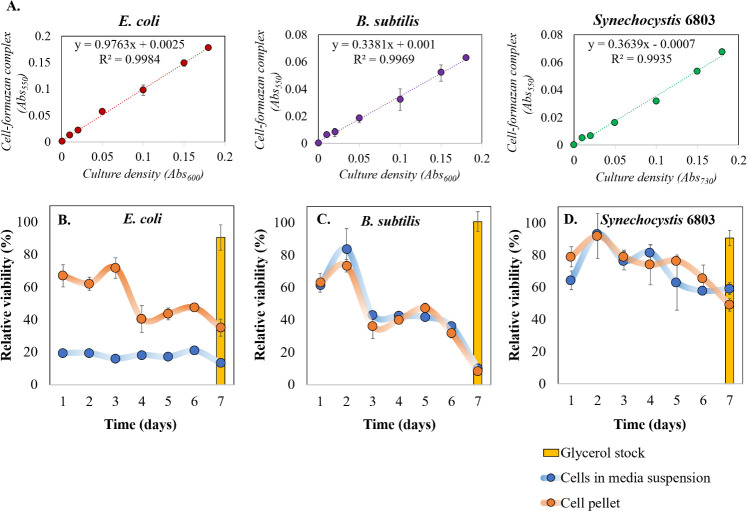
Fig 2. Impact of storing cells at ultra-low temperature on cell viability.
The cells stored at ULT over a period of 7 days were subjected to MTT assay. MTT assay is based on a simple principle of active dehydrogenase present in viable cells, whereby such active cells can convert MTT to MTT-formazan-cell complex (solubilized in DMSO), which has a λmax of 550 nm. This establishes direct correlation between cell viability and absorbance at 550 nm. We hereby present MTT assay standard curves for bacteria with different cell densities (measured by Abs600 or Abs730) (A), and relative (%) viability plots (with respect to that of freshly harvested cells) for E. coli (B), B. subtilis (C), Synechocystis 6803 (D) with (blue) and without (orange) the culture media. Relative viabilities were also compared with their glycerol stocks (bars in the plots) which had almost 100% viability. Data are shown as mean ± S.D, n = 3.
Fig 3
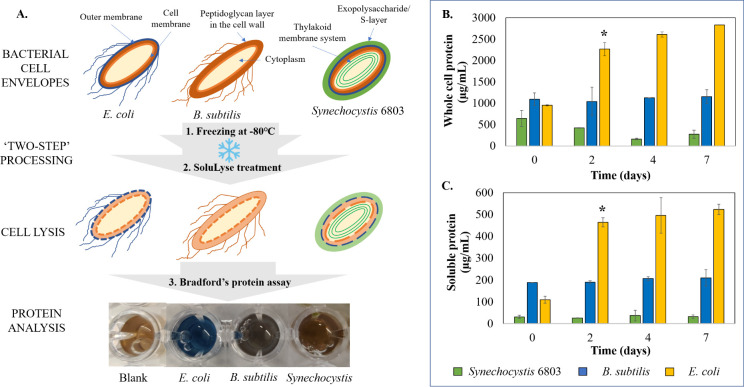
Fig 3. Impact of ULT storage on protein extraction efficiency.
A) Schematic representation of bacterial cell structures used in this study and the steps followed for protein extraction and analysis. Comparative protein concentrations of whole (B) and soluble fraction of (C) cell lysates from E. coli (yellow), Synechocystis 6803 (green) and B. subtilis (blue) over 7 days of ULT-storage. E. coli significantly displayed highest protein yields. The experiments were performed in biological triplicates. Statistical significance was determined using t-test (p<0.05). Data represented as Mean ± SD, n = 3.
Fig 4
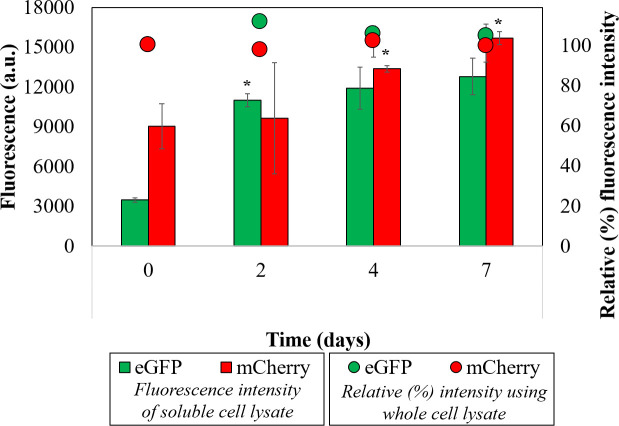
Fig 4. Fluorescence analysis of the extracted proteins.
Fluorescence intensity of soluble protein lysates (bars) indicates increase in protein extraction efficiency with the duration of ULT-storage. Quantification of functional proteins was performed using whole cell lysates to determine relative fluorescence intensity (dots) of protein samples. Relative fluorescence intensity was calculated as a ratio of proteins present in whole cell lysates from any day to that of day 0. The experiments were performed in biological triplicates. Statistical significance was determined using t-test (5% level of significance). Data represented as Mean ± SD, n = 3.
Fig 5
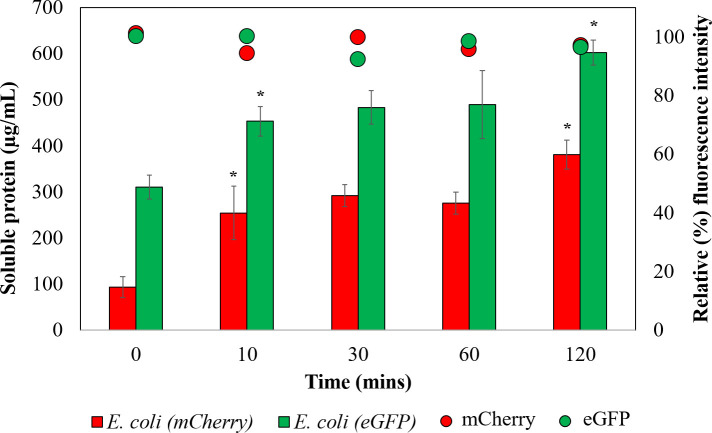
Fig 5. Impact of short-term ULT storage on protein extraction efficiency and functionality.
Comparative protein concentrations of the soluble fraction of cell lysates from E. coli strains expressing mCherry (red) and eGFP (green) over 0, 10, 30, 60, 120 mins of ULT-storage. Both the E. coli strains displayed significant improvement in protein extraction after ULT-storage. Fluorescence analyses further confirmed sustained protein functionality. The experiments were performed in biological triplicates. Statistical significance was determined using t-test (5% level of significance). Data represented as Mean ± SD, n = 3.

References

    1. Calero P, Nikel PI. Chasing bacterial chassis for metabolic engineering: a perspective review from classical to non-traditional microorganisms. Microbial Biotechnology. 2019;12(1):98–124. 10.1111/1751-7915.13292 - DOI - PMC - PubMed
    1. Ko YS, Kim JW, Lee JA, Han T, Kim GB, Park JE, et al.. Tools and strategies of systems metabolic engineering for the development of microbial cell factories for chemical production. Chem Soc Rev. 2020;49(14):4615–36. 10.1039/d0cs00155d - DOI - PubMed
    1. Sarnaik A, Sawant K, Khadilkar J, Pillai G, Pandit R, Lali A. Cyanobacterial Cell Factories for Improved Carotenoid Biosynthesis through a Synthetic Biology Approach. Next Generation Biomanufacturing Technologies. ACS Symposium Series. 1329: American Chemical Society; 2019. p. 23–39.
    1. Sarnaik A, Nambissan V, Pandit R, Lali A. Recombinant Synechococcus elongatus PCC 7942 for improved zeaxanthin production under natural light conditions. Algal Research. 2018;36:139–51.
    1. Gao W, Leung K, Hawdon N. Freezing inactivation of Escherichia coli and Enterococcus faecalis in water: response of different strains. Water Environ Res. 2009;81(8):824–30. - PubMed

Publication types

MeSH terms

Substances