


Prenatal anemia and postpartum hemorrhage risk: A systematic review and meta-analysis
- PMID: 34002432
- PMCID: PMC9258034
- DOI: 10.1111/jog.14834
Prenatal anemia and postpartum hemorrhage risk: A systematic review and meta-analysis
Abstract
Introduction: Postpartum hemorrhage (PPH) has remained the leading cause of maternal mortality. While anemia is a leading contributor to maternal morbidity, molecular, cellular and anemia-induced hypoxia, clinical studies of the relationship between prenatal-anemia and PPH have reported conflicting results. Therefore, our objective was to investigate the outcomes of studies on the relationships between prenatal anemia and PPH-related mortality.
Materials and methods: Electronic databases (MEDLINE, Scopus, ClinicalTrials.gov, PROSPERO, EMBASE, and the Cochrane Central Register of Controlled Trials) were searched for studies published before August 2019. Keywords included "anemia," "hemoglobin," "postpartum hemorrhage," and "postpartum bleeding." Only studies involving the association between anemia and PPH were included in the meta-analysis. Our primary analysis used random effects models to synthesize odds-ratios (ORs) extracted from the studies. Heterogeneity was formally assessed with the Higgins' I2 statistics, and explored using meta-regression and subgroup analysis.
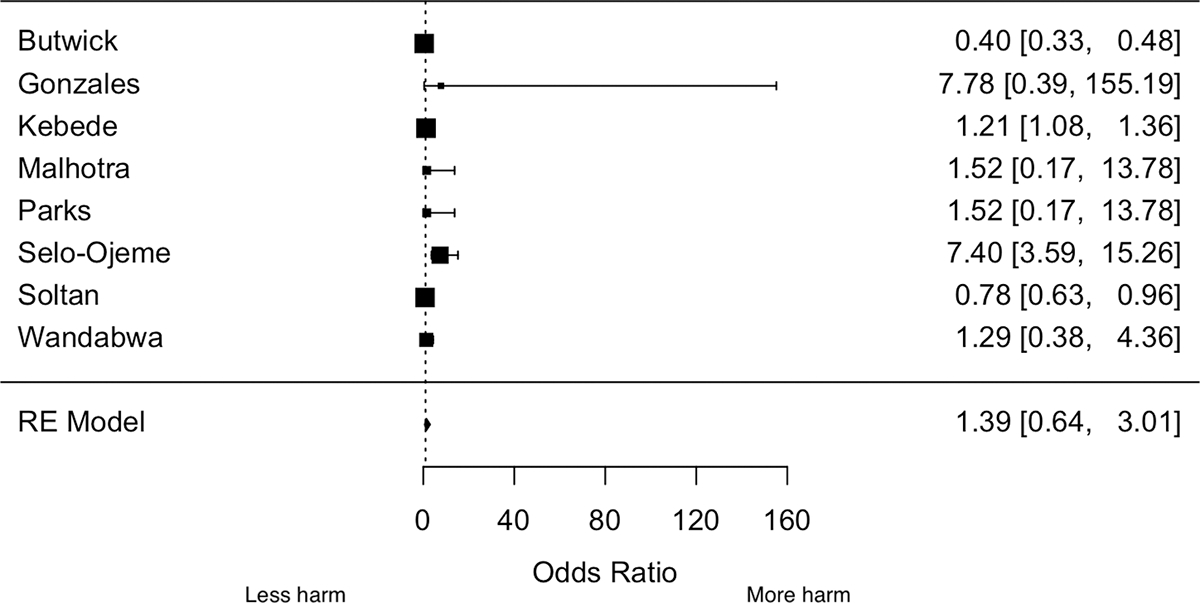
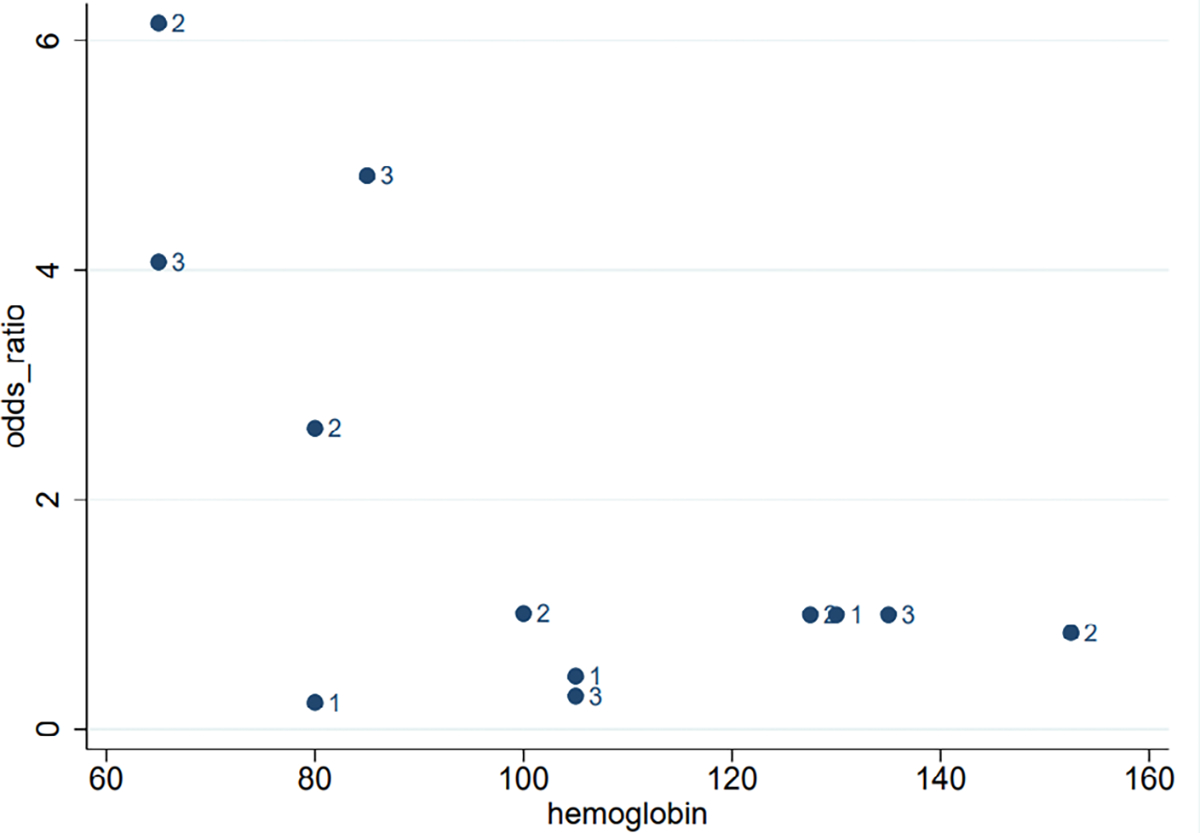
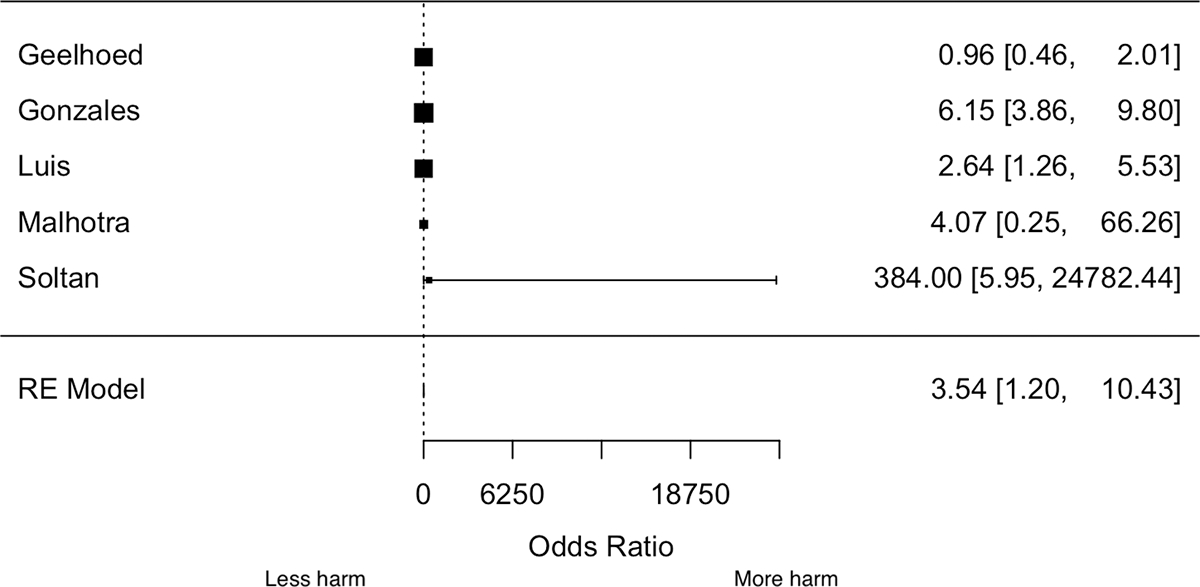
Results: We found 13 eligible studies investigating the relationship between prenatal anemia and PPH. Our findings suggest that severe prenatal anemia increases PPH risk (OR = 3.54; 95% CI: 1.20, 10.4, p-value = 0.020). There was no statistical association with mild (OR = 0.60; 95% CI: 0.31, 1.17, p-value = 0.130), or moderate anemia (OR = 2.09; 95% CI: 0.40, 11.1, p-value = 0.390) and the risk of PPH.
Conclusion: Severe prenatal anemia is an important predictive factor of adverse outcomes, warranting intensive management during pregnancy. PROSPERO Registration Number: CRD42020149184; https://www.crd.york.ac.uk/prospero/display_record.php?RecordID=149184.
Keywords: maternal mortality; meta-analysis; obstetric emergency; postpartum hemorrhage risk factors; postpartum hemorrhage-related mortality; prenatal anemia; systematic review.
© 2021 Japan Society of Obstetrics and Gynecology.
Conflict of interest statement
Conflict of interest
The authors have nothing to disclose.
Figures
References
-
- Say L, Chou D, Gemmill A, Tunçalp Ö, Moller AB, Daniels J, et al. Global causes of maternal death: a WHO systematic analysis. Lancet Glob Health. 2014;2:e323–33. - PubMed
-
- Kramer MS, Berg C, Abenhaim H, et al. Incidence, risk factors, and temporal trends in severe postpartum hemorrhage. Am J Obstet Gynecol. 2013;209:449.e1–7. - PubMed
-
- Rogers J, Wood J, McCandlish R, Ayers S, Truesdale A, Elbourne D. Active versus expectant management of third stage of labour: the Hinchingbrooke randomised controlled trial. Lancet. 1998;351:693–9. - PubMed
Publication types
MeSH terms
Substances
Grants and funding
LinkOut - more resources
Full Text Sources
Other Literature Sources
Medical
