


CD300a contributes to the resolution of articular inflammation triggered by MSU crystals by controlling neutrophil apoptosis
- PMID: 34002852
- PMCID: PMC8442245
- DOI: 10.1111/imm.13371
CD300a contributes to the resolution of articular inflammation triggered by MSU crystals by controlling neutrophil apoptosis
Abstract
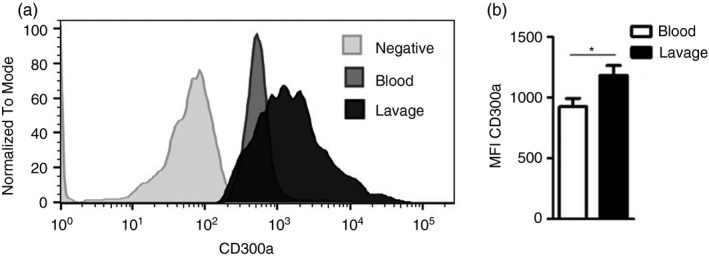
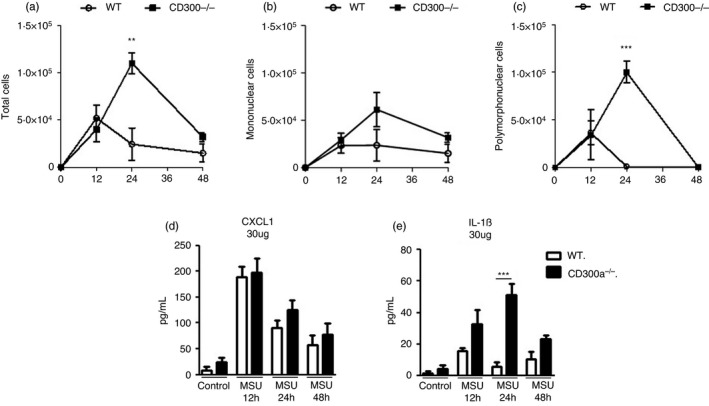
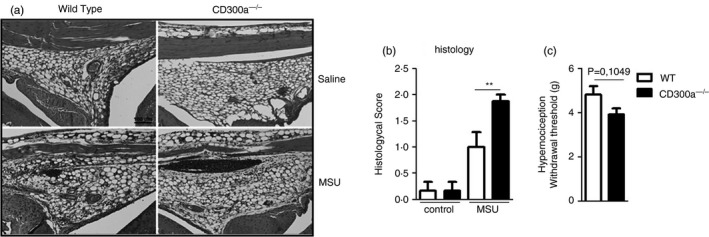
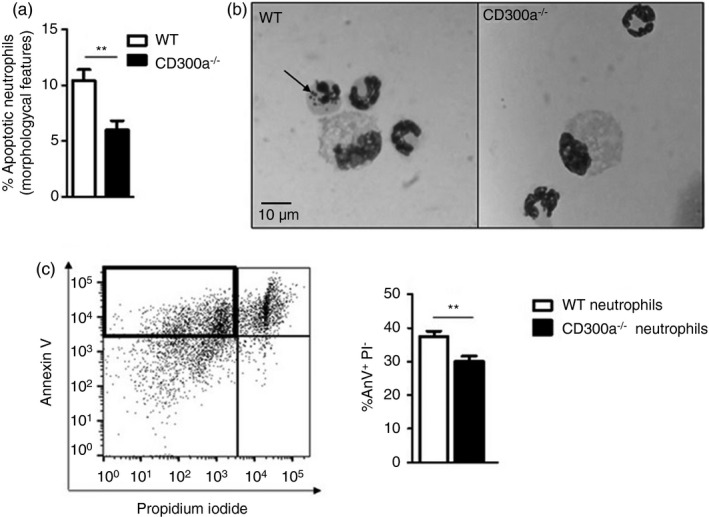
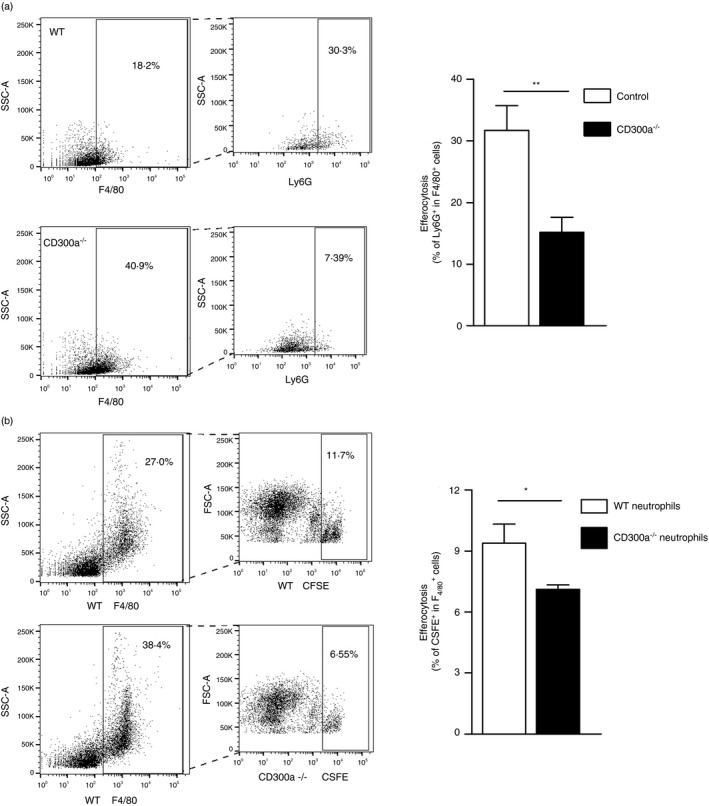
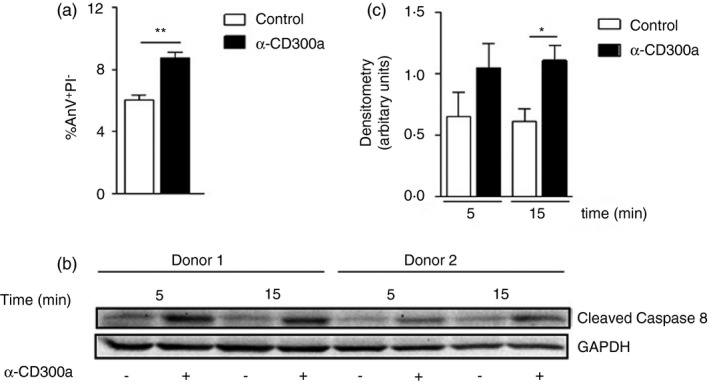
Gout is an inflammatory disease triggered by deposition of monosodium urate (MSU) crystals in the joints, resulting in high neutrophil influx and pain. Here, we studied the role of the inhibitory receptor CD300a in the resolution process in a murine model of gout. We found increased CD300a expression on neutrophils emigrated to the joint. When compared to WT mice, CD300a-/- mice had persistent neutrophil influx till 24 hr after MSU injection. This was associated with increased concentration of IL-1β and greater tissue damage in the joints of CD300a-/- mice. There was an increase in the percentage of apoptotic neutrophils in the synovial lavage of WT mice, as compared to CD300a-/- mice. This difference was reflected in the decline of efferocytic events in the synovial cavity of CD300a-/- mice 24 hr after MSU injection. A CD300a agonistic antibody was shown, for the first time, to increase apoptosis of human neutrophils, and this was associated with cleavage of caspase-8. In conclusion, our results reveal an important role of CD300a in the control of leucocyte infiltration, IL-1β production and caspase-8 cleavage in neutrophils, contributing to the resolution of inflammation triggered by MSU injection.
Keywords: CD300a; apoptosis; gout; neutrophilic inflammation; resolution of inflammation.
© 2021 John Wiley & Sons Ltd.
Conflict of interest statement
The authors declare no conflict of interest.
Figures
References
Publication types
MeSH terms
Substances
LinkOut - more resources
Full Text Sources
Other Literature Sources
Molecular Biology Databases
