The Transcriptomic Landscape of Mismatch Repair-Deficient Intestinal Stem Cells
- PMID: 34003775
- PMCID: PMC8318201
- DOI: 10.1158/0008-5472.CAN-20-2896
The Transcriptomic Landscape of Mismatch Repair-Deficient Intestinal Stem Cells
Abstract
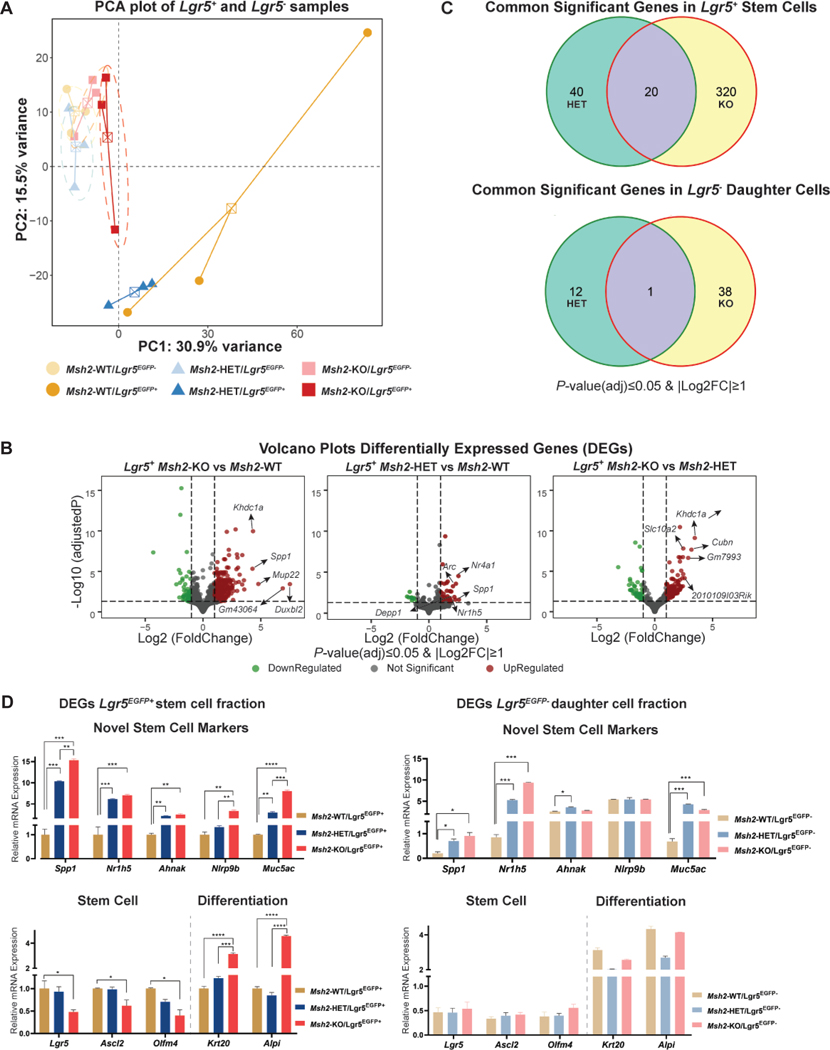
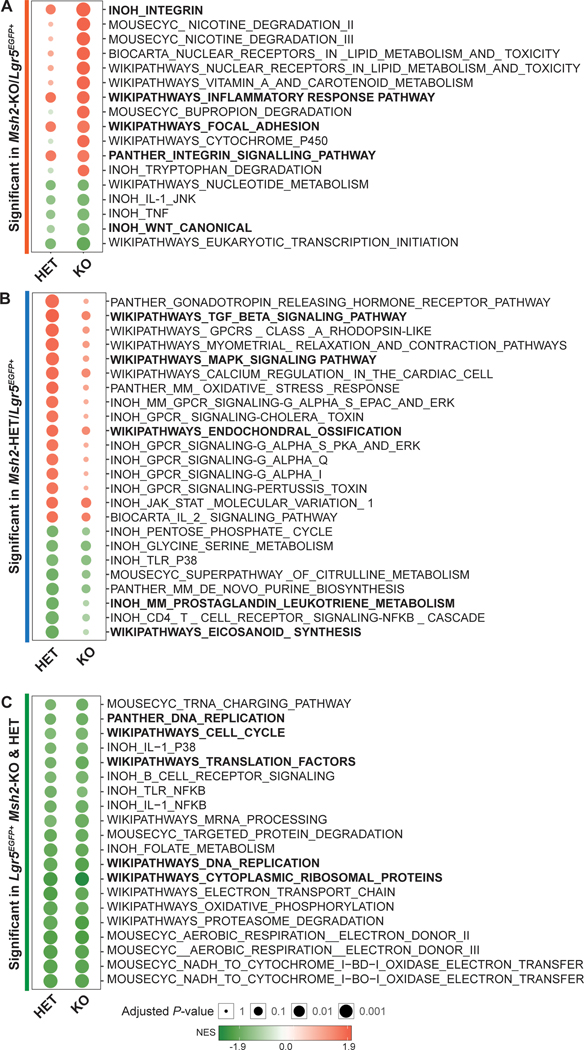
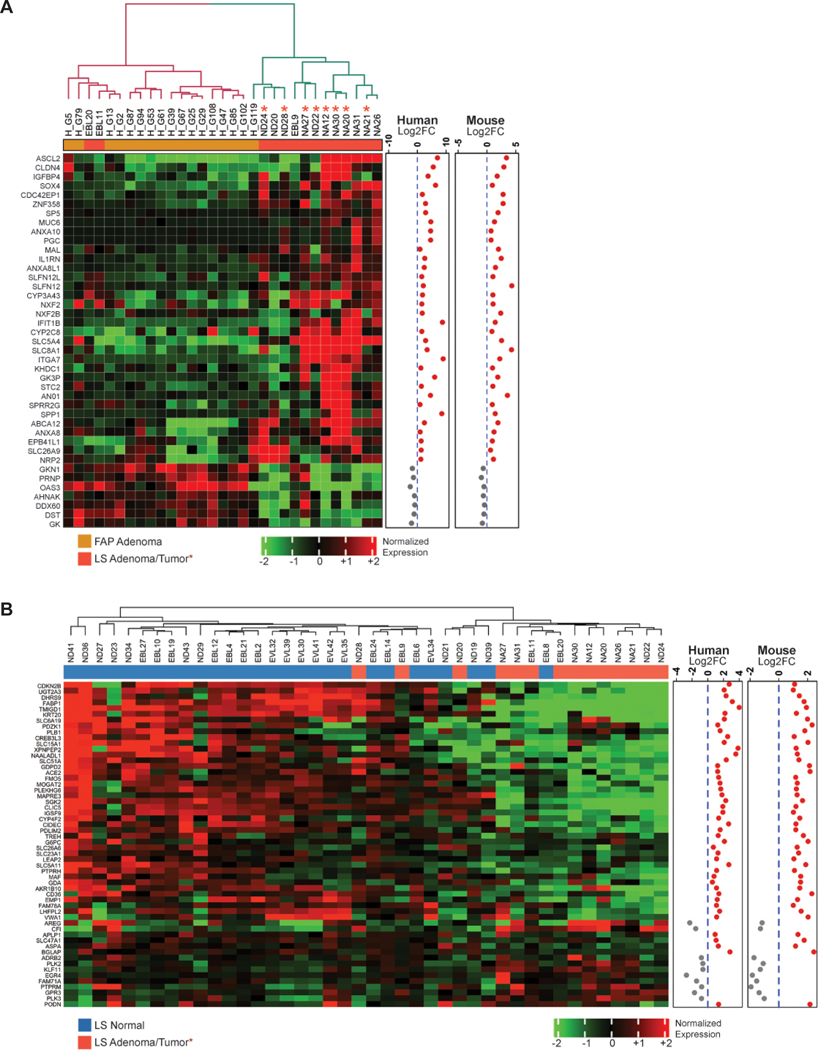
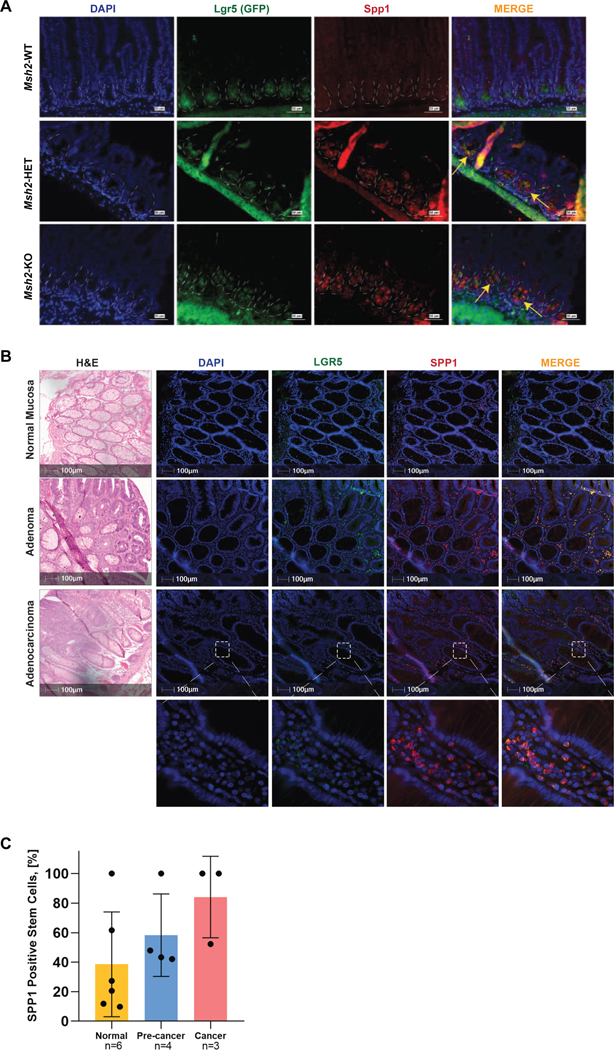
Lynch syndrome is the most common cause of hereditary colorectal cancer and is secondary to germline alterations in one of four DNA mismatch repair (MMR) genes. Here we aimed to provide novel insights into the initiation of MMR-deficient (MMRd) colorectal carcinogenesis by characterizing the expression profile of MMRd intestinal stem cells (ISC). A tissue-specific MMRd mouse model (Villin-Cre;Msh2 LoxP/LoxP ) was crossed with a reporter mouse (Lgr5-EGFP-IRES-creERT2) to trace and isolate ISCs (Lgr5+) using flow cytometry. Three different ISC genotypes (Msh2-KO, Msh2-HET, and Msh2-WT) were isolated and processed for mRNA-seq and mass spectrometry, followed by bioinformatic analyses to identify expression signatures of complete MMRd and haplo-insufficiency. These findings were validated using qRT-PCR, IHC, and whole transcriptomic sequencing in mouse tissues, organoids, and a cohort of human samples, including normal colorectal mucosa, premalignant lesions, and early-stage colorectal cancers from patients with Lynch syndrome and patients with familial adenomatous polyposis (FAP) as controls. Msh2-KO ISCs clustered together with differentiated intestinal epithelial cells from all genotypes. Gene-set enrichment analysis indicated inhibition of replication, cell-cycle progression, and the Wnt pathway and activation of epithelial signaling and immune reaction. An expression signature derived from MMRd ISCs successfully distinguished MMRd neoplastic lesions of patients with Lynch syndrome from FAP controls. SPP1 was specifically upregulated in MMRd ISCs and colocalized with LGR5 in Lynch syndrome colorectal premalignant lesions and tumors. These results show that expression signatures of MMRd ISC recapitulate the initial steps of Lynch syndrome carcinogenesis and have the potential to unveil novel biomarkers of early cancer initiation. SIGNIFICANCE: The transcriptomic and proteomic profile of MMR-deficient intestinal stem cells displays a unique set of genes with potential roles as biomarkers of cancer initiation and early progression.
©2021 American Association for Cancer Research.
Conflict of interest statement
Conflict of Interest Disclosures:
No other disclosures are reported.
Figures

References
-
- Lynch HT, Snyder CL, Shaw TG, et al. Milestones of Lynch syndrome: 1895–2015. Nat Rev Cancer 2015;15:181–94. - PubMed
-
- Fearon ER. Molecular genetics of colorectal cancer. Annu Rev Pathol 2011;6:479–507. - PubMed
-
- Bonadona V, Bonaiti B, Olschwang S, et al. Cancer risks associated with germline mutations in MLH1, MSH2, and MSH6 genes in Lynch syndrome. JAMA 2011;305:2304–10. - PubMed
Publication types
MeSH terms
Substances
Grants and funding
LinkOut - more resources
Full Text Sources
Other Literature Sources
Medical
Molecular Biology Databases
Research Materials
Miscellaneous