


Biomarkers as therapy monitoring for postmenopausal osteoporosis: a systematic review
- PMID: 34006294
- PMCID: PMC8130375
- DOI: 10.1186/s13018-021-02474-7
Biomarkers as therapy monitoring for postmenopausal osteoporosis: a systematic review
Abstract
Background: Biochemical markers of bone turnover (BTMs), such as bone alkaline phosphatase (bALP), procollagen type I N propeptide (PINP), serum cross-linked C-telopeptides of type I collagen (bCTx), and urinary cross-linked N-telopeptides of type I collagen (NTx), are commonly used for therapy monitoring purposes for osteoporotic patients. The present study evaluated the potential role of BTMs as therapy monitoring.
Methods: All randomized clinical trials (RCTs) comparing two or more pharmacological treatments for postmenopausal osteoporosis were accessed. Only studies that reported the value of bALP, PINP, bCTx, and NTx at last follow-up were included. A multivariate analysis was performed to assess associations between these biomarkers and clinical outcomes and rate of adverse events in patients with postmenopausal osteoporosis. A multiple linear model regression analysis through the Pearson product-moment correlation coefficient was used.
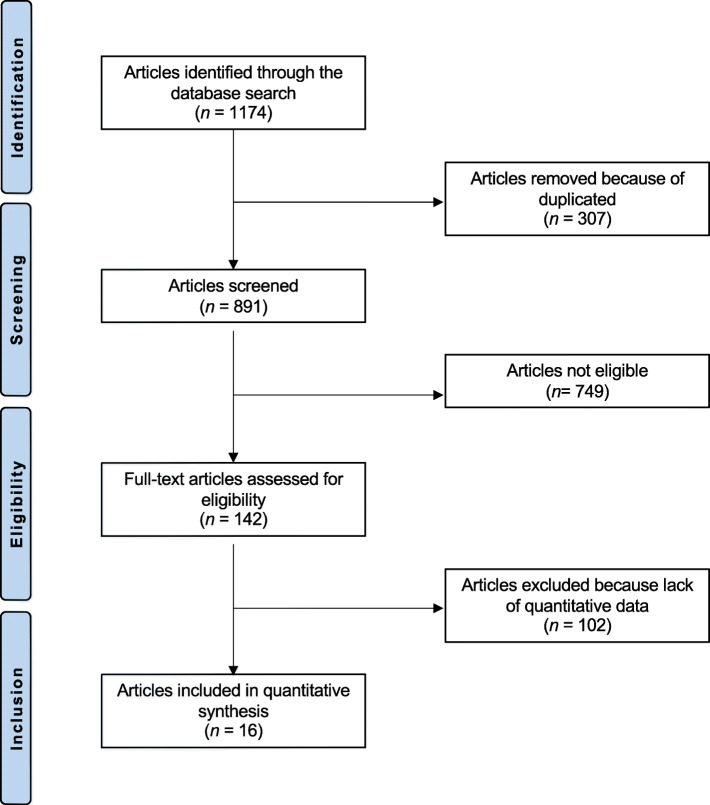
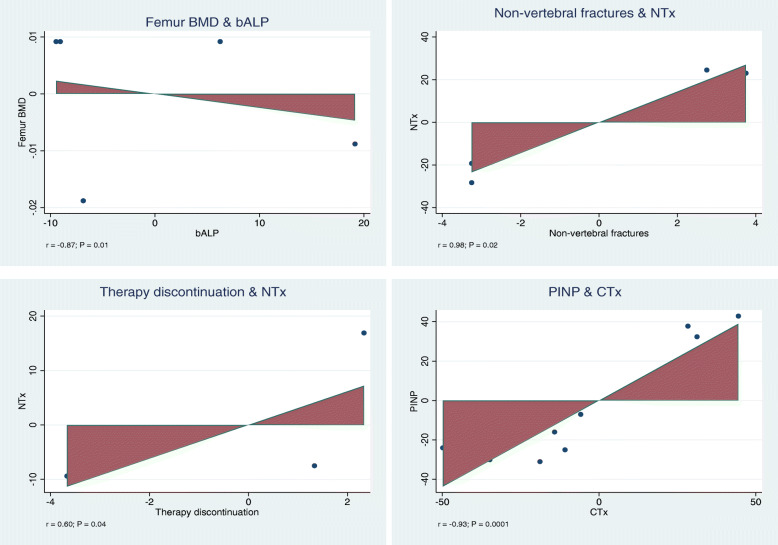
Results: A total of 16 RCTs (14,446 patients) were included. The median age was 67 years, and the median BMI 25.4 kg/m2. The median vertebral BMD was 0.82, hip BMD 0.79, and femur BMD 0.64 g/cm2. The ANOVA test found optimal within-group variance concerning mean age, body mass index, and BMD. Greater bALP was associated with lower femoral BMD (P = 0.01). Greater NTx was associated with a greater number of non-vertebral fractures (P = 0.02). Greater NTx was associated with greater rate of therapy discontinuation (P = 0.04). No other statistically significant associations were detected.
Conclusion: Our analysis supports the adoption of BTMs in therapy monitoring of osteoporotic patients.
Level of evidence: Level I, systematic review of RCTs.
Keywords: Biomarkers; Osteoporosis; Postmenopausal; Therapy monitoring.
Conflict of interest statement
The authors declare that they have no conflicts of interest.
Figures
References
Publication types
MeSH terms
Substances
LinkOut - more resources
Full Text Sources
Other Literature Sources
Medical
Research Materials
