


Neuroprotective Phytochemicals in Experimental Ischemic Stroke: Mechanisms and Potential Clinical Applications
- PMID: 34007405
- PMCID: PMC8102108
- DOI: 10.1155/2021/6687386
Neuroprotective Phytochemicals in Experimental Ischemic Stroke: Mechanisms and Potential Clinical Applications
Abstract
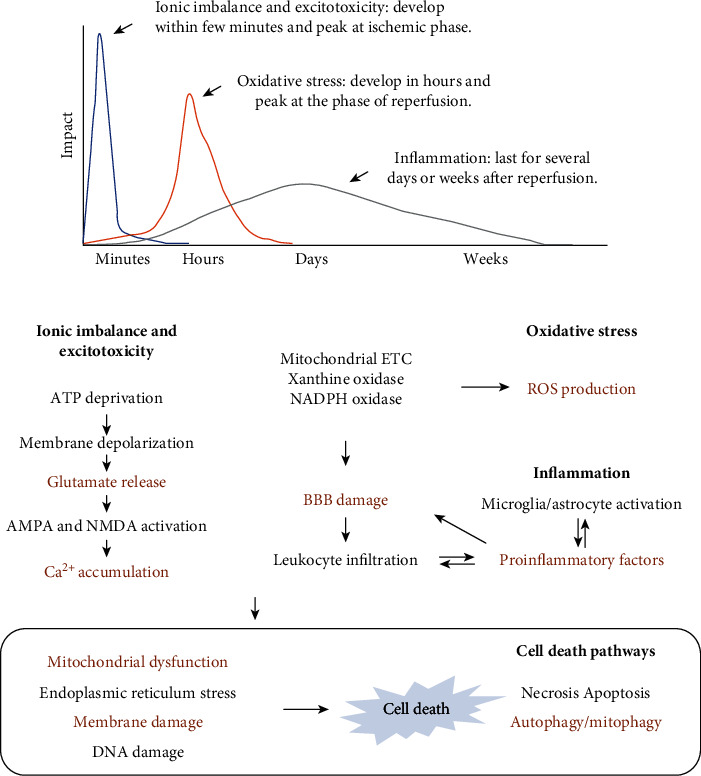
Ischemic stroke is a challenging disease with high mortality and disability rates, causing a great economic and social burden worldwide. During ischemic stroke, ionic imbalance and excitotoxicity, oxidative stress, and inflammation are developed in a relatively certain order, which then activate the cell death pathways directly or indirectly via the promotion of organelle dysfunction. Neuroprotection, a therapy that is aimed at inhibiting this damaging cascade, is therefore an important therapeutic strategy for ischemic stroke. Notably, phytochemicals showed great neuroprotective potential in preclinical research via various strategies including modulation of calcium levels and antiexcitotoxicity, antioxidation, anti-inflammation and BBB protection, mitochondrial protection and antiapoptosis, autophagy/mitophagy regulation, and regulation of neurotrophin release. In this review, we summarize the research works that report the neuroprotective activity of phytochemicals in the past 10 years and discuss the neuroprotective mechanisms and potential clinical applications of 148 phytochemicals that belong to the categories of flavonoids, stilbenoids, other phenols, terpenoids, and alkaloids. Among them, scutellarin, pinocembrin, puerarin, hydroxysafflor yellow A, salvianolic acids, rosmarinic acid, borneol, bilobalide, ginkgolides, ginsenoside Rd, and vinpocetine show great potential in clinical ischemic stroke treatment. This review will serve as a powerful reference for the screening of phytochemicals with potential clinical applications in ischemic stroke or the synthesis of new neuroprotective agents that take phytochemicals as leading compounds.
Copyright © 2021 Hui Xu et al.
Conflict of interest statement
The authors declare no conflicts of interest.
Figures
References
Publication types
MeSH terms
Substances
LinkOut - more resources
Full Text Sources
Other Literature Sources
Medical
Miscellaneous
