


Improved Mild Closed Head Traumatic Brain Injury Outcomes With a Brain-Computer Interface Amplified Cognitive Remediation Training
- PMID: 34007777
- PMCID: PMC8121126
- DOI: 10.7759/cureus.14996
Improved Mild Closed Head Traumatic Brain Injury Outcomes With a Brain-Computer Interface Amplified Cognitive Remediation Training
Abstract
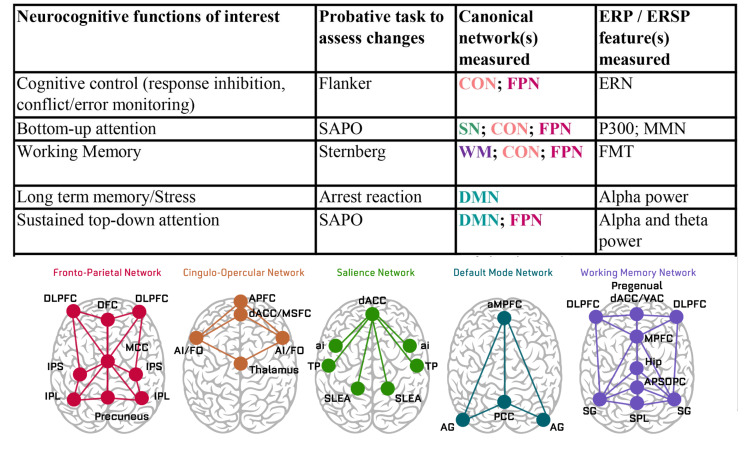
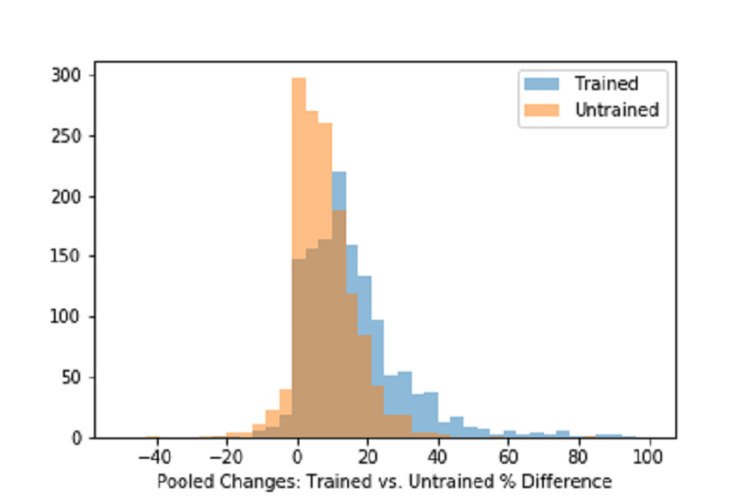
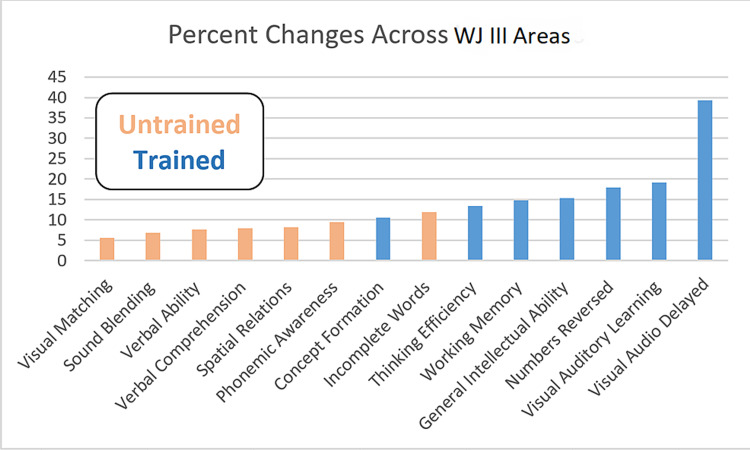
This study is a retrospective chart review of 200 clients who participated in a non-verbal restorative cognitive remediation training (rCRT) program between 2012 and 2020. Each client participated in the program for about 16 weeks, and the study as a whole occurred over a five-year period. The program was applied to effect proper neural functional remodeling needed to support resilient, flexible, and adaptable behaviors after encountering a mild closed head traumatic brain injury (mTBI). The rCRT program focused on improving functional performance in executive cognitive control networks as defined by fMRI studies. All rCRT activities were delivered in a semi-game-like manner, incorporating a brain-computer interface (BCI) that provided in-the-moment neural network performance integrity metrics (nPIMs) used to adjust the level of play required to properly engage long-term potentiation (LTP) and long-term depression (LTD) network learning rules. This study reports on t-test and Reliable Change Index (RCI) changes found within individual cognitive abilities' performance metrics derived from the Woodcock-Johnson Cognitive Abilities III Test. We compared pre- and post-scores from seven cognitive abilities considered dependent on executive cognitive control networks against seven non-executive control abilities. We observed significant improvements (p < 10-4) with large Cohen's deffect sizes (0.78-1.20) across 13 of 14 cognitive ability domains with a medium effect size (0.49) on the remaining one. The mean percent change for the pooled trained domain was double that observed for the pooled untrained domain, at 17.2% versus 8.3%, respectively. To further adjust for practice effects, practice effect RCI values were computed and further supported the effectiveness of the rCRT (trained RCI 1.4-4.8; untrained RCI 0.-08-0.75).
Keywords: bci; brain computer interface; cognitive remediation training; executive cognitive control; mtbi; qeeg; quantitative electroencephalography; traumatic brain injury.
Copyright © 2021, Cripe et al.
Conflict of interest statement
The authors have declared financial relationships, which are detailed in the next section.
Figures
References
-
- Report to Congress on mild traumatic brain injury in the United States; steps to prevent a serious public health problem. Frieden TR, Houry D, Baldwin G. https://stacks.cdc.gov/view/cdc/6544 2015
-
- The heterogeneity of mild traumatic brain injury: where do we stand? Tellier A, Marshall SC, Wilson KG, Smith A, Perugini M, Stiell IG. Brain Inj. 2009;23:879–887. - PubMed
-
- Traumatic brain injury: a disease process, not an event. Masel BE, DeWitt DS. J Neurotrauma. 2010;27:1529–1540. - PubMed
-
- The effect of moderate to severe traumatic brain injury (TBI) on different aspects of memory: a selective review. Vakil E. J Clin Exp Neuropsychol. 2005;27:977–1021. - PubMed
-
- Intervention for executive functions after traumatic brain injury: a systematic review, meta-analysis and clinical recommendations. Kennedy MR, Coelho C, Turkstra L, et al. Neuropsychol Rehabil. 2008;18:257–299. - PubMed
LinkOut - more resources
Full Text Sources
Other Literature Sources