


Saffron: A potential drug-supplement for severe acute respiratory syndrome coronavirus (COVID) management
- PMID: 34007917
- PMCID: PMC8118646
- DOI: 10.1016/j.heliyon.2021.e07068
Saffron: A potential drug-supplement for severe acute respiratory syndrome coronavirus (COVID) management
Erratum in
-
Corrigendum to "Saffron: A potential drug-supplement for severe acute respiratory syndrome coronavirus (COVID) management" [Heliyon Volume 7, Issue 5, May 2021, Article e07068].Heliyon. 2025 Jun 20;11(12):e43520. doi: 10.1016/j.heliyon.2025.e43520. eCollection 2025 Jul. Heliyon. 2025. PMID: 41216549 Free PMC article.
Abstract
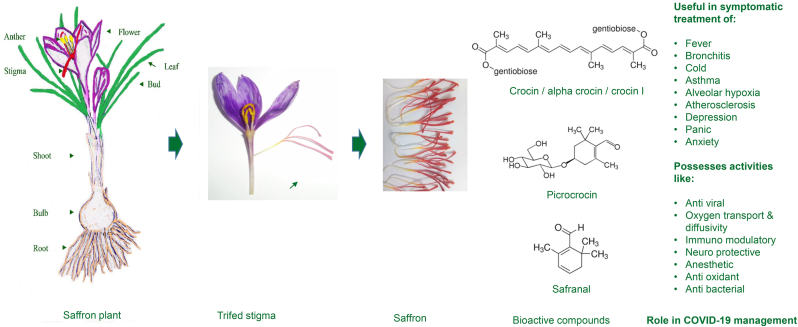
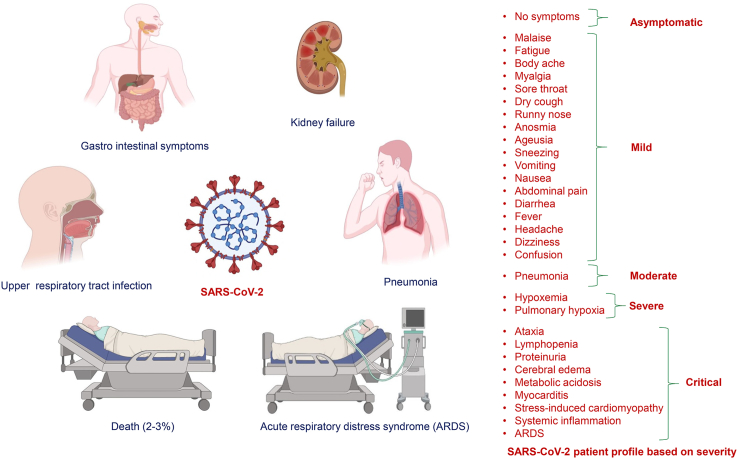
Severe acute respiratory syndrome coronavirus 2, SARS-CoV-2 (COVID-19), came as a significant health care challenge for humans in 2019-20. Based on recent laboratory and epidemiological studies, a growing list of mutations in the virus has the potential to enhance its transmission or help it evade the immune response. To further compound the problems, there are considerable challenges to the availability of effective, affordable, safe vaccines on a mass scale. These impediments have led some to explore additional options available in traditional medicines, especially immune-boosting natural products. Saffron has been used for centuries to treat fever, bronchitis, cold and other immune, respiratory disorders. Herein, we discuss the potential role of saffron during and after COVID-19 infection, focusing on immunomodulation, respiratory, renal, and cardiovascular functions. As a nutraceutical or drug supplement, it can alleviate the magnitude of COVID-19 symptoms in patients. The anti-inflammatory, antioxidant, and other medicinal properties attributed to saffron bioactive compounds can help in both pre-and post-infection management strategies. The abnormalities associated with COVID-19 survivors include anxiety, depression, sleep disturbances, and post-traumatic stress disorder. Saffron can help manage these post-hospitalization abnormalities (sub-acute and chronic) too, owing to its anti-depressant property. It can help common people boost immunity and manage depression, stress and anxiety caused due to prolonged lockdown, isolation or quarantine.
Keywords: COVID-19; Coronavirus; Crocus sativus L.; Depression; Herbal medicines; Immunity; Lockdown; Pandemics; Saffron; Stress.
© 2021 Published by Elsevier Ltd.
Conflict of interest statement
The authors declare no conflict of interest.
Figures
References
-
- Abdullaev F.I. Cancer chemopreventive and tumoricidal properties of saffron (Crocus sativus L.) Exp. Biol. Med. 2002;227(1):20–25. - PubMed
-
- Abdullaev F.I., Espinosa-Aguirre J.J. Biomedical properties of saffron and its potential use in cancer therapy and chemoprevention trials. Cancer Detect. Prev. 2004;28(6):426–432. - PubMed
-
- Ahmad A.S., Ansari M.A., Ahmad M., Saleem S., Yousuf S., Hoda M.N., Islam F. Neuroprotection by crocetin in a hemi-parkinsonian rat model. Pharmacol. Biochem. Behav. 2005;81(4):805–813. - PubMed
-
- Akhondzadeh S., Sabet M.S., Harirchian M.H., Togha M., Cheraghmakani H., Razeghi S. A 22-week, multicenter, randomized, double-blind controlled trial of Crocus sativus in the treatment of mild-to-moderate Alzheimer’s disease. Psychopharmacol. 2010;207(4):637–643. - PubMed
Publication types
LinkOut - more resources
Full Text Sources
Other Literature Sources
Research Materials
Miscellaneous
