. 2021 May 19;16(5):e0245031.
doi: 10.1371/journal.pone.0245031. eCollection 2021.

The Biobanque québécoise de la COVID-19 (BQC19)-A cohort to prospectively study the clinical and biological determinants of COVID-19 clinical trajectories

Affiliations

The Biobanque québécoise de la COVID-19 (BQC19)-A cohort to prospectively study the clinical and biological determinants of COVID-19 clinical trajectories

Karine Tremblay et al. PLoS One. .

Abstract

SARS-CoV-2 infection causing the novel coronavirus disease 2019 (COVID-19) has been responsible for more than 2.8 million deaths and nearly 125 million infections worldwide as of March 2021. In March 2020, the World Health Organization determined that the COVID-19 outbreak is a global pandemic. The urgency and magnitude of this pandemic demanded immediate action and coordination between local, regional, national, and international actors. In that mission, researchers require access to high-quality biological materials and data from SARS-CoV-2 infected and uninfected patients, covering the spectrum of disease manifestations. The "Biobanque québécoise de la COVID-19" (BQC19) is a pan-provincial initiative undertaken in Québec, Canada to enable the collection, storage and sharing of samples and data related to the COVID-19 crisis. As a disease-oriented biobank based on high-quality biosamples and clinical data of hospitalized and non-hospitalized SARS-CoV-2 PCR positive and negative individuals. The BQC19 follows a legal and ethical management framework approved by local health authorities. The biosamples include plasma, serum, peripheral blood mononuclear cells and DNA and RNA isolated from whole blood. In addition to the clinical variables, BQC19 will provide in-depth analytical data derived from the biosamples including whole genome and transcriptome sequencing, proteome and metabolome analyses, multiplex measurements of key circulating markers as well as anti-SARS-CoV-2 antibody responses. BQC19 will provide the scientific and medical communities access to data and samples to better understand, manage and ultimately limit, the impact of COVID-19. In this paper we present BQC19, describe the process according to which it is governed and organized, and address opportunities for future research collaborations. BQC19 aims to be a part of a global communal effort addressing the challenges of COVID-19.


Conflict of interest statement

The authors have declared that no competing interests exist.

Figures
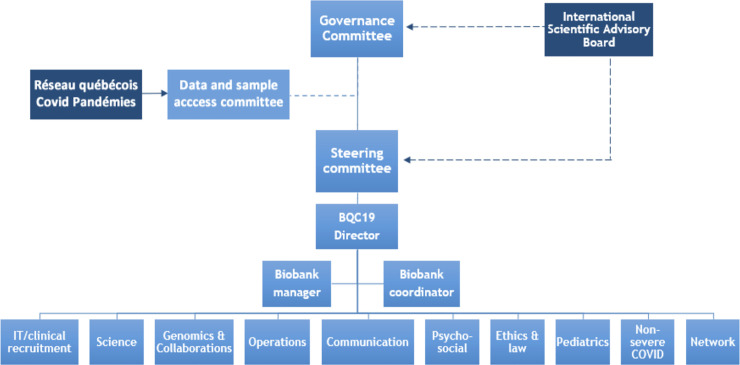
Fig 1
Fig 1. BQC19 organizational chart.
BQC19 is a biobank with its own management and governance structure. The governance includes a Governing Committee, a Steering Committee, an independent Data and Sample Access Committee, and an international Scientific Advisory Board (Antoine Flahault, MD, Ph.D., Director, Institut de santé globale, Université de Genève, Switzerland (President); Andrew D. Badley, MD, Principal Investigator, Mayo COVID19 Biobank, Rochester, Minnesota, USA; Mark Daly, Ph.D., Co-director, Program in Medical and Population Genetics, Broad Institute, Cambridge, Massachusetts, USA; Daniel Douek, MD, Ph.D., Chief of the Human Immunology Section, NIAID, NIH, Bethesda, Maryland, USA; Mette Hartlev, LLM, Ph.D., LLD, Professor, Centre for Legal Studies in Welfare and Market, Denmark; Gary Kobinger, Ph.D., Canada Research Chair in immunotherapy and innovative vaccine platforms, Centre de recherche du CHU de Québec, Université Laval, Quebec, Canada; Rosanna Peeling, Ph.D., London School of Hygiene and Tropical Medicine, London, UK, Professor/Chair of Diagnostics Research, Director of the International Diagnostic Centre (IDC)). It also includes several sub-committees responsible for mandates ranging from scientific priorities to communication and ethical, legal and social issues. The governance of BQC19 is framed in its Management Framework. Terms of References for accessing samples and data collected within the framework of BQC19 are being completed.
Fig 2
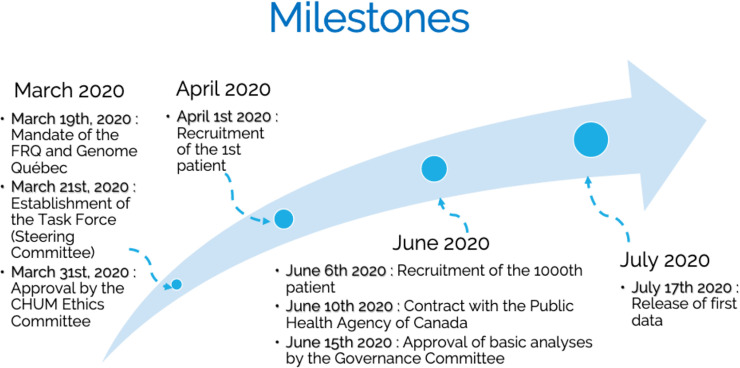
Fig 2. BQC19 milestones.
The key BQC19 milestones achieved since the start of its mandate received on March 19th, 2020 leading to the release of the first set of data (July 17, The key BQC19 milestones achieved since the start of its mandate received on March 19th, 2020 leading to the release of the first set of data (July 17, 2020).
Fig 3
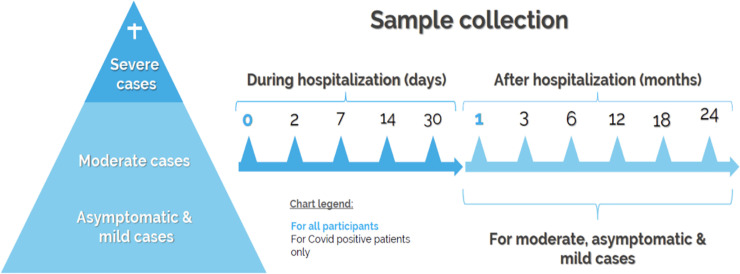
Fig 3. BQC19 study design.
Schematic representation of the BQC19 study design. For hospitalized patients (hospitalized cohort) samples are collected during hospitalization at the days indicated (darker blue) and following hospitalization at the months indicated (paler blue). For asymptomatic, mild and moderate disease out-patients (non-hospitalized cohort), samples are collected at the indicated time points (pale blue). Samples to be collected by all participants (pale blue) and COVID-19 + only (black).
Fig 4
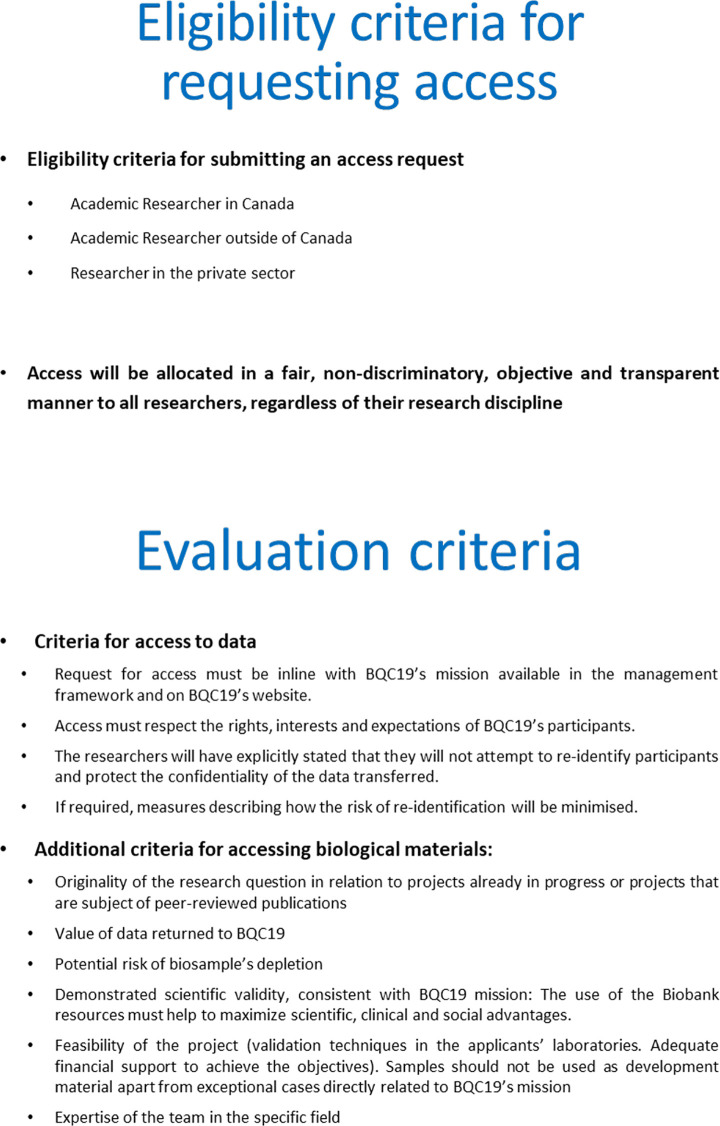
Fig 4. Eligibility and evaluation criteria for BQC19 access.
The figure lists the general eligibility and evaluation criteria to obtain access to BQC19 biological material and data.
Fig 5
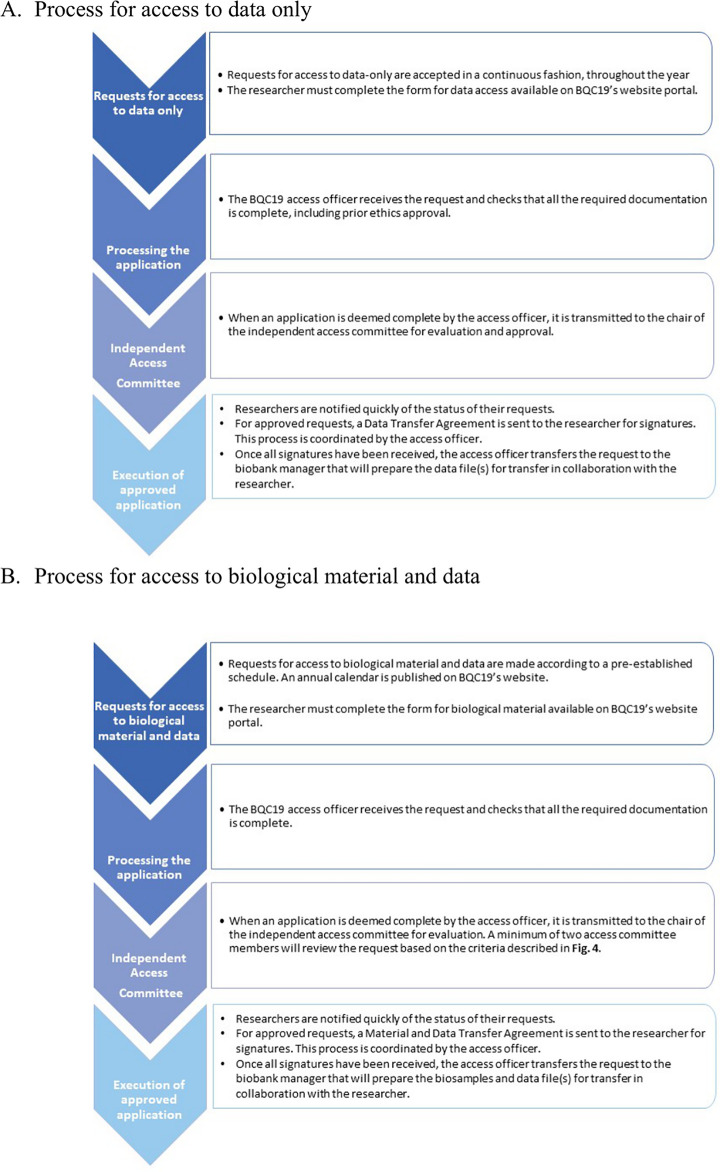
Fig 5. Flow chart of BQC19 access process.
The chart illustrates the steps required to gain access to BQC19 data only (A) or biological material and data (B).
Fig 6
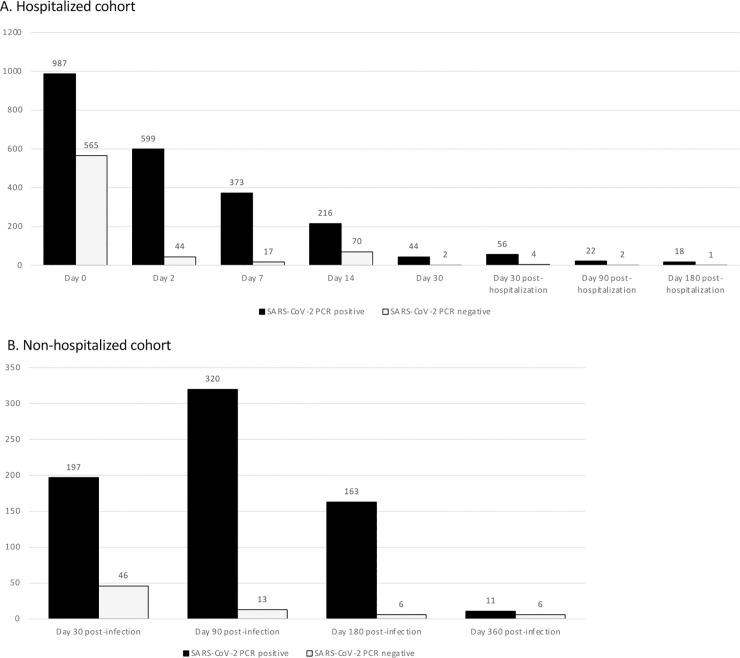
Fig 6. Longitudinal distribution of BQC19 participants.
The number of participants to the hospitalized cohort (A) and to the non-hospitalized cohort (B) at each time point of sampling is given above each bar. Of note, for the hospitalized cohort, follow-up visits are calculated after patient hospital discharge and for the non-hospitalized cohort, follow-up visits are calculated after patients diagnosis (PCR confirmed). Black bars represent SARS-CoV-2 PCR positive cases while grey bars represent SARS-CoV-2 PCR negative controls. Data as of March 19, 2021.

References

    1. Marshall JC, Murthy S, Diaz J, Adhikari NK, Angus DC, Arabi YM, et al. A minimal common outcome measure set for COVID-19 clinical research. The Lancet Infectious Diseases. 2020. August 1;20(8):e192–7. 10.1016/S1473-3099(20)30483-7 - DOI - PMC - PubMed
    1. Heyer E, Tremblay M. Variability of the genetic contribution of Quebec population founders associated to some deleterious genes. Am J Hum Genet. 1995. April;56(4):970–8. - PMC - PubMed
    1. Scriver CR. Human genetics: lessons from Quebec populations. Annu Rev Genomics Hum Genet. 2001;2:69–101. 10.1146/annurev.genom.2.1.69 - DOI - PubMed
    1. Braekeleer MD. Hereditary Disorders in Saguenay-Lac-St-Jean (Quebec, Canada). HHE. 1991;41(3):141–6. - PubMed
    1. Laprise C. The Saguenay-Lac-Saint-Jean asthma familial collection: the genetics of asthma in a young founder population. Genes Immun. 2014. April;15(4):247–55. 10.1038/gene.2014.12 - DOI - PubMed

Publication types