Review
. 2021 Sep 5:417:125938.
doi: 10.1016/j.jhazmat.2021.125938. Epub 2021 Apr 27.

COVID-19 discarded disposable gloves as a source and a vector of pollutants in the environment

Affiliations
Review

COVID-19 discarded disposable gloves as a source and a vector of pollutants in the environment

Katarzyna Jędruchniewicz et al. J Hazard Mater. .

Abstract

The appearance of the virus SARS-CoV-2 at the end of 2019 and its spreading all over the world has caused global panic and increase of personal protection equipment usage to protect people against infection. Increased usage of disposable protective gloves, their discarding to random spots and getting to landfills may result in significant environmental pollution. The knowledge concerning possible influence of gloves and potential of gloves debris on the environment (water, soil, etc.), wildlife and humans is crucial to predict future consequences of disposable gloves usage caused by the pandemic. This review focuses on the possibility of chemical release (heavy metals and organic pollutants) from gloves and gloves materials, their adsorptive properties in terms of contaminants accumulation and effects of gloves degradation under environmental conditions.

Keywords: COVID-19; Disposable gloves; Pandemic; Plastics; Pollution; Risk.


Conflict of interest statement

The authors declare that they have no known competing financial interests or personal relationships that could have appeared to influence the work reported in this paper.

Figures
ga1
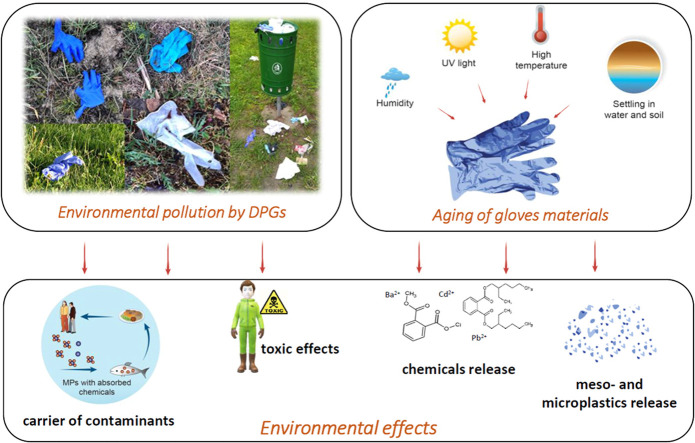
Graphical abstract
Fig. 1
Fig. 1
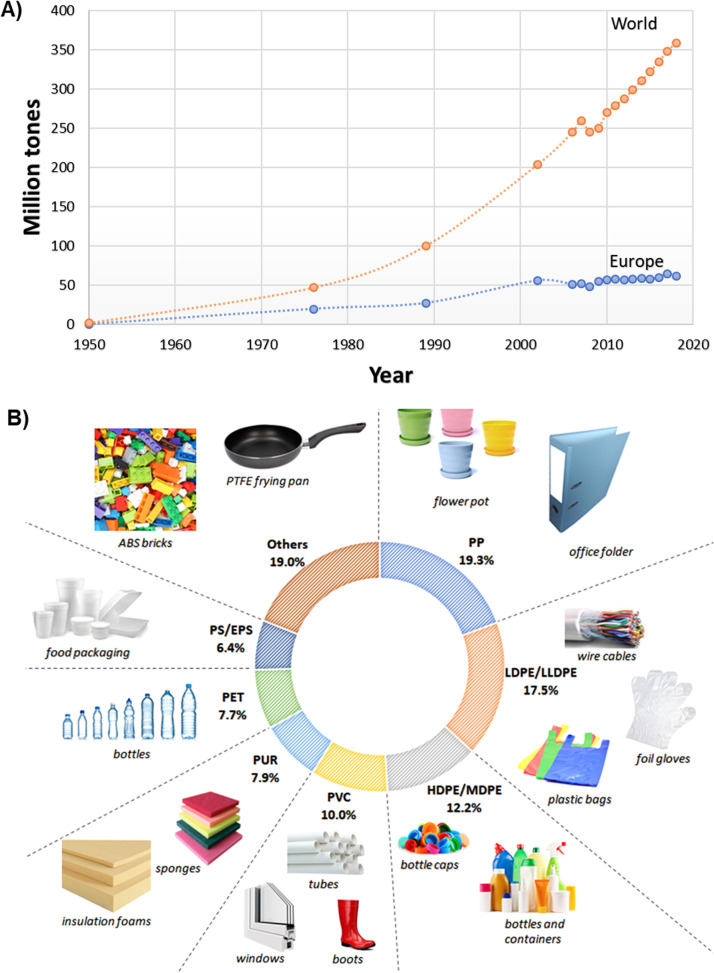
(A) World and Europe production of plastics (Geyer et al., 2017); (B) Plastics demand distribution by their types in 2018 and examples of particular plastics application (ABS – acrylonitrile butadiene styrene, HDPE/MDPE – high density polyethylene/medium density polyethylene, LDPE/LLDPE – low density polyethylene/linear low density polyethylene, PET – polyethylene terephthalate, PP – polypropylene, PS/EPS – polystyrene/expanded polystyrene, PTFE – polytetrafluoroethylene, PUR – polyurethane, PVC – polyvinylchloride).
Fig. 2
Fig. 2
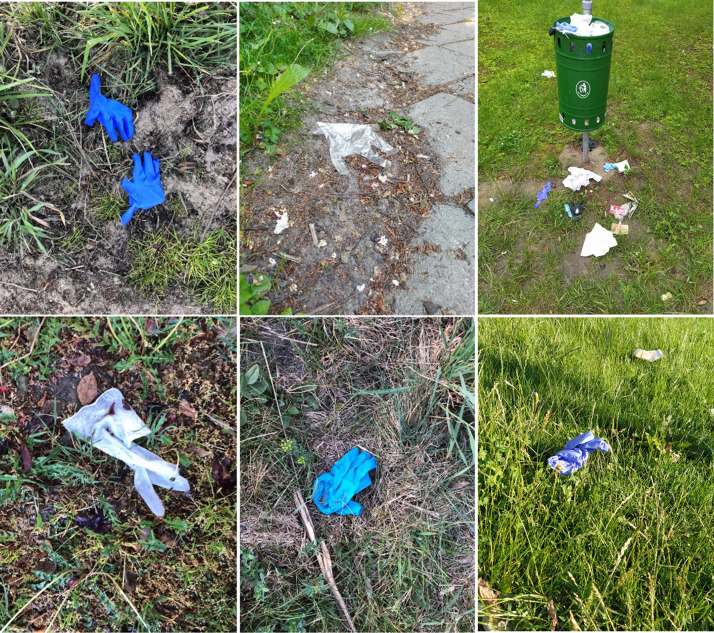
The examples of discarded DPGs in random spots in Lublin and Poznań Cites (Poland).
Fig. 3
Fig. 3
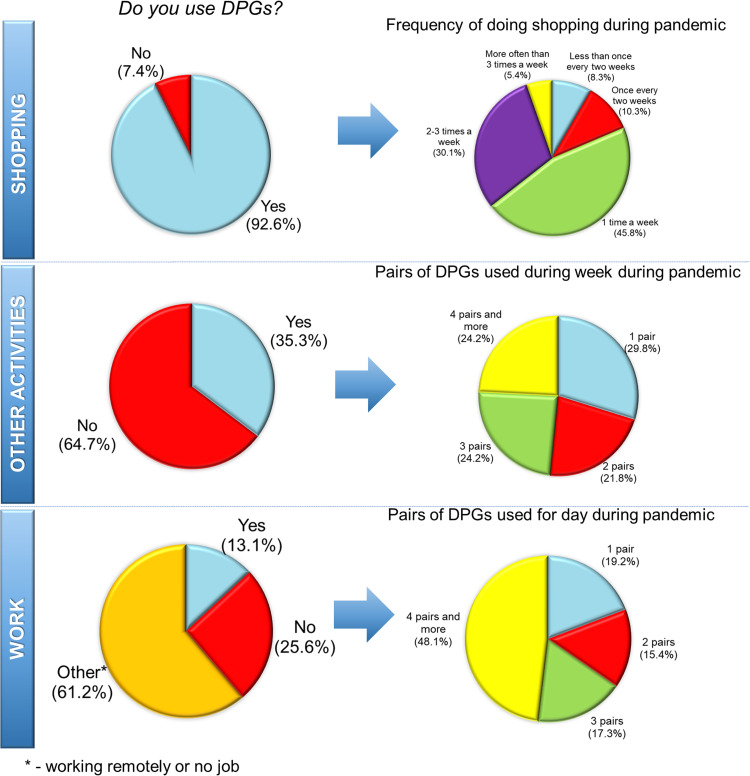
Diagrams presenting the usage of DPGs during pandemic (data come from the survey performed at the beginning of May 2020).
Fig. 4
Fig. 4
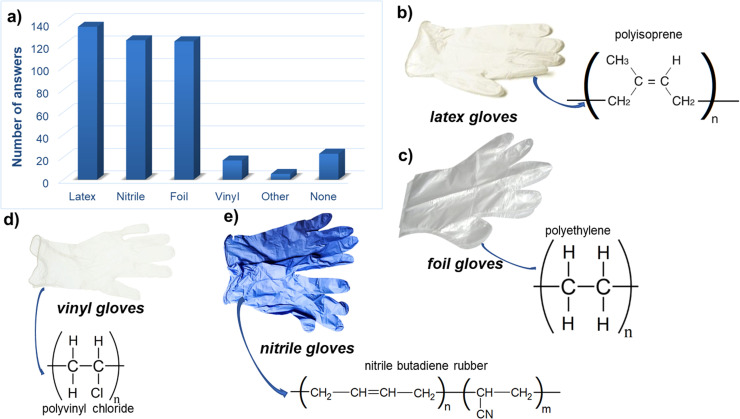
The survey summary concerning the DPGs types usage during a pandemic (n = 312) (a) and types of mainly used gloves: latex (b), foil (c), vinyl (d), and nitrile (e).
Fig. 5
Fig. 5
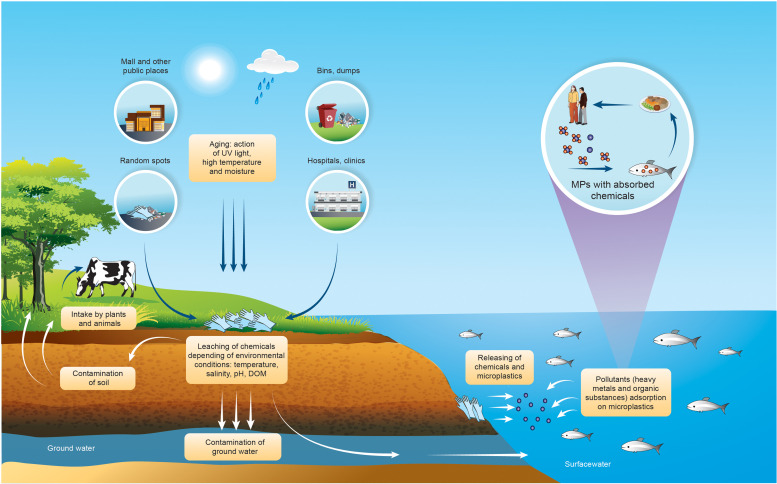
The routes of possible environmental pollution by DPGs.
Fig. 6
Fig. 6
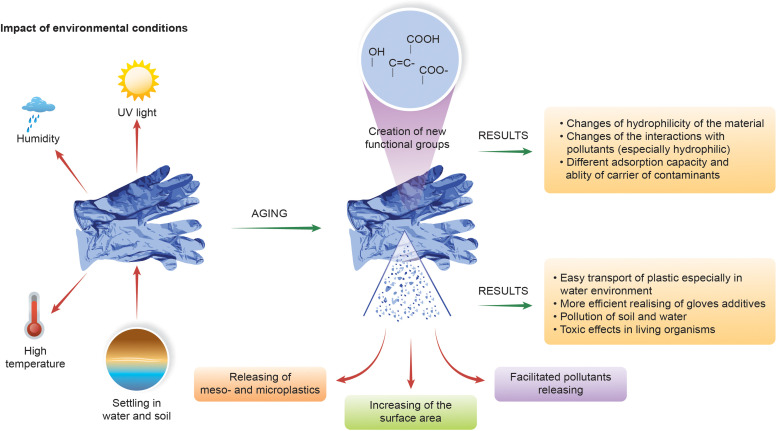
The impact of environmental conditions on gloves materials.

References

    1. Acter T., Uddin N., Das J., Akhter A., Choudhury T.R., Kim S. Evolution of severe acute respiratory syndrome coronavirus 2 (SARS-CoV-2) as coronavirus disease 2019 (COVID-19) pandemic: a global health emergency. Sci. Total Environ. 2020;730 doi: 10.1016/j.scitotenv.2020.138996. - DOI - PMC - PubMed
    1. Agrawal A.A., Konno K. Latex: a model for understanding mechanisms, ecology, and evolution of plant defense against herbivory. Annu. Rev. Ecol. Evol. Syst. 2009;40:311–331. doi: 10.1146/annurev.ecolsys.110308.120307. - DOI
    1. Akhbarizadeh R., Dobaradaran S., Schmidt T.C., Nabipour I., Spitz J. Worldwide bottled water occurrence of emerging contaminants: a review of the recent scientific literature. J. Hazard. Mater. 2020;392 doi: 10.1016/j.jhazmat.2020.122271. - DOI - PubMed
    1. Alam O., Wang S., Lu W. Heavy metals dispersion during thermal treatment of plastic bags and its recovery. J. Environ. Manag. 2018;212:367–374. doi: 10.1016/j.jenvman.2018.02.034. - DOI - PubMed
    1. Alam O., Yang L., Yanchun X. Determination of the selected heavy metal and metalloid contents in various types of plastic bags. J. Environ. Health Sci. Eng. 2019;17:161–170. doi: 10.1007/s40201-019-00337-2. - DOI - PMC - PubMed