


Involvement of the dopaminergic system in the reward-related behavior of pregabalin
- PMID: 34011976
- PMCID: PMC8134490
- DOI: 10.1038/s41598-021-88429-8
Involvement of the dopaminergic system in the reward-related behavior of pregabalin
Abstract
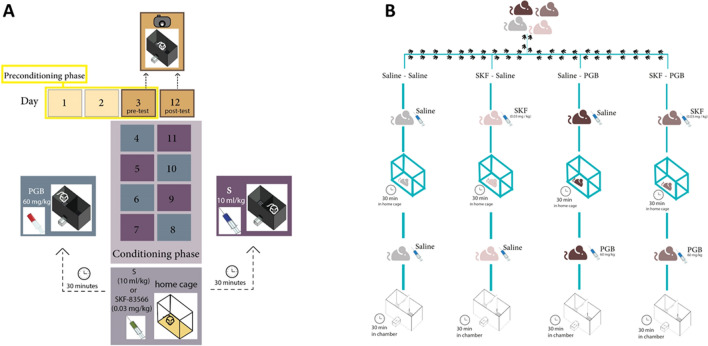
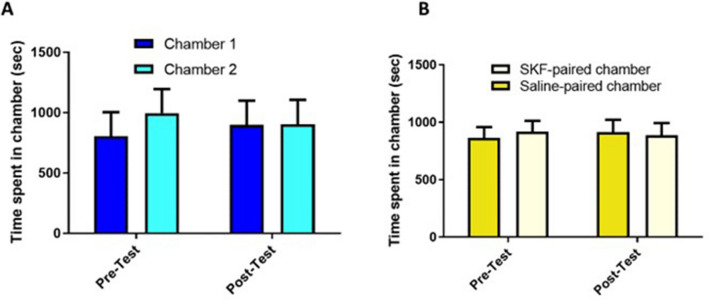
There has been an increase in cases of drug addiction and prescription drug abuse worldwide. Recently, pregabalin abuse has been a focus for many healthcare agencies, as highlighted by epidemiological studies. We previously evaluated the possibility of pregabalin abuse using the conditioned place preference (CPP) paradigm. We observed that a 60 mg/kg dose could induce CPP in mice and that pregabalin-rewarding properties were mediated through glutamate neurotransmission. Notably, the dopaminergic reward circuitry is also known to play a crucial role in medication-seeking behavior. Therefore, this study aimed to explore the possible involvement of dopaminergic receptor-1 in pregabalin-induced CPP. Mice were randomly allocated to receive saline or the dopamine-1 receptor antagonist SKF-83566 (0.03 mg/kg, intraperitoneal). After 30 min, the mice received either saline or pregabalin (60 mg/kg) during the conditioning phase. Among the control groups that received saline or SKF-83566, the time spent in the two conditioning chambers was not significantly altered. However, among the pregabalin-treated group, there was a marked increase in the time spent in the drug-paired chamber compared to the time spent in the vehicle-paired chamber. Notably, blocking dopamine-1 receptors with SKF-83566 completely prevented pregabalin-induced place preference, thus demonstrating the engagement of the dopaminergic system in pregabalin-induced reward-related behavior.
Conflict of interest statement
The authors declare no competing interests.
Figures

References
-
- European Monitoring Centre for Drugs and Drug Addiction, E. P. O. E. European Drug Report 2014: Trends and developments (2014).
Publication types
MeSH terms
Substances
LinkOut - more resources
Full Text Sources
Other Literature Sources
