


Supernumerary and Supplementary Teeth in a Non-syndromic Patients
- PMID: 34012205
- PMCID: PMC8116093
- DOI: 10.5455/medarh.2021.75.78-81
Supernumerary and Supplementary Teeth in a Non-syndromic Patients
Abstract
Background: Irregularities in the number of teeth can also occur in deciduous and in permanent dentition.
Objective: The aim of this article is to report the case of a seven years old child and a 27 years old male patient affected by a numeric dental anomaly.
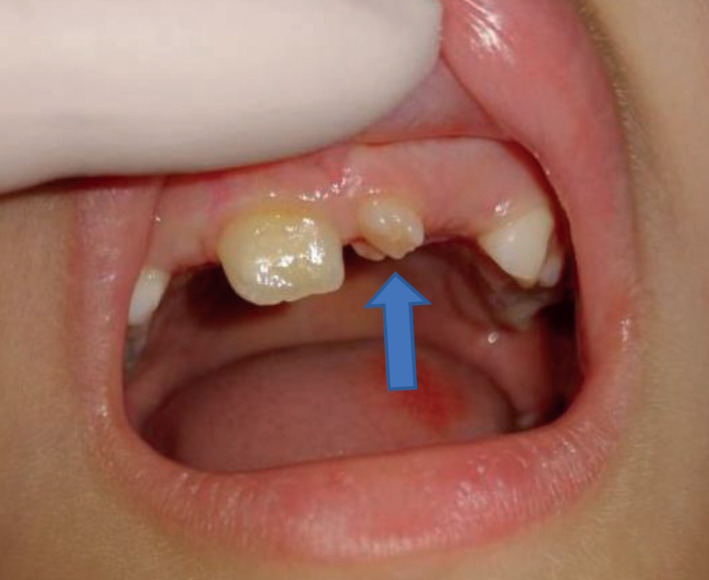
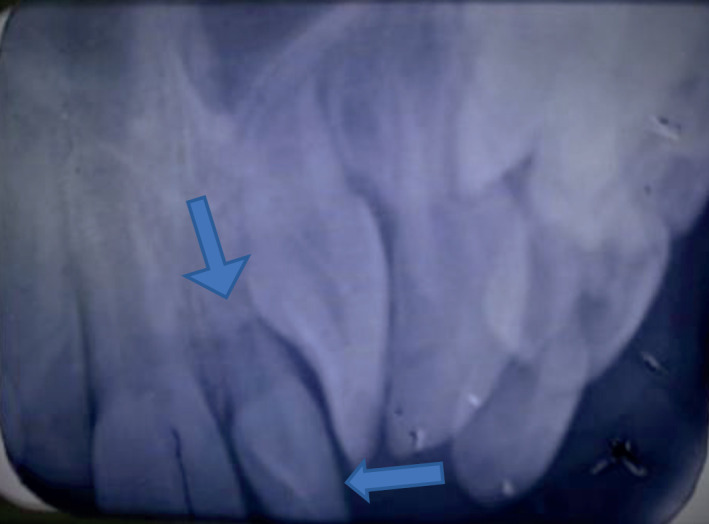
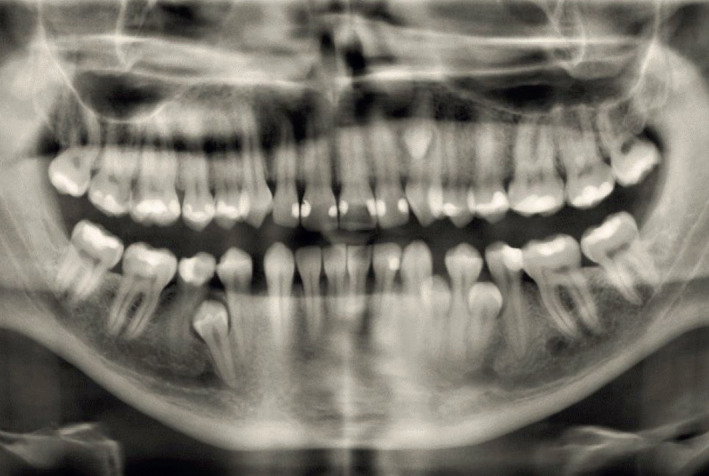
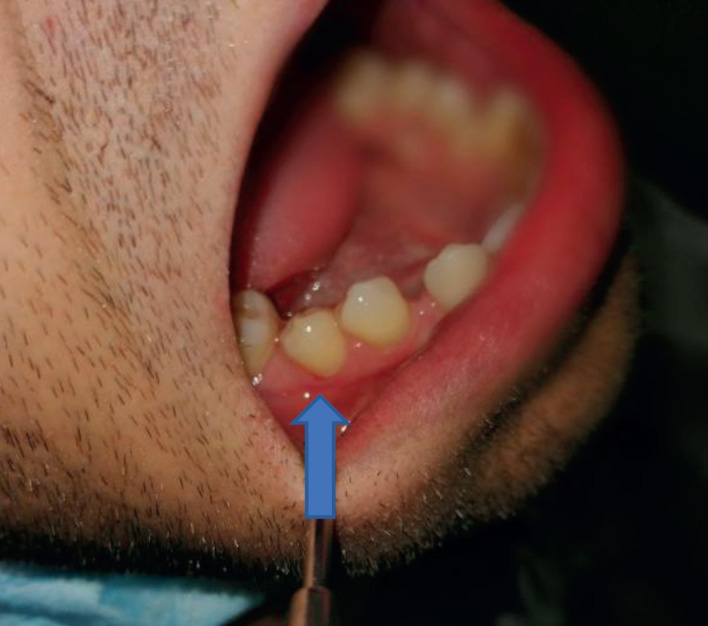
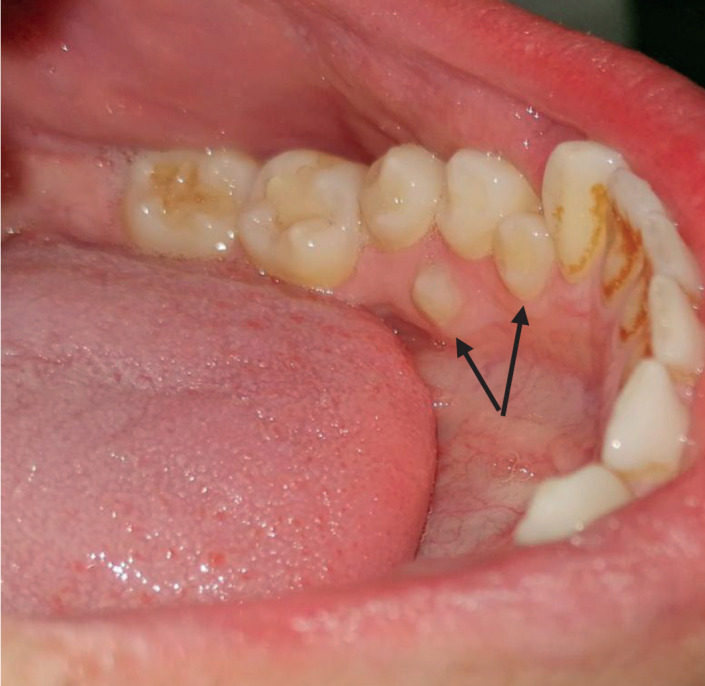
Methods: This paper has shown the pathologic condition characterized by the presence of supernumerary tooth (mesiodens) and supernumerary canine as well as supplementary premolars in a non-syndromic patients. Clinical and instrumental examinations were made to perform a correct orthodontic examination and diagnosis. A young patient was affected by numeric dental anomaly in the upper jaw. An adult patient was affected by numeric anomaly in both jaws, supplementary premolars in lower jaw and a supernumerary canine in lower and upper jaw.
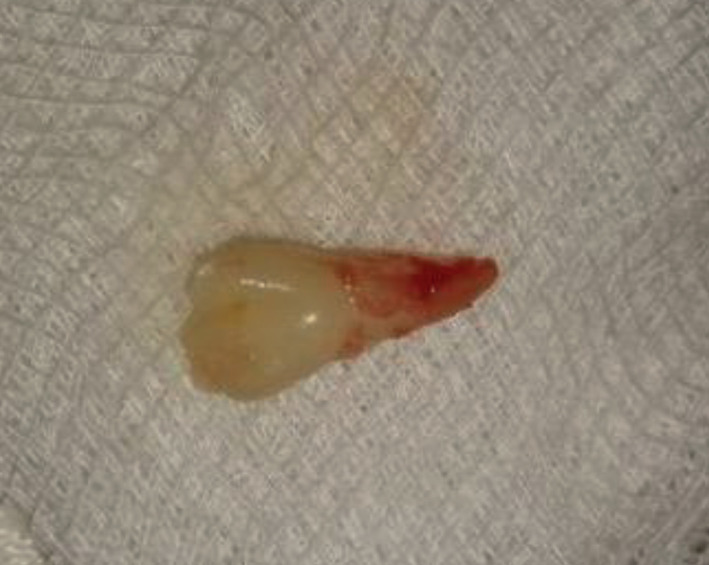
Discussion: The aim of surgical-orthodontic treatment was extraction of the erupted supernumerary teeth to obtain the physiologic eruption and placement of the permanent ones.
Conclusion: Therapy of supernumerary/ supplementary teeth is the extraction. But also, an excess tooth in the dentition can be left as a replacement tooth, due to a previously lost permanent tooth from the dentition, if its biological value and potential is sufficient to complete the dentition both functionally and aesthetically.
Keywords: Supplemental and supernumerary teeth; dental anomaly; mesiodens.
© 2021 Nermin Suljkanovic, Dženan Balic, Nadina Begic.
Conflict of interest statement
None declared.
Figures
References
-
- Jurić H. Jastrebarsko: Naklada Slap; 2015. Dječja dentalna medicina.
-
- Gajić M, Lalić M. izdanje – Pančevo: Stomatološki fakultet; 2011. Dječija stomatologija.1.
-
- Blanco Ballesteros G. Dientes múltiples supernumerarios. Reporte de un caso. Revista Estomatológica. 2005;13(1):13–18.
-
- Lo Giudice G, Nigrone V, Longo A, Cicciù M. Supernumerary and supplemental teeth: case report. European Journal of Paediatric Dentistry. 2008;9:2. - PubMed
Publication types
MeSH terms
LinkOut - more resources
Full Text Sources