


Robust and Facile Automated Radiosynthesis of [18F]FSPG on the GE FASTlab
- PMID: 34013395
- PMCID: PMC8578107
- DOI: 10.1007/s11307-021-01609-w
Robust and Facile Automated Radiosynthesis of [18F]FSPG on the GE FASTlab
Abstract
Purpose: (S)-4-(3-18F-Fluoropropyl)-ʟ-Glutamic Acid ([18F]FSPG) is a radiolabeled non-natural amino acid that is used for positron emission tomography (PET) imaging of the glutamate/cystine antiporter, system xC-, whose expression is upregulated in many cancer types. To increase the clinical adoption of this radiotracer, reliable and facile automated procedures for [18F]FSPG production are required. Here, we report a cassette-based method to produce [18F]FSPG at high radioactivity concentrations from low amounts of starting activity.
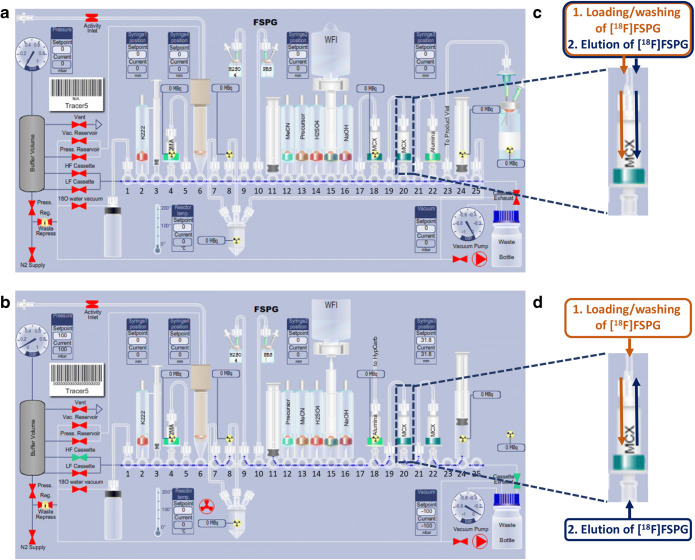
Procedures: An automated synthesis and purification of [18F]FSPG was developed using the GE FASTlab. Optimization of the reaction conditions and automated manipulations were performed by measuring the isolated radiochemical yield of [18F]FSPG and by assessing radiochemical purity using radio-HPLC. Purification of [18F]FSPG was conducted by trapping and washing of the radiotracer on Oasis MCX SPE cartridges, followed by a reverse elution of [18F]FSPG in phosphate-buffered saline. Subsequently, the [18F]FSPG obtained from the optimized process was used to image an animal model of non-small cell lung cancer.
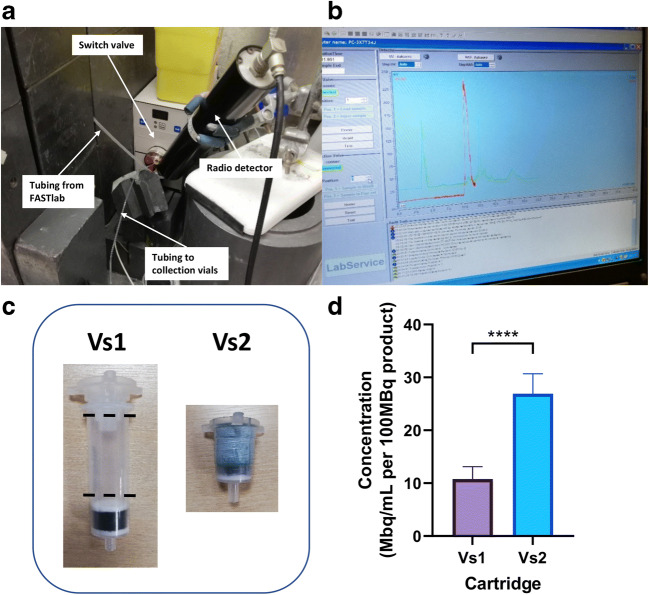
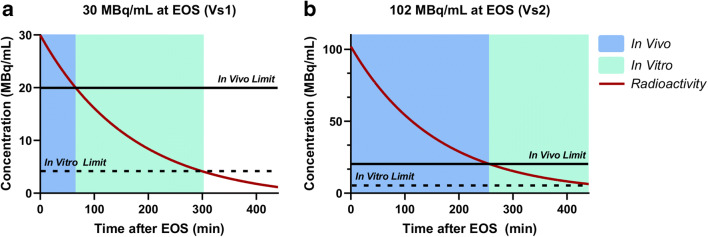
Results: The optimized protocol produced [18F]FSPG in 38.4 ± 2.6 % radiochemical yield and >96 % radiochemical purity with a molar activity of 11.1 ± 7.7 GBq/μmol. Small alterations, including the implementation of a reverse elution and an altered Hypercarb cartridge, led to significant improvements in radiotracer concentration from <10 MBq/ml to >100 MBq/ml. The improved radiotracer concentration allowed for the imaging of up to 20 mice, starting with just 1.5 GBq of [18F]Fluoride.
Conclusions: We have developed a robust and facile method for [18F]FSPG radiosynthesis in high radiotracer concentration, radiochemical yield, and radiochemical purity. This cassette-based method enabled the production of [18F]FSPG at radioactive concentrations sufficient to facilitate large-scale preclinical experiments with a single prep of starting activity. The use of a cassette-based radiosynthesis on an automated synthesis module routinely used for clinical production makes the method amenable to rapid and widespread clinical translation.
Keywords: Automated synthesis; Cancer imaging; FASTlab; Positron emission tomography; SPE purification; [18F]FSPG.
© 2021. The Author(s).
Conflict of interest statement
Graeme McRobbie is an employee of GE Healthcare and holds shares in GE. Imtiaz Khan is an employee of GE Healthcare. All other authors declare that they have no conflicts of interest
Figures

References
Publication types
MeSH terms
Substances
Grants and funding
LinkOut - more resources
Full Text Sources
Other Literature Sources
Medical
Miscellaneous
