


Exploring perception and hesitancy toward COVID-19 vaccine: A study from Jordan
- PMID: 34014128
- PMCID: PMC8475591
- DOI: 10.1080/21645515.2021.1888633
Exploring perception and hesitancy toward COVID-19 vaccine: A study from Jordan
Abstract
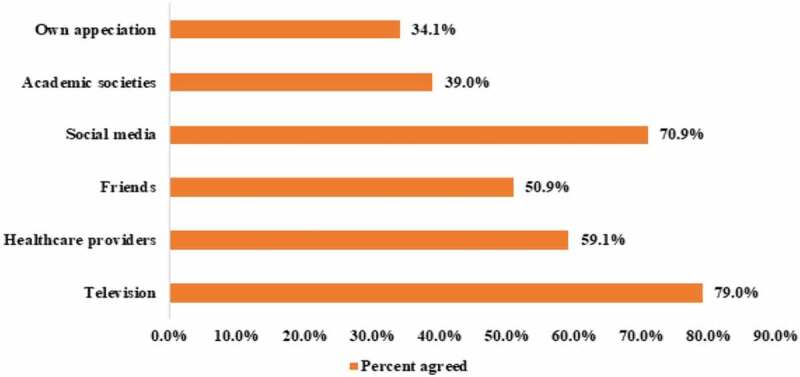
Vaccination against COVID-19 may present the most effective strategy to control current viral pandemic. The success of delivering mass vaccination, on the scale of what would be applied to contain COVID-19, largely depends on the compliance of the public to programs mandated by public health officials. This study was aimed to evaluate the perception and possible hesitance of people in Jordan toward a tentative COVID-19 vaccine using self-administrated online survey. During the study period, a total of 1287 agreed to participate in the study. More than half of the participants (n = 734, 57%) were females and the majority (n = 893, 69%) had a University degree. Most of the participants (n = 871, 68%) believed that scientists have adequate tools to develop a safe and efficacious COVID-19 vaccine and two-third of them (n = 861, 67%) believed that developing vaccines would end the pandemic. However, around half of them (n = 665, 52%) reported not having adequate information on the benefits of COVID-19 vaccination. Preference of study participants to achieve immunity against COVID-19 using natural way was the most commonly reported reason to refuse vaccination (n = 826, 64%), followed by their concern about adverse effects associated with the vaccine (n = 781, 61%). In conclusion, the sampled participants showed an overall positive attitude toward receiving a COVID-19 vaccine. Educational campaigns using television and social media are recommended to better inform the public of the benefits of COVID-19 vaccine in reaching a "herd immunity" based strategy to control the current pandemic.
Keywords: COVID-19; Jordan; hesitancy; perception; public; vaccine.
Figures
References
-
- WHO. World Health Organization. Vaccines and immunization. 2020. https://www.who.int/health-topics/vaccines-and-immunization#tab=tab_1
MeSH terms
Substances
LinkOut - more resources
Full Text Sources
Other Literature Sources
Medical
