


Toward a Typology of Office-based Buprenorphine Treatment Laws: Themes From a Review of State Laws
- PMID: 34014209
- PMCID: PMC8599526
- DOI: 10.1097/ADM.0000000000000863
Toward a Typology of Office-based Buprenorphine Treatment Laws: Themes From a Review of State Laws
Abstract
Objectives: Buprenorphine is a gold standard treatment for opioid use disorder (OUD). Some US states have passed laws regulating office-based buprenorphine treatment (OBBT) for OUD, with requirements beyond those required in federal law. We sought to identify themes in state OBBT laws.
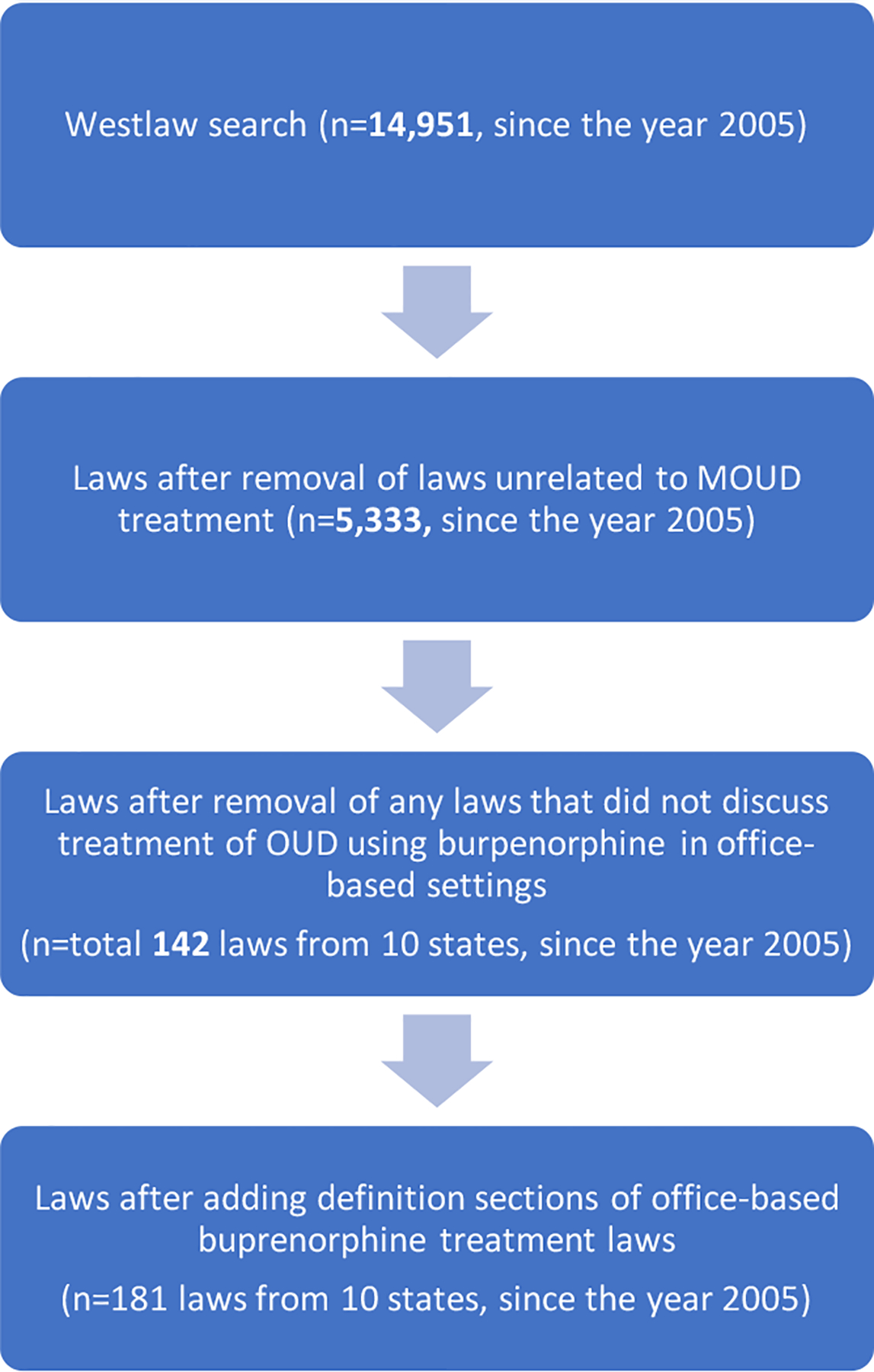
Methods: Using search terms related to medications for OUD, we searched Westlaw software for state regulations and statutes in 51 US jurisdictions from 2005 to 2019. We identified and inductively analyzed OBBT laws for themes.
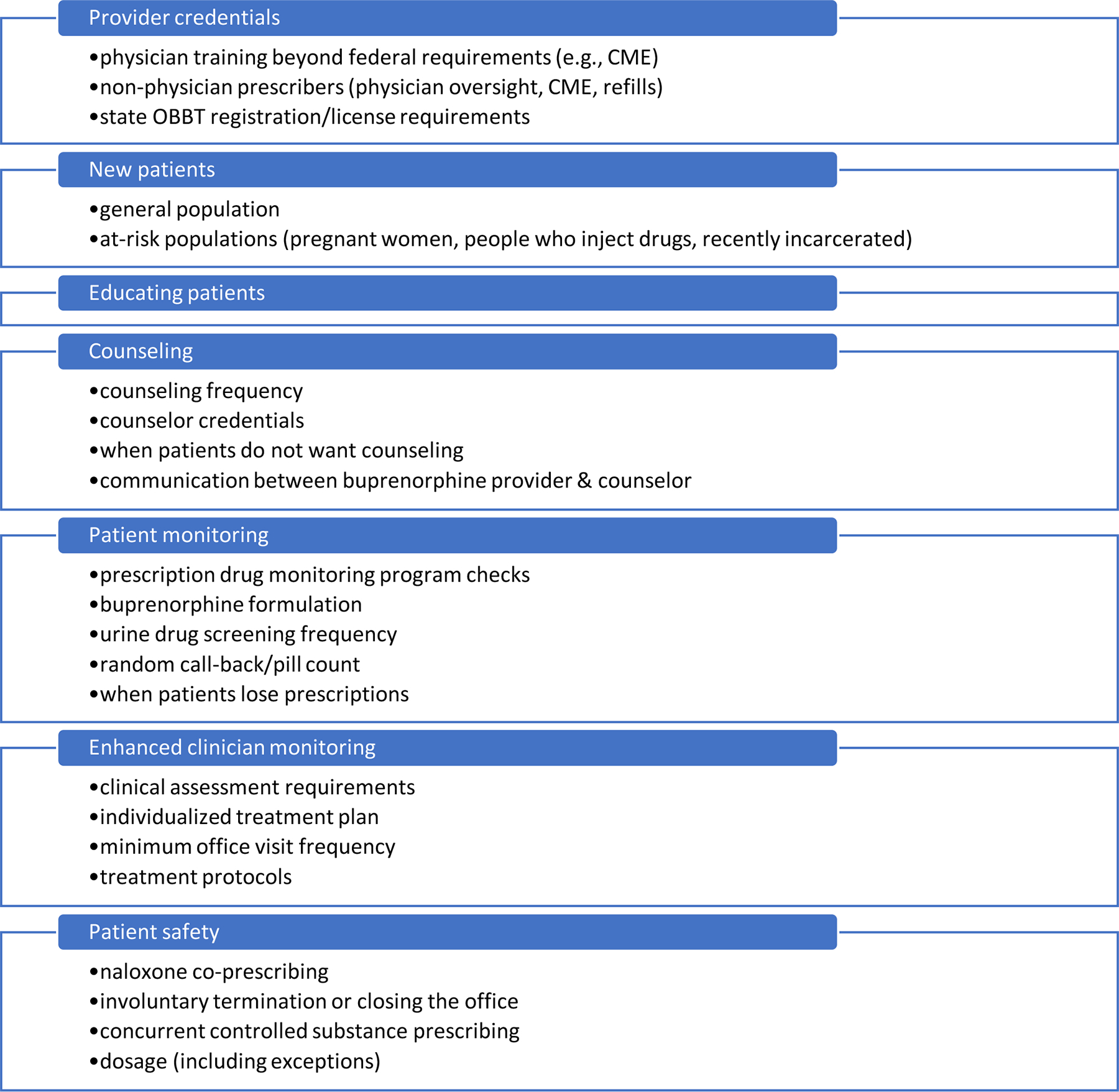
Results: Since 2005, 10 states have passed a total of 181 OBBT laws. We identified the following themes: (1) provider credentials: state licensure for OBBT providers and continuing medical education requirements; (2) new patients: objective symptoms patients must have before receiving OBBT and exceptions for special populations; (3) educating patients: general informed consent requirements, and specific information to provide; (4) counseling: minimum counselor credentials, minimum counseling frequency, counseling alternatives; (5) patient monitoring: required prescription drug monitoring checks, frequency of drug screening, and responses to lost/stolen medications; (6) enhanced clinician monitoring: evidence-based treatment protocols, minimum clinician-patient contact frequency, health assessment requirements, and individualized treatment planning; and (7) patient safety: reconciling prescriptions, dosage limitations, naloxone coprescribing, tapering, and office closures.
Conclusions: Some laws codify practices for which scientific consensus is lacking. Additionally, some OBBT laws resemble opioid treatment programs and pain management regulations. Results could serve as the basis for a typology of office-based treatment laws, which could facilitate empirical examination of policy impacts on treatment access and quality.
Copyright © 2021 American Society of Addiction Medicine.
Conflict of interest statement
The authors report no conflicts of interest.
Figures
Comment in
-
Commentary: Moving Toward Clear, Evidence-based, and Effective State Policies for Addiction Medicine.J Addict Med. 2022 Mar-Apr 01;16(2):130-131. doi: 10.1097/ADM.0000000000000862. J Addict Med. 2022. PMID: 34014208
References
-
- Substance Abuse and Mental Health Services Administration. Medications for Opioid Use Disorder TIP 63 Treatment Improvement Protocol For Healthcare and Addiction Professionals, Policymakers, Patients, and Families. Subtance Abuse & Mental Health Services Administration;2018.
Publication types
MeSH terms
Substances
Grants and funding
LinkOut - more resources
Full Text Sources
Other Literature Sources
Medical
