


Prevention of tunneled cuffed catheter dysfunction with prophylactic use of a taurolidine urokinase lock: A randomized double-blind trial
- PMID: 34015014
- PMCID: PMC8136626
- DOI: 10.1371/journal.pone.0251793
Prevention of tunneled cuffed catheter dysfunction with prophylactic use of a taurolidine urokinase lock: A randomized double-blind trial
Abstract
Background: The efficacy and cost-effectiveness of prophylactic thrombolytic locks in hemodialysis patients at high-risk of thrombotic dialysis catheter dysfunction is uncertain. We investigated this question in a double-blinded randomized controlled study.
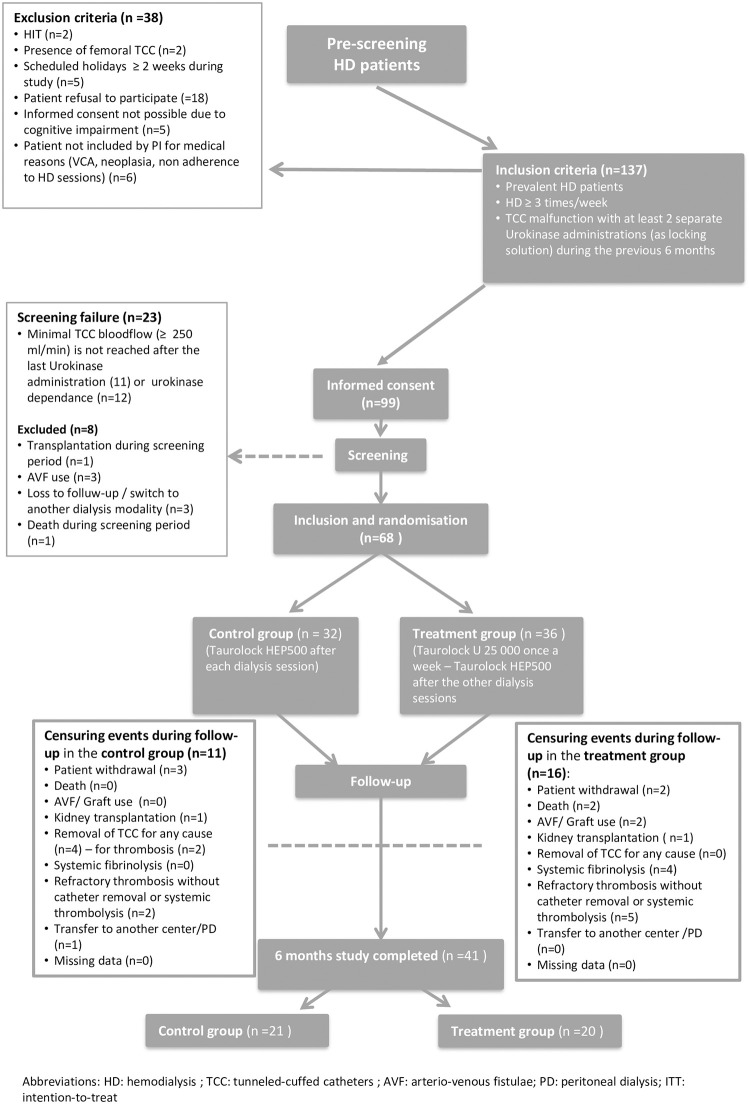
Methods: Prevalent hemodialysis patients from 8 Belgian hemodialysis units, with ≥2 separate episodes of thrombotic dysfunction of their tunneled cuffed catheter during the 6 months before inclusion, were randomized to either: taurolidine heparin locks thrice weekly (control arm) or the same locks twice a week combined with taurolidine urokinase locks once a week before the longest interval without HD (TaurolockU arm). The primary efficacy outcome was the incidence rate of catheter thrombotic dysfunction requiring thrombolytic locks to restore function.
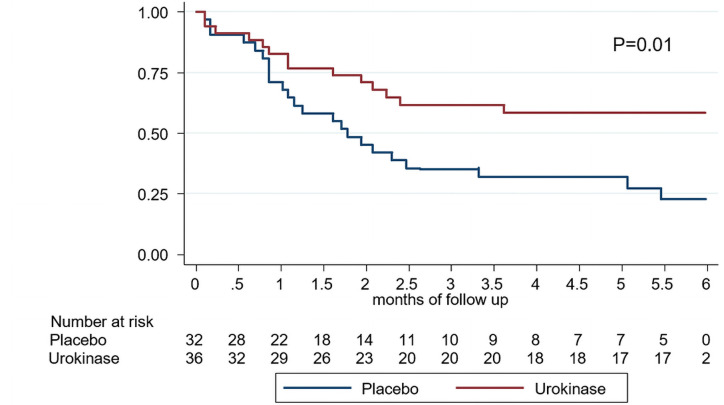
Results: 68 hemodialysis patients (32 controls, 36 urokinase) were followed during 9875 catheter days between May 2015 and June 2017. Incidence rate of thrombotic catheter dysfunction was 4.8 in TaurolockU vs 12.1/1000 catheter days in control group (rate ratio 0.39; 95%CI 0.23-0.64). 15/36 (42%) catheters in the treatment group required at least one therapeutic urokinase lock vs 23/32 (72%) in the control group (P = 0.012). The two groups did not differ significantly in catheter-related bloodstream infection and combined cost of prophylactic and therapeutic catheter locks. The TaurolockU group had a numerically higher number of episodes of refractory thrombosis.
Conclusions: Prophylactic use of urokinase locks is highly effective in reducing the number of thrombotic catheter dysfunctions in catheters with a history of recurring dysfunction. Prophylactic use of urokinase locks did not reduce the overall costs associated with catheter locks and was associated with a numerically higher number of episodes of refractory thrombosis.
Trial registration: ClinicalTrials.gov Identifier: NCT02036255.
Conflict of interest statement
The authors have declared that no competing interests exist.
Figures
References
Publication types
MeSH terms
Substances
Associated data
LinkOut - more resources
Full Text Sources
Other Literature Sources
Medical
