


Comprehensive analysis of gut microbiota of a healthy population and covariates affecting microbial variation in two large Japanese cohorts
- PMID: 34016052
- PMCID: PMC8139087
- DOI: 10.1186/s12866-021-02215-0
Comprehensive analysis of gut microbiota of a healthy population and covariates affecting microbial variation in two large Japanese cohorts
Abstract
Background: Inter-individual variations in gut microbiota composition are observed even among healthy populations. The gut microbiota may exhibit a unique composition depending on the country of origin and race of individuals. To comprehensively understand the link between healthy gut microbiota and host state, it is beneficial to conduct large-scale cohort studies. The aim of the present study was to elucidate the integrated and non-redundant factors associated with gut microbiota composition within the Japanese population by 16S rRNA sequencing of fecal samples and questionnaire-based covariate analysis.
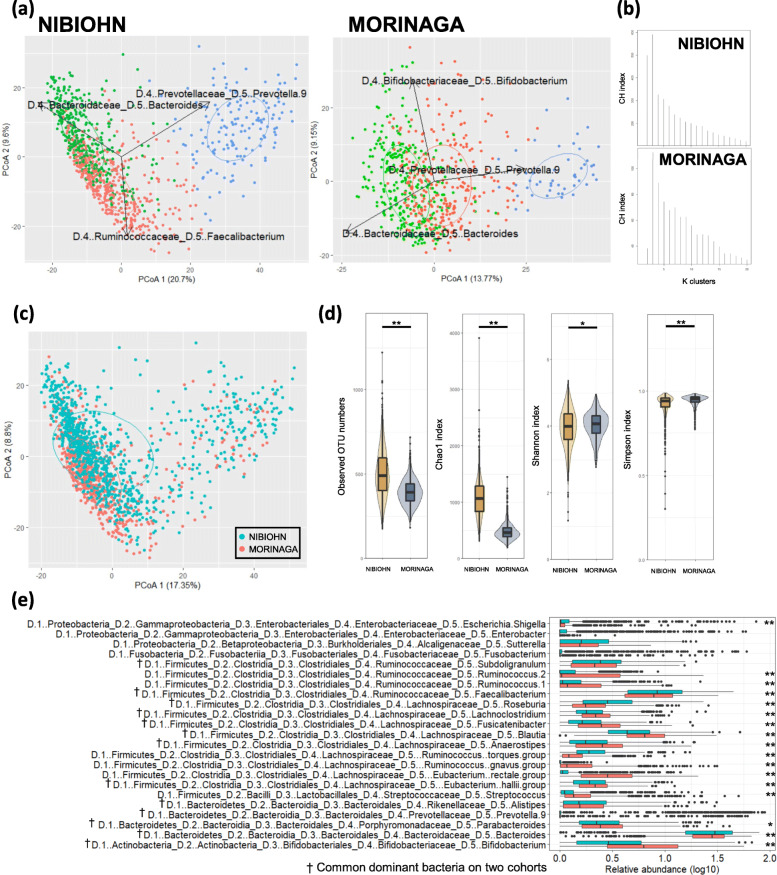
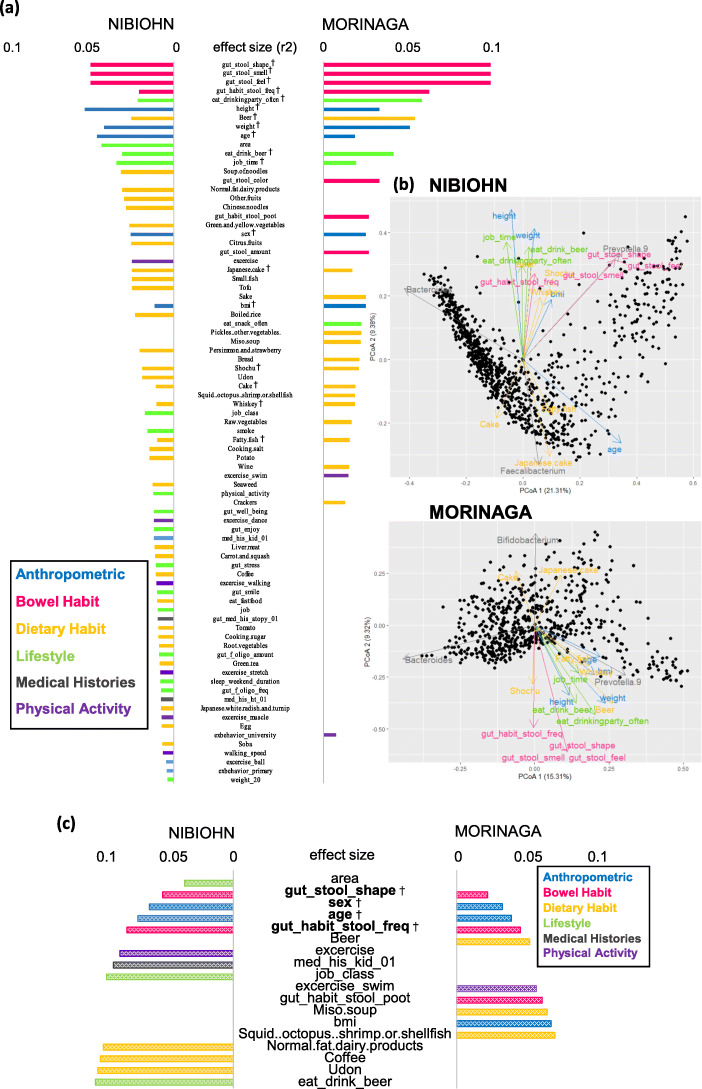
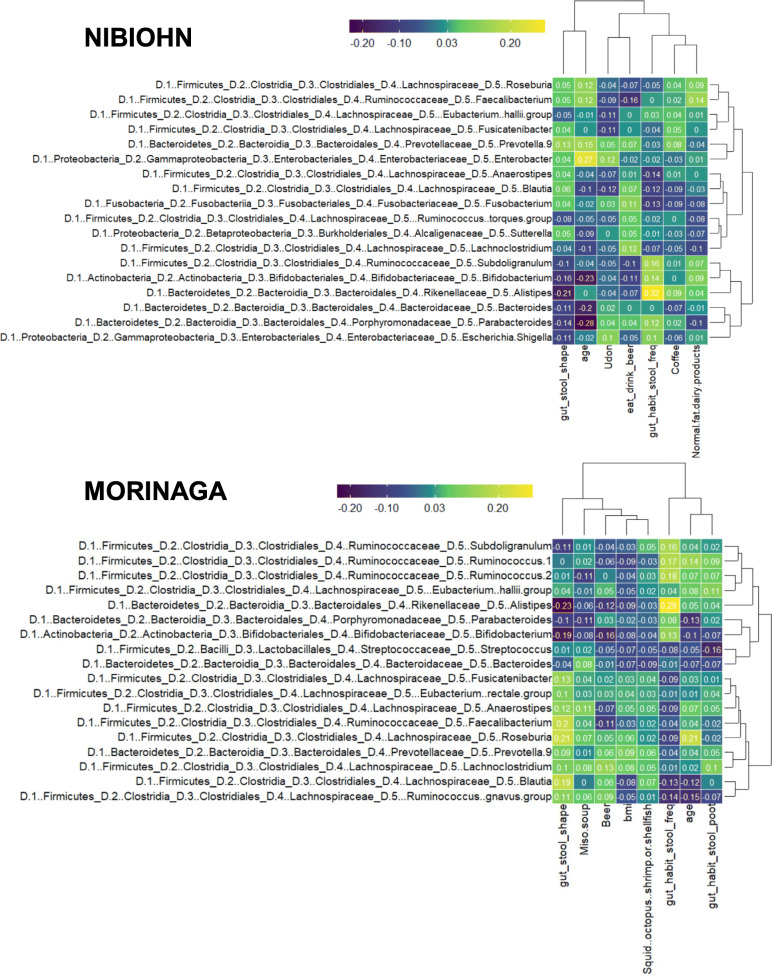
Results: A total of 1596 healthy Japanese individuals participated in this study via two independent cohorts, NIBIOHN cohort (n = 954) and MORINAGA cohort (n = 642). Gut microbiota composition was described and the interaction of these microorganisms with metadata parameters such as anthropometric measurements, bowel habits, medical history, and lifestyle were obtained. Thirteen genera, including Alistipes, Anaerostipes, Bacteroides, Bifidobacterium, Blautia, Eubacterium halli group, Faecalibacterium, Fusicatenibacter, Lachnoclostridium, Parabacteroides, Prevotella_9, Roseburia, and Subdoligranulum were predominant among the two cohorts. On the basis of univariate analysis for overall microbiome variation, 18 matching variables exhibited significant association in both cohorts. A stepwise redundancy analysis revealed that there were four common covariates, Bristol Stool Scale (BSS) scores, gender, age, and defecation frequency, displaying non-redundant association with gut microbial variance.
Conclusions: We conducted a comprehensive analysis of gut microbiota in healthy Japanese individuals, based on two independent cohorts, and obtained reliable evidence that questionnaire-based covariates such as frequency of bowel movement and specific dietary habit affects the microbial composition of the gut. To our knowledge, this was the first study to investigate integrated and non-redundant factors associated with gut microbiota among Japanese populations.
Keywords: 16S rRNA; Covariates; Gut microbiota; Japanese population; Large cohort.
Conflict of interest statement
The authors of this manuscript have the following competing interests: Kumiko Kato, Jin-zhong Xiao and Toshitaka Odamaki are employees of Morinaga Milk Industry Co., Ltd.
Figures
References
Publication types
MeSH terms
Substances
Grants and funding
LinkOut - more resources
Full Text Sources
Other Literature Sources
