


Genetic architecture and lifetime dynamics of inbreeding depression in a wild mammal
- PMID: 34016997
- PMCID: PMC8138023
- DOI: 10.1038/s41467-021-23222-9
Genetic architecture and lifetime dynamics of inbreeding depression in a wild mammal
Abstract
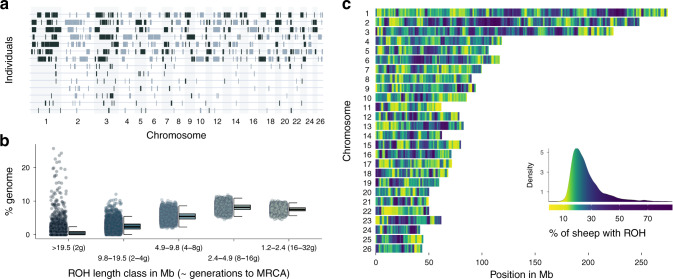
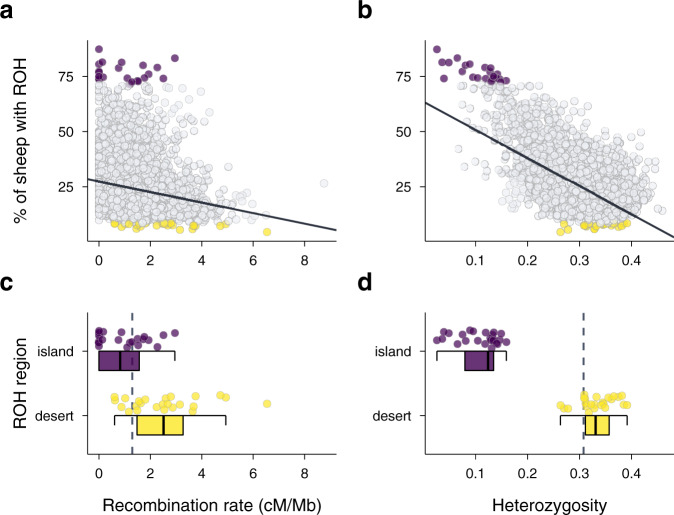
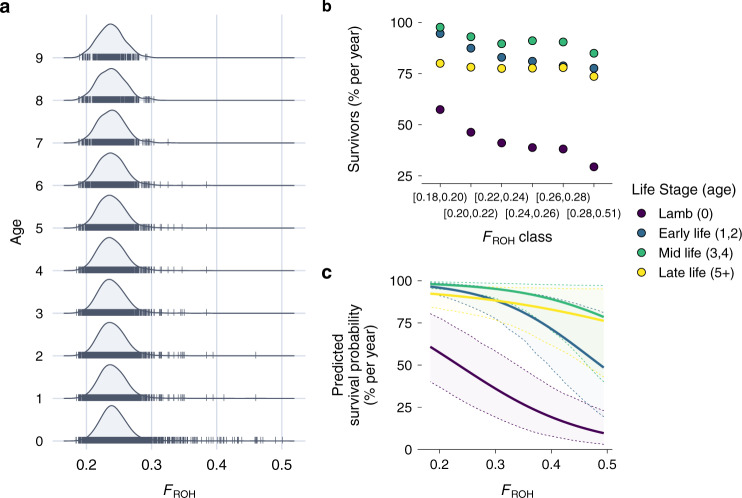
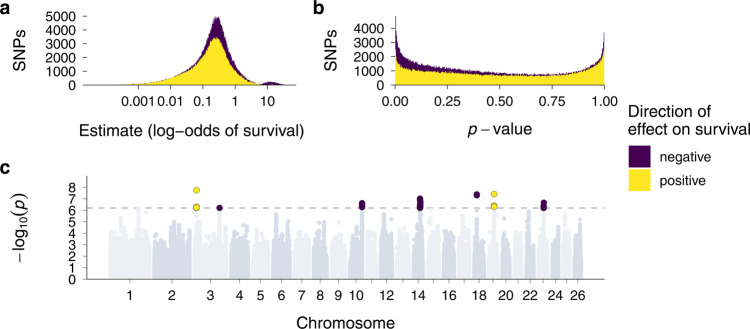
Inbreeding depression is ubiquitous, but we still know little about its genetic architecture and precise effects in wild populations. Here, we combine long-term life-history data with 417 K imputed SNP genotypes for 5952 wild Soay sheep to explore inbreeding depression on a key fitness component, annual survival. Inbreeding manifests in long runs of homozygosity (ROH), which make up nearly half of the genome in the most inbred individuals. The ROH landscape varies widely across the genome, with islands where up to 87% and deserts where only 4% of individuals have ROH. The fitness consequences of inbreeding are severe; a 10% increase in individual inbreeding FROH is associated with a 60% reduction in the odds of survival in lambs, though inbreeding depression decreases with age. Finally, a genome-wide association scan on ROH shows that many loci with small effects and five loci with larger effects contribute to inbreeding depression in survival.
Conflict of interest statement
The authors declare no competing interests.
Figures
References
-
- Darwin, C. The Effect of Cross and Self Fertilization in the Vegetable Kingdom (John Murray, 1876).
-
- Angeloni F, Ouborg NJ, Leimu R. Meta-analysis on the association of population size and life history with inbreeding depression in plants. Biol. Conserv. 2011;144:35–43. doi: 10.1016/j.biocon.2010.08.016. - DOI
Publication types
MeSH terms
Grants and funding
LinkOut - more resources
Full Text Sources
Other Literature Sources
