


A preliminary study of influences of hydroxyethyl starch combined with ulinastatin on degree of edema in newborns with capillary leak syndrome
- PMID: 34017422
- PMCID: PMC8129267
A preliminary study of influences of hydroxyethyl starch combined with ulinastatin on degree of edema in newborns with capillary leak syndrome
Abstract
Objective: To analyze the efficacy of hydroxyethyl starch (HES) combined with Ulinastatin (Uti) in the treatment of newborns with capillary leak syndrome (CLS).
Methods: A total of 60 newborns with CLS admitted to four hospitals were selected as the study subjects, and were randomly divided into the control group (n = 30) and the observation group (n = 30) in accordance with the random number table. The control group was treated with HES alone, while the observation group was treated with Uti combined with HES.
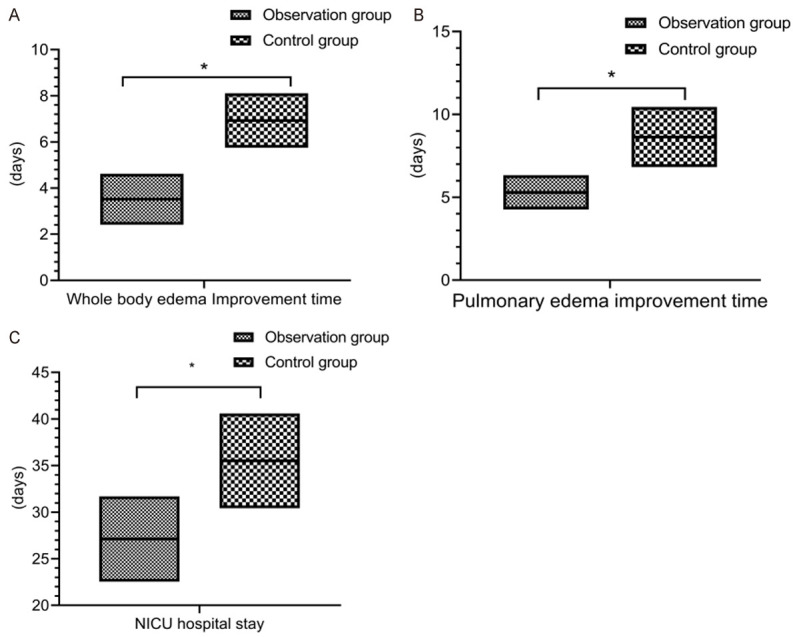
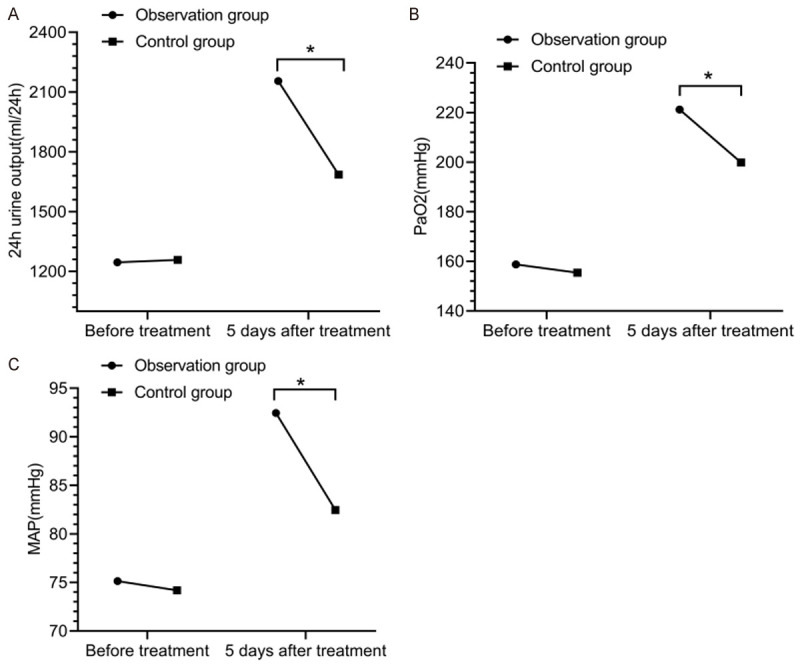
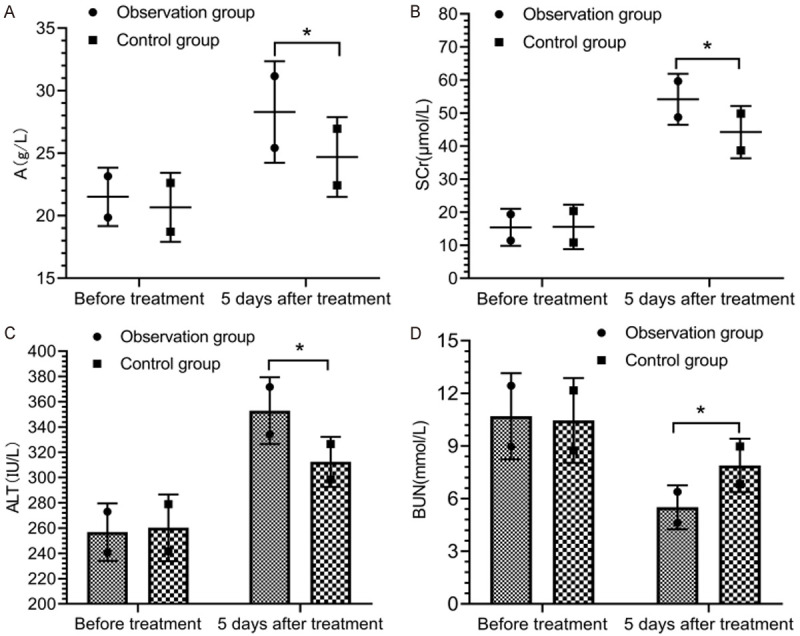
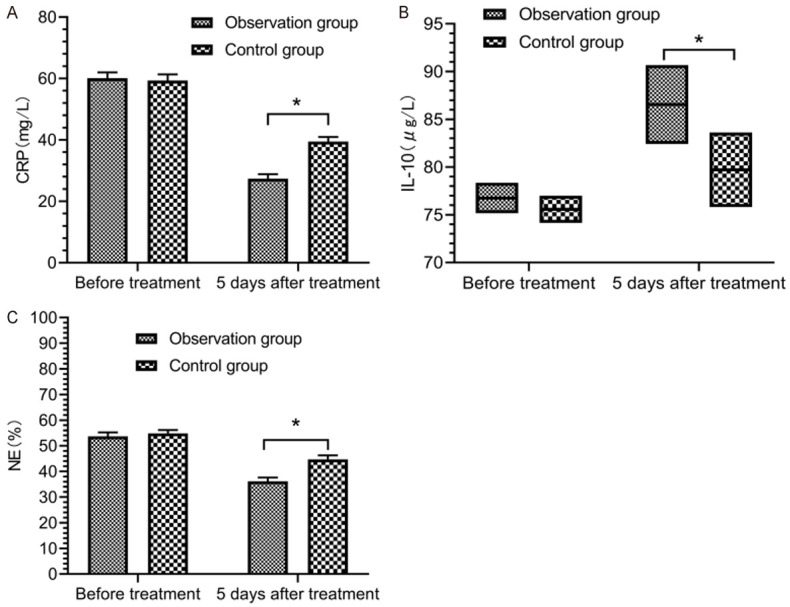
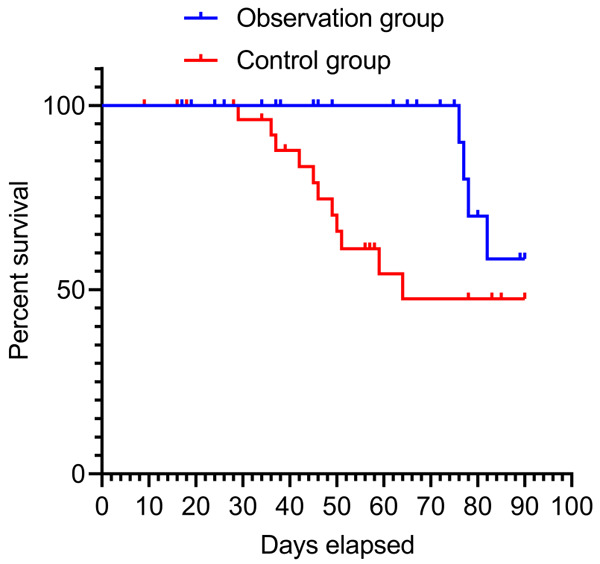
Results: At 5 d after treatment, the incidence rates of systemic edema and pulmonary edema, the levels of CRP, NE, and BUN, and the duration for the improvement of systemic edema, pulmonary edema and NICU hospital stay in the control group were superior to those in the observation group, while the 24-h urine output, PaO2 and MAP levels, the levels of A, SCr, ALT, and IL-10 in the observation group were superior to those in the control group (P < 0.05). After 3 months of follow-up after treatment, the mortality rate of newborns in the observation group (13.33%) was lower than that in the control group (36.67%) (P < 0.05).
Conclusion: HES combined with Uti can effectively alleviate edema, control inflammatory levels, and improve hepatic and renal functions and neonatal survival rate of newborns with CLS.
Keywords: Newborns; capillary leak syndrome; degree of edema; hydroxyethyl starch; treatment; ulinastatin.
AJTR Copyright © 2021.
Conflict of interest statement
None.
Figures
References
-
- Baloch NU, Bikak M, Rehman A, Rahman O. Recognition and management of idiopathic systemic capillary leak syndrome: an evidence-based review. Expert Rev Cardiovasc Ther. 2018;16:331–340. - PubMed
-
- Kulihova K, Prochazkova M, Semberova J, Janota J. Fatal primary capillary leak syndrome in a late preterm newborn. Indian J Pediatr. 2016;83:1197–1199. - PubMed
-
- Shaw AR, Mueller BA. Antibiotic dosing in continuous renal replacement therapy. Adv Chronic Kidney Dis. 2017;24:219–227. - PubMed
LinkOut - more resources
Full Text Sources
Research Materials
Miscellaneous