


Bacterial endophytome-mediated resistance in banana for the management of Fusarium wilt
- PMID: 34017673
- PMCID: PMC8124033
- DOI: 10.1007/s13205-021-02833-5
Bacterial endophytome-mediated resistance in banana for the management of Fusarium wilt
Abstract
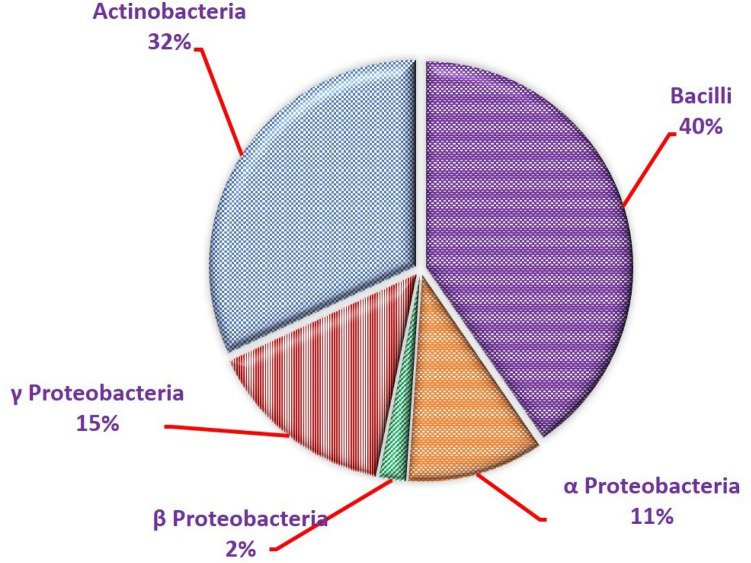
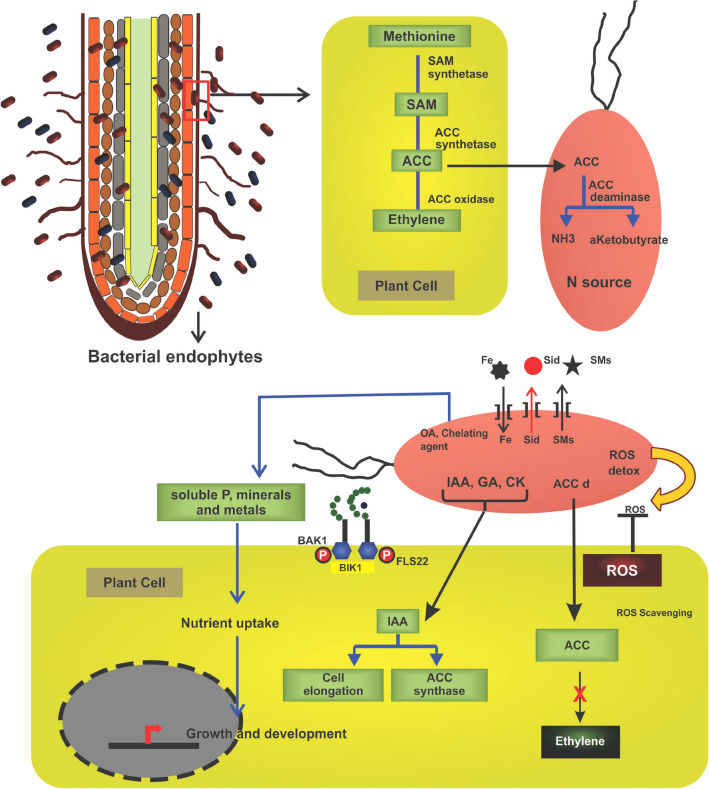
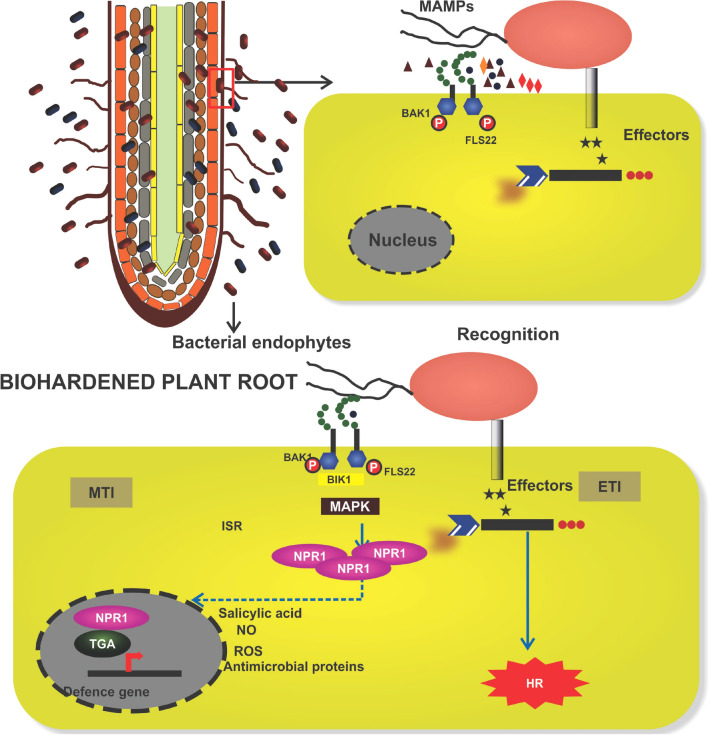
Banana (Musa spp.), a major cash and staple fruit crop in many parts of the world, is infected by Fusarium wilt, which contributes up to 100% yield loss and causes social consequences. Race 1 and race 2 of Panama wilt caused by Fusarium oxysporum f. sp. cubense (Foc) are prevalent worldwide and seriously affect many traditional varieties. The threat of Foc tropical race 4 (Foc TR4) is looming large in African counties. However, its incidence in India has been confined to Bihar (Katihar and Purnea), Uttar Pradesh (Faizabad), Madhya Pradesh (Burhanpur) and Gujarat (Surat). Management of Foc races by employing fungicides is often not a sustainable option as the disease spread is rapid and they negatively alter the biodiversity of beneficial ectophytes and endophytes. Besides, soil drenching with carbendazim/trifloxystrobin + tebuconazole is also not effective in suppressing the Fusarium wilt of banana. Improvement of resistance to Fusarium wilt in susceptible cultivars is being addressed through both conventional and advanced breeding approaches. However, engineering of banana endosphere with bacterial endophytes from resistant genotypes like Pisang lilly and YKM5 will induce the immune response against Foc, irrespective of races. The composition of the bacterial endomicrobiome in different banana cultivars is dominated by the phyla Proteobacteria, Bacteroidetes and Actinobacteria. The major bacterial endophytic genera antagonistic to Foc are Bacillus, Brevibacillus, Paenibacillus, Virgibacillus, Staphylococcus, Cellulomonas, Micrococcus, Corynebacterium, Kocuria spp., Paracoccus sp., Acinetobacter spp. Agrobacterium, Aneurinibacillus, Enterobacter, Klebsiella, Lysinibacillus, Micrococcus, Rhizobium, Sporolactobacillus, Pantoea, Pseudomonas, Serratia, Microbacterium, Rhodococcus, Stenotrophomonas, Pseudoxanthomonas, Luteimonas, Dokdonella, Rhodanobacter, Luteibacter, Steroidobacter, Nevskia, Aquicella, Rickettsiella, Legionella, Tatlockia and Streptomyces. These bacterial endophytes promote the growth of banana plantlets by solubilising phosphate, producing indole acetic acid and siderophores. Application of banana endophytes during the hardening phase of tissue-cultured clones serves as a shield against Foc. Hitherto, MAMP molecules of endophytes including flagellin, liposaccharides, peptidoglycans, elongation factor, cold shock proteins and hairpins induce microbe-associated molecular pattern (MAMP)-triggered immunity to suppress plant pathogens. The cascade of events associated with ISR and SAR is induced through MAPK and transcription factors including WRKY and MYC. Studies are underway to exploit the potential of antagonistic bacterial endophytes against Foc isolates and to develop an understanding of the MAMP-triggered immunity and metabolomics cross talk modulating resistance. This review explores the possibility of harnessing the potential bacterial endomicrobiome against Foc and developing nanoformulations with bacterial endophytes for increased efficacy against lethal pathogenic races of Foc infecting banana.
Supplementary information: The online version contains supplementary material available at 10.1007/s13205-021-02833-5.
Keywords: Bacterial endophytes; Banana; Foc; Fusarium wilt; Growth promotion; Plant immunity.
© King Abdulaziz City for Science and Technology 2021.
Figures
References
-
- Adeline SYT, Sariah M, Jugah K, Son R, Gurmit S. Endophytic microorganisms as potential growth promoters of banana. Biocontrol. 2007;53:541–553.
-
- Ahire JJ, Robertson DD, Van Reenen AJ, Dicks LMT. Surfactin-loaded polyvinyl alcohol (PVA) nanofibers alters adhesion of Listeria monocytogenes to polystyrene. Mater Sci Eng. 2017;77:27–33. - PubMed
-
- Ajit Kumar S, Ashok B, Ananya B. Endophyte mediated activation of defense enzymes in banana plants pre-immunized with covert endophytes. Indian Phytopathol. 2020 doi: 10.1007/s42360-020-00245-8. - DOI
-
- Ali S, Charles TC, Glick BR. Delay of flower senescence by bacterial endophytes expressing 1-aminocyclopropane-1-carboxylate deaminase. J Appl Microbiol. 2012;113(5):1139–1144. - PubMed
Publication types
LinkOut - more resources
Full Text Sources
Other Literature Sources
Miscellaneous
