


Psychological Symptoms Among Evacuees From the 2016 Fort McMurray Wildfires: A Population-Based Survey One Year Later
- PMID: 34017813
- PMCID: PMC8130827
- DOI: 10.3389/fpubh.2021.655357
Psychological Symptoms Among Evacuees From the 2016 Fort McMurray Wildfires: A Population-Based Survey One Year Later
Abstract
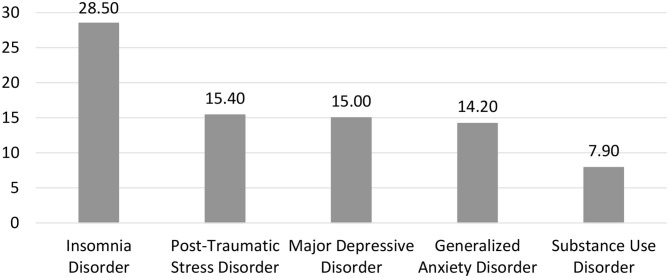
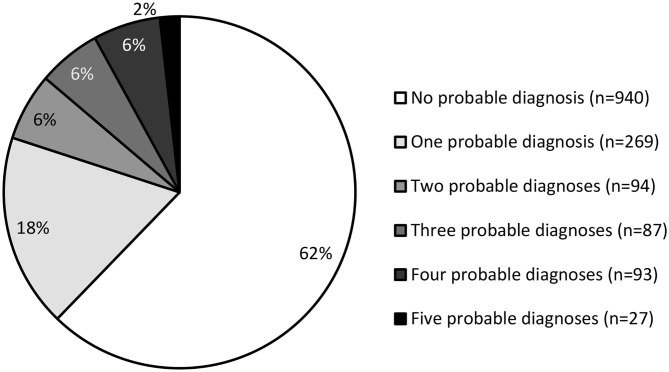
Background: The 2016 wildfires in Fort McMurray (Alberta, Canada) led to a massive displacement of 88,000 people and destroyed 2,400 homes. Although no direct human fatality resulted, many individuals feared for their lives or those of their loved ones. Objectives: (1) To estimate the prevalence of post-traumatic stress, major depressive, insomnia, generalized anxiety, and substance use disorders in the adult population of Fort McMurray 1 year after the evacuation; (2) To identify pre-, peri-, and post-disaster correlates of mental health disorders. Methods: A phone survey using random digit sampling was used to survey evacuees. A total of 1,510 evacuees (response rate = 40.2%, 55.5% women, mean age = 44.11, SD = 12.69) were interviewed between May 9th and July 28th, 2017. Five validated scales were administered: the PTSD Symptoms Checklist (PCL-5), the Insomnia Severity Index (ISI), the depression and anxiety subscales of the Patient Health Questionnaire (PHQ-9, GAD-7), and the CAGE Substance Abuse Screening Tool. Results: One year after the wildfires, 38% had a probable diagnosis of either post-traumatic stress, major depressive, insomnia, generalized anxiety, or substance use disorder, or a combination of these. Insomnia disorder was the most common, with an estimated prevalence of 28.5%. Post-traumatic stress, major depressive and generalized anxiety disorders were almost equally prevalent, with ~15% each. The estimated prevalence of substance use disorder was 7.9%. For all five mental health disorders, having a mental health condition prior to the fires was a significant risk factor, as well as having experienced financial stress or strain due to the economic decline already present in Fort McMurray. Five post-disaster consequences were significant predictors of four of the five disorders: decrease in work, decrease in social life, poorer current health status, increase in drug and alcohol use, and higher level of stress experienced since the fires. Conclusion: One year after the fires, more than one third of the evacuees had clinically significant psychological symptoms, including those of insomnia, post-traumatic stress, depression, anxiety, and substance use. This study helped identify individuals more at risk for mental health issues after a natural disaster and could guide post-disaster psychosocial support strategies.
Keywords: disaster and psychological consequences and risks and interventions and prevention; generalized anxiety disorder; insomnia; major depression; posttraumatic stress disorder; substance use disorder.
Copyright © 2021 Belleville, Ouellet, Lebel, Ghosh, Morin, Bouchard, Guay, Bergeron, Campbell and MacMaster.
Conflict of interest statement
SB is President and shareholder of Cliniques et Développement In Virtuo, a clinic that offers psychotherapy services and distributes virtual reality software. All of this is framed by the conflict of interest management policy of the Université du Québec en Outaouais. CM has received research grants from Idorsia and Canopy Health and served as consultant for Eisai, Merck, Pear Therapeutics, Sunovion, and Weight Watchers. The remaining authors declare that the research was conducted in the absence of any commercial or financial relationships that could be construed as a potential conflict of interest.
Figures
References
Publication types
MeSH terms
Grants and funding
LinkOut - more resources
Full Text Sources
Other Literature Sources
Medical
