


Maternal depressive symptoms, sleep, and odds of spontaneous early birth: implications for racial inequities in birth outcomes
- PMID: 34019675
- PMCID: PMC8598176
- DOI: 10.1093/sleep/zsab133
Maternal depressive symptoms, sleep, and odds of spontaneous early birth: implications for racial inequities in birth outcomes
Abstract
Study objectives: Delivery prior to full term affects 37% of US births, including ~400,000 preterm births (<37 weeks) and >1,000,000 early term births (37-38 weeks). Approximately 70% of cases of shortened gestation are spontaneous-without medically-indicated cause. Elucidation of modifiable behavioral factors would have considerable clinical impact.
Methods: This study examined the role of depressive symptoms and sleep quality in predicting the odds of spontaneous shortened gestation among 317 women (135 black, 182 white) who completed psychosocial assessment in mid-pregnancy.
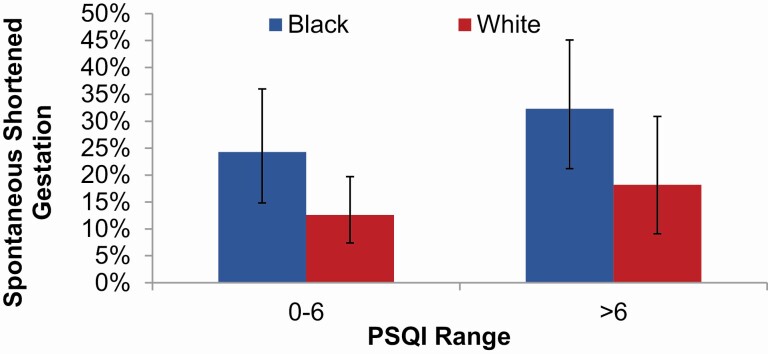
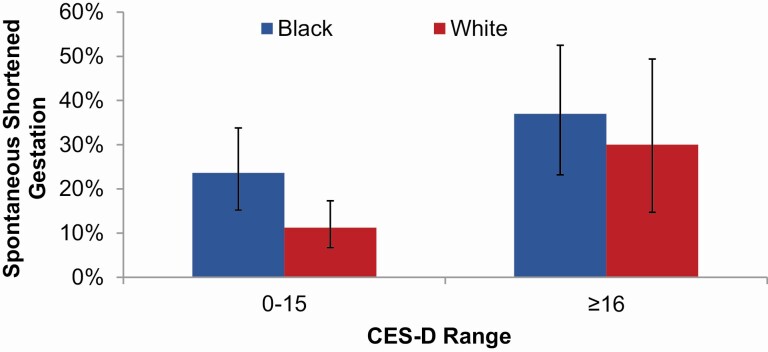
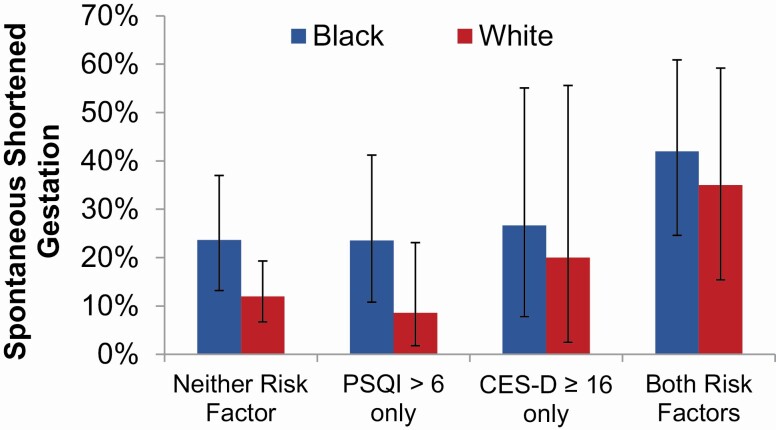
Results: Adjusting for key covariates, black women had 1.89 times higher odds of spontaneous shortened gestation compared to White women (OR [95% CI] = 1.89 [1.01, 3.53], p = 0.046). Women who reported only poor subjective sleep quality (PSQI > 6) or only elevated depressive symptoms (CES-D ≥ 16) exhibited no statistically significant differences in odds of spontaneous shortened gestation compared to those with neither risk factor. However, women with comorbid poor sleep and depressive symptoms exhibited markedly higher odds of spontaneous shortened gestation than those with neither risk factor (39.2% versus 15.7% [OR (95% CI) = 2.69 (1.27, 5.70)], p = 0.01). A higher proportion of black women met criteria for both risk factors (23% of black women versus 11% of white women; p = 0.004), with a lower proportion experiencing neither risk factor (40.7% of black versus 64.3% of white women; p < 0.001).
Conclusions: Additive effects of poor subjective sleep quality and depressive symptoms were observed with markedly higher odds of spontaneous shortened gestation among women with both risk factors. Racial inequities in rates of comorbid exposure corresponded with inequities in shortened gestation. Future empirical studies and intervention efforts should consider the interactive effects of these commonly co-morbid exposures.
Keywords: depression; depressive symptoms; early term birth; mental health; pregnancy; preterm birth; racial inequities; shortened gestation; sleep.
© Sleep Research Society 2021. Published by Oxford University Press on behalf of the Sleep Research Society. All rights reserved. For permissions, please email: journals.permissions@oup.com.
Figures
References
-
- The American College of Obstetricians and Gynecologists Committee on Obstetric Practice. Committee Opinion No. 579: definition of term pregnancy. Obstet Gynecol. 2013;122:1139–1140. - PubMed
-
- Chan E, et al. School performance at age 7 years in late preterm and early term birth: a cohort study. Arch Dis Child Fetal Neonatal Ed. 2014;99(6):F451–F457. - PubMed
-
- Quigley MA, et al. Early term and late preterm birth are associated with poorer school performance at age 5 years: a cohort study. Arch Dis Child Fetal Neonatal Ed. 2012;97(3):F167–F173. - PubMed
-
- Spong CY. Defining “term” pregnancy: recommendations from the defining “Term” Pregnancy Workgroup. JAMA. 2013;309(23):2445–2446. - PubMed
Publication types
MeSH terms
Grants and funding
LinkOut - more resources
Full Text Sources
Other Literature Sources
Medical
Miscellaneous
