


Use of capnography for prediction of obstruction severity in non-intubated COPD and asthma patients
- PMID: 34020637
- PMCID: PMC8138110
- DOI: 10.1186/s12931-021-01747-3
Use of capnography for prediction of obstruction severity in non-intubated COPD and asthma patients
Abstract
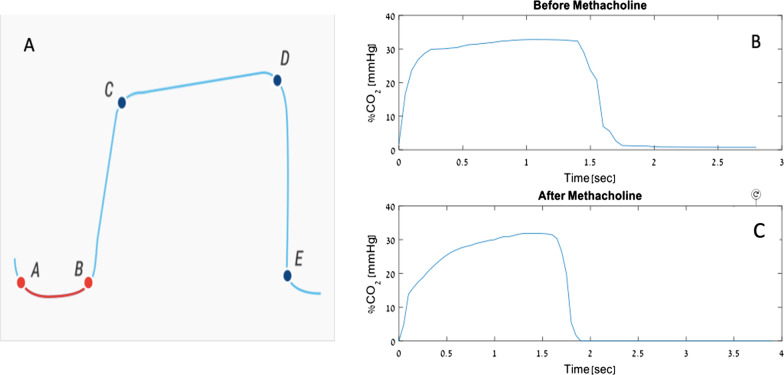
Background: Capnography waveform contains essential information regarding physiological characteristics of the airway and thus indicative of the level of airway obstruction. Our aim was to develop a capnography-based, point-of-care tool that can estimate the level of obstruction in patients with asthma and COPD.
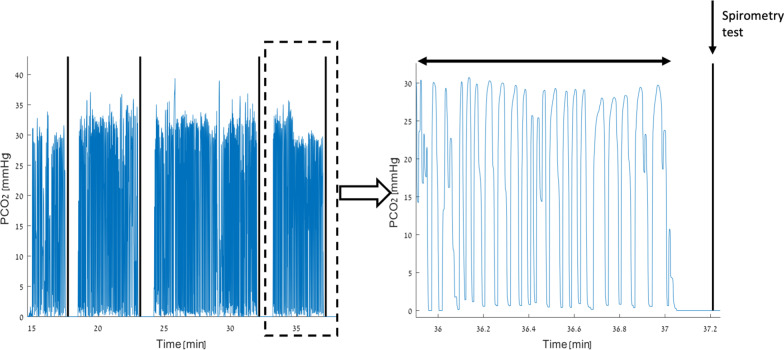
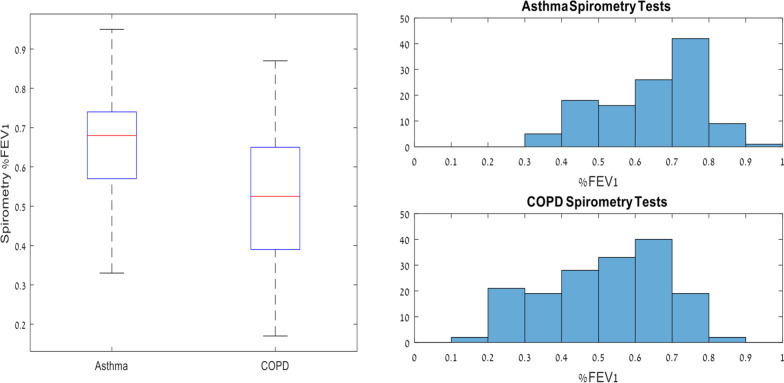
Methods: Two prospective observational studies conducted between September 2016 and May 2018 at Rabin Medical Center, Israel, included healthy, asthma and COPD patient groups. Each patient underwent spirometry test and continuous capnography, as part of, either methacholine challenge test for asthma diagnosis or bronchodilator reversibility test for asthma and COPD routine evaluation. Continuous capnography signal, divided into single breaths waveforms, were analyzed to identify waveform features, to create a predictive model for FEV1 using an artificial neural network. The gold standard for comparison was FEV1 measured with spirometry.
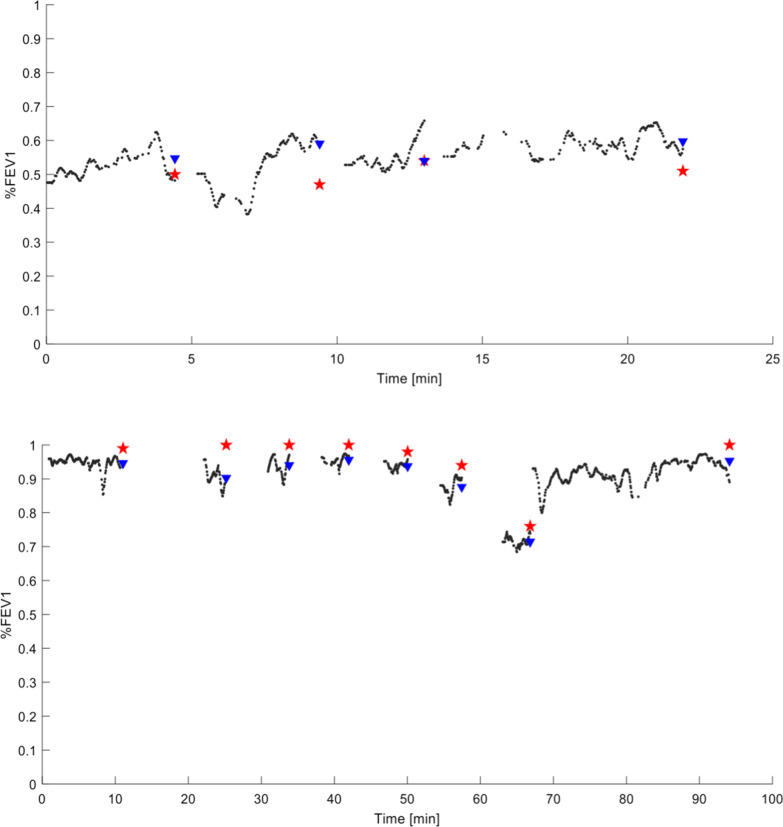
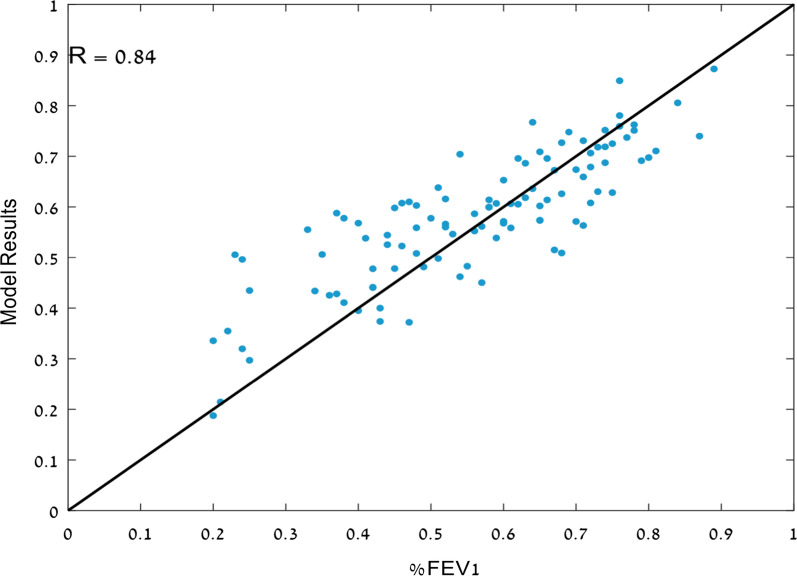
Measurements and main results: Overall 160 patients analyzed. Model prediction included 32/88 waveform features and three demographic features (age, gender and height). The model showed excellent correlation with FEV1 (R = 0.84), R2 achieved was 0.7 with mean square error of 0.13.
Conclusion: In this study we have developed a model to evaluate FEV1 in asthma and COPD patients. Using this model, as a point-of-care tool, we can evaluate the airway obstruction level without reliance on patient cooperation. Moreover, continuous FEV1 monitoring can identify disease fluctuations, response to treatment and guide therapy.
Trial registration: clinical trials.gov, NCT02805114. Registered 17 June 2016, https://clinicaltrials.gov/ct2/show/NCT02805114.
Keywords: Airway obstruction; Asthma; COPD; Capnography; FEV1; Model; Neural network.
Conflict of interest statement
This study was sponsored by Medtronic. The authors have no competing interests declared.
Figures
References
-
- Global Strategy for the Diagnosis, Management, and Prevention of Chronic Obstructive Lung Disease GOLD-2020- [cited 2020 Aug 28]. https://goldcopd.org/wp-content/uploads/2019/12/GOLD-2020-FINAL-ver1.2-0... - PubMed
-
- Global strategy for asthma management and preventionGINA-2020- [cited 2020 Aug 28]. https://ginasthma.org/wp-content/uploads/2020/04/GINA-2020-full-report_-...
-
- Guidelines for Methacholine and Exercise Challenge Testing1999: This official statement of the American Thoracic Society was adopted by the ATS board of directors, July 1999. Am J Respir Crit Care Med. 2000;161(1):30929. - PubMed
Publication types
MeSH terms
Associated data
LinkOut - more resources
Full Text Sources
Other Literature Sources
Medical
