


Self-reported symptoms of arm lymphedema and health-related quality of life among female breast cancer survivors
- PMID: 34021179
- PMCID: PMC8139966
- DOI: 10.1038/s41598-021-89055-0
Self-reported symptoms of arm lymphedema and health-related quality of life among female breast cancer survivors
Abstract
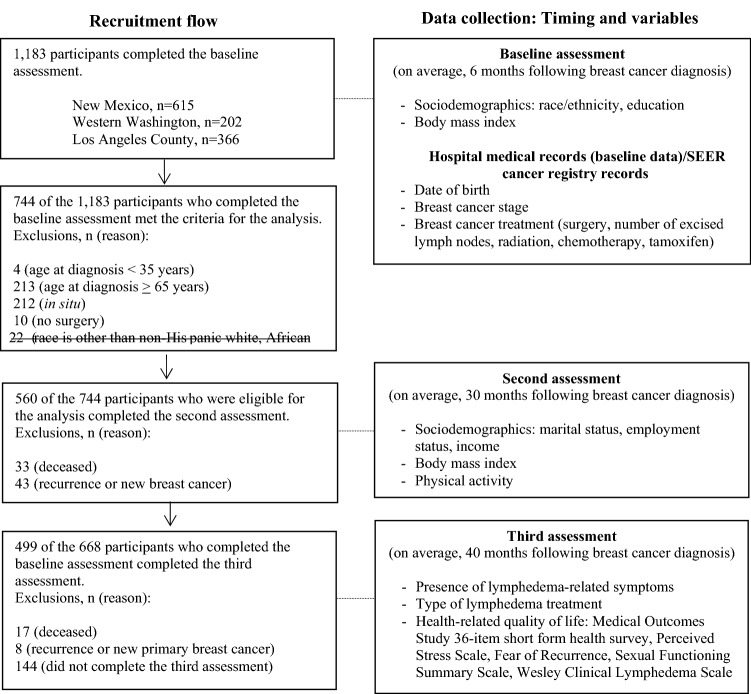
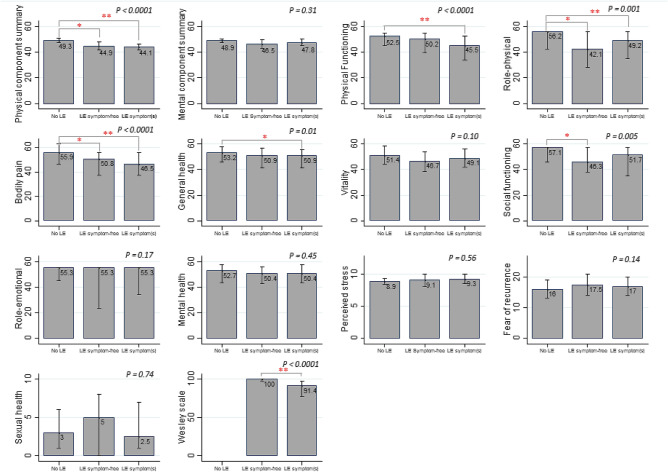
We examined cross-sectional associations between arm lymphedema symptoms and health-related quality of life (HRQoL) in the Health, Eating, Activity and Lifestyle (HEAL) Study. 499 women diagnosed with localized or regional breast cancer at ages 35-64 years completed a survey, on average 40 months after diagnosis, querying presence of lymphedema, nine lymphedema-related symptoms, e.g., tension, burning pain, mobility loss, and warmth/redness, and HRQoL. Analysis of covariance models were used to assess HRQoL scores in relation to presence of lymphedema and lymphedema-related symptoms. Lymphedema was self-reported by 137 women, of whom 98 were experiencing lymphedema at the time of the assessment. The most common symptoms were heaviness (52%), numbness (47%), and tightness (45%). Perceived physical health was worse for women reporting past or current lymphedema than those reporting no lymphedema (P-value < 0.0001). No difference was observed for perceived mental health (P-value = 0.31). Perceived physical health, stress, and lymphedema-specific HRQoL scores worsened as number of symptoms increased (P-values ≤ 0.01). Women reporting tension in the arm had lower physical health (P-value = 0.01), and those experiencing burning pain, tension, heaviness, or warmth/redness in the arm had lower lymphedema-specific HRQoL (P-values < 0.05). Treatment targeting specific lymphedema-related symptoms in addition to size/volume reduction may improve some aspects of HRQoL among affected women.
Conflict of interest statement
The authors declare no competing interests.
Figures
References
Publication types
MeSH terms
Grants and funding
LinkOut - more resources
Full Text Sources
Other Literature Sources
Medical
Miscellaneous
