


Endothelial cell dysfunction, coagulation, and angiogenesis in coronavirus disease 2019 (COVID-19)
- PMID: 34022205
- PMCID: PMC8135191
- DOI: 10.1016/j.mvr.2021.104188
Endothelial cell dysfunction, coagulation, and angiogenesis in coronavirus disease 2019 (COVID-19)
Abstract
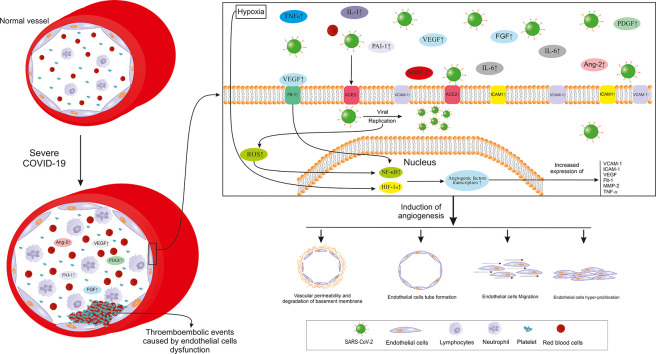
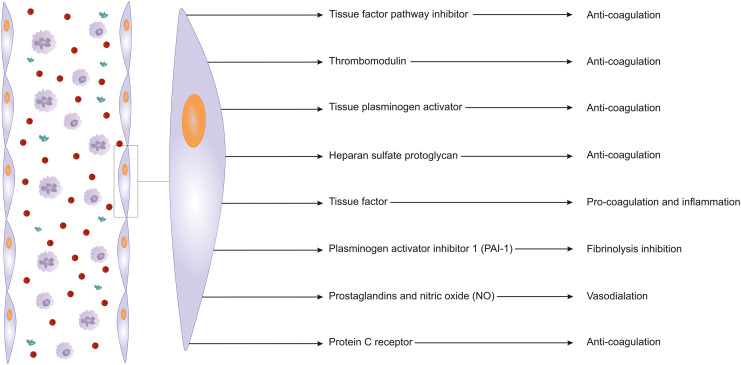
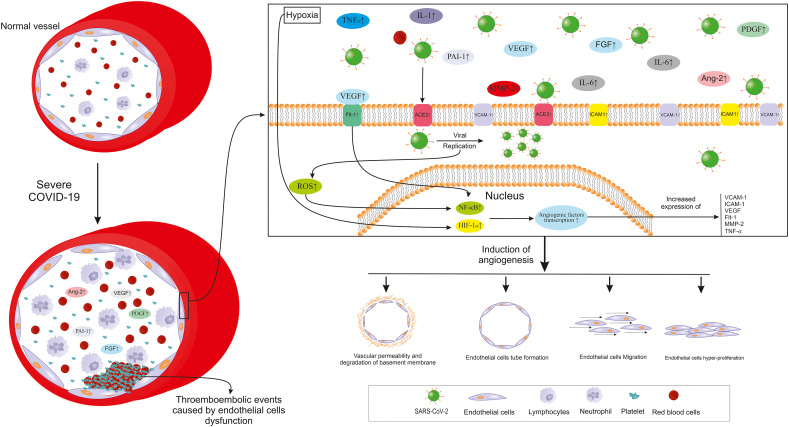
Coronavirus disease 2019 (COVID-19) caused by severe acute respiratory syndrome coronavirus 2 (SARS-CoV-2) has been led to a pandemic emergency. So far, different pathological pathways for SARS-CoV-2 infection have been introduced in which the excess release of pro-inflammatory cytokines (such as interleukin 1 β [IL-1β], IL-6, and tumor necrosis factor α [TNFα]) has earned most of the attentions. However, recent studies have identified new pathways with at least the same level of importance as cytokine storm in which endothelial cell (EC) dysfunction is one of them. In COVID-19, two main pathologic phenomena have been seen as a result of EC dysfunction: hyper-coagulation state and pathologic angiogenesis. The EC dysfunction-induced hypercoagulation state seems to be caused by alteration in the levels of different factors such as plasminogen activator inhibitor 1 (PAI-1), von Willebrand factor (vWF) antigen, soluble thrombomodulin, and tissue factor pathway inhibitor (TFPI). As data have shown, these thromboembolic events are associated with severity of disease severity or even death in COVID-19 patients. Other than thromboembolic events, pathologic angiogenesis is among the recent findings. Furthermore, over-expression/higher levels of different proangiogenic factors such as vascular endothelial growth factor (VEGF), hypoxia-inducible factor 1 α (HIF-1α), IL-6, TNF receptor super family 1A and 12, and angiotensin-converting enzyme 2 (ACE2) have been found in the lung biopsies/sera of both survived and non-survived COVID-19 patients. Also, there are some hypotheses regarding the role of nitric oxide in EC dysfunction and acute respiratory distress syndrome (ARDS) in SARS-CoV-2 infection. It has been demonstrated that different pathways involved in inflammation are generally common with EC dysfunction and angiogenesis. Altogether, considering the common possible upstream pathways in cytokine storm, pathologic angiogenesis, and EC dysfunction, it seems that targeting these molecules (such as nuclear factor κB) could be more effective in the management of patients with COVID-19.
Keywords: Angiogenesis; Coagulation; Coronavirus disease 2019; Cytokine storm; Endothelial cells; Inflammation.
Copyright © 2021 Elsevier Inc. All rights reserved.
Conflict of interest statement
The authors declare that they have no known competing financial interests or personal relationships that could have appeared to influence the work reported in this paper.
Figures
References
Publication types
MeSH terms
Substances
LinkOut - more resources
Full Text Sources
Other Literature Sources
Medical
Research Materials
Miscellaneous
