


Effect of Exclusion Diets on Symptom Severity and the Gut Microbiota in Patients With Irritable Bowel Syndrome
- PMID: 34022450
- PMCID: PMC9054035
- DOI: 10.1016/j.cgh.2021.05.027
Effect of Exclusion Diets on Symptom Severity and the Gut Microbiota in Patients With Irritable Bowel Syndrome
Abstract
Background & aims: Altered fecal microbiota have been reported in irritable bowel syndrome (IBS), although studies vary, which could be owing to dietary effects. Many IBS patients may eliminate certain foods because of their symptoms, which in turn may alter fecal microbiota diversity and composition. This study aimed to determine if dietary patterns were associated with IBS, symptoms, and fecal microbiota differences reported in IBS.
Methods: A total of 346 IBS participants and 170 healthy controls (HCs) completed a Diet Checklist reflecting the diet(s) consumed most frequently. An exclusion diet was defined as a diet that eliminated food components by choice. Within this group, a gluten-free, dairy-free, or low fermentable oligosaccharides, disaccharides, monosaccharides, and polyols diet was further defined as restrictive because they often are implicated in reducing symptoms. Stool samples were obtained from 171 IBS patients and 98 HCs for 16S ribosomal RNA gene sequencing and microbial composition analysis.
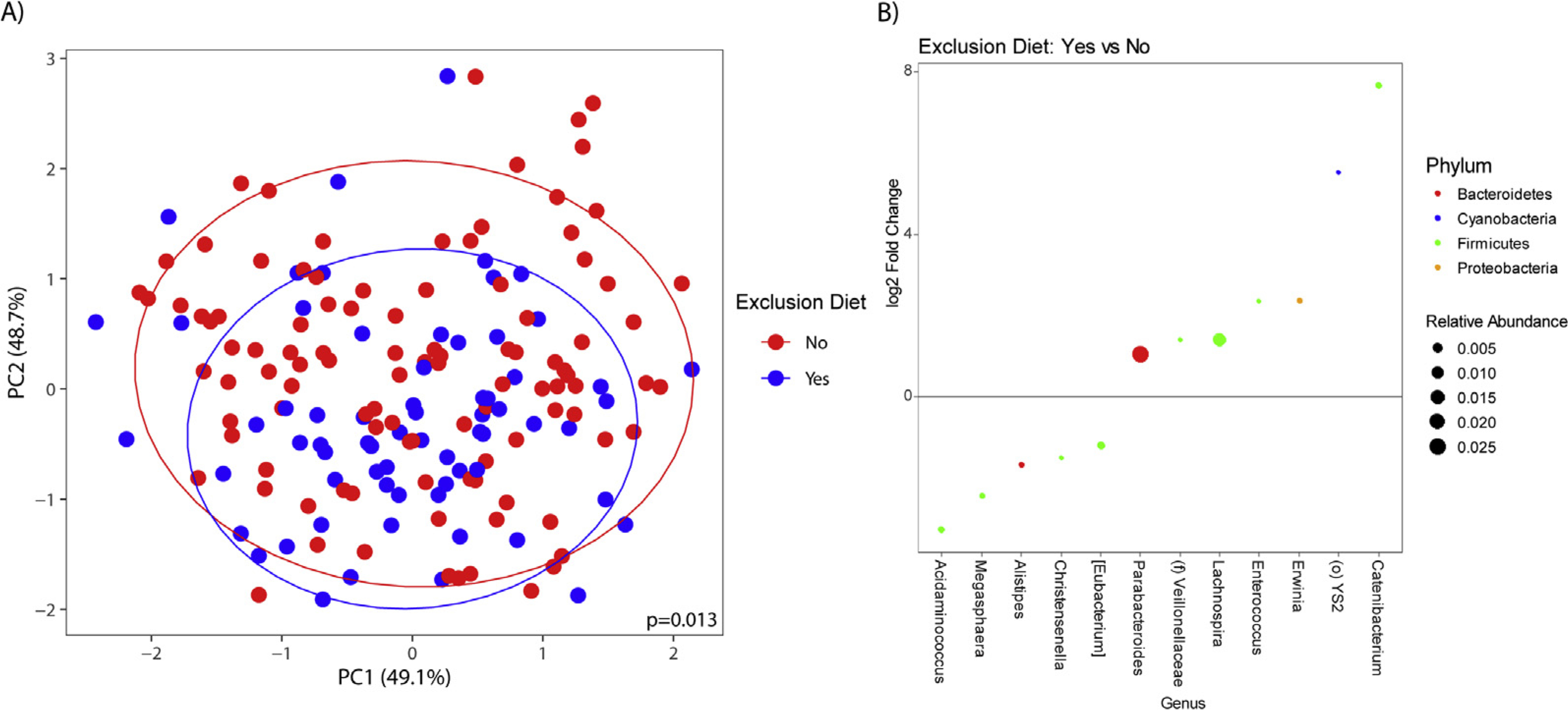
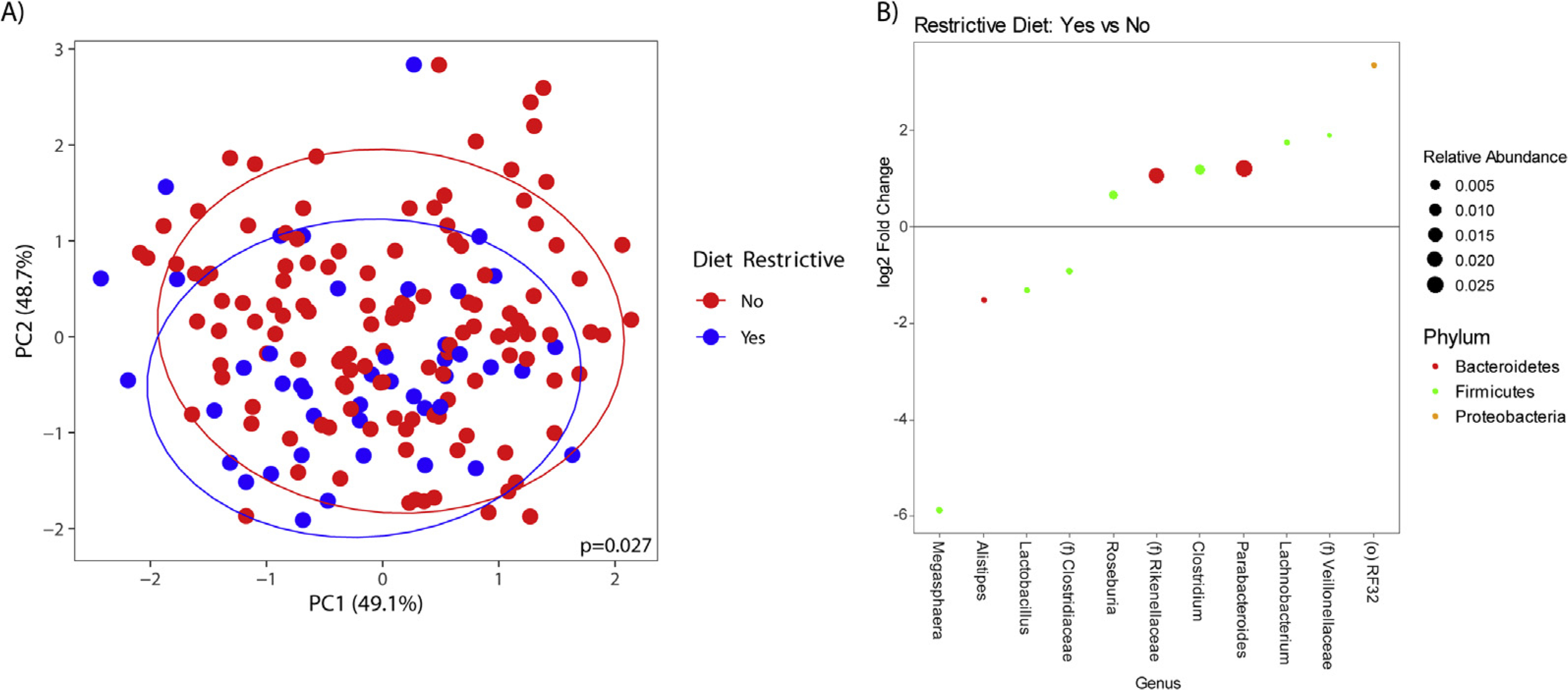
Results: Having IBS symptoms was associated with consuming a restrictive diet (27.17% of IBS patients vs 7.65% of HCs; odds ratio, 3.25; 95% CI, 1.66-6.75; P value = .006). IBS participants on an exclusion or restrictive diet reported more severe IBS symptoms (P = .042 and .029, respectively). The composition of the microbiota in IBS patients varied depending on the diet consumed. IBS participants on an exclusion diet had a greater abundance of Lachnospira and a lower abundance of Eubacterium (q value, <.05), and those on a restrictive diet had a lower abundance of Lactobacillus (q value, <.05).
Conclusions: Restrictive diets likely are consumed more by IBS patients than HCs to reduce GI symptom severity. Dietary patterns influence the composition of the fecal microbiota and may explain some of the differences between IBS and HCs.
Keywords: Diet; Fecal Microbiome; Irritable Bowel Syndrome.
Copyright © 2022 The Authors. Published by Elsevier Inc. All rights reserved.
Conflict of interest statement
Conflicts of interest
This author discloses the following: Emeran A. Mayer is a scientific advisory board member of Danone, Axial Biotherapeutics, Viome, Amare, Mahana Therapeutics, Pendulum, Bloom Biosciences, and APC Microbiome Ireland. The remaining authors disclose no conflicts.
Figures
References
-
- Lacy BE, Mearin F, Chang L, et al. Bowel disorders. Gastroenterology 2016;150:1393–1407. - PubMed
-
- Bohn L, Storsrud S, Tornblom H, et al. Self-reported food-related gastrointestinal symptoms in IBS are common and associated with more severe symptoms and reduced quality of life. Am J Gastroenterol 2013;108:634–641. - PubMed
-
- Monsbakken KW, Vandvik PO, Farup PG. Perceived food intolerance in subjects with irritable bowel syndrome–etiology, prevalence and consequences. Eur J Clin Nutr 2006; 60:667–672. - PubMed
