


Prevalence and impact of fibrinolytic dysregulation in patients with acute coronary syndromes
- PMID: 34022898
- PMCID: PMC8141118
- DOI: 10.1186/s12959-021-00288-5
Prevalence and impact of fibrinolytic dysregulation in patients with acute coronary syndromes
Abstract
Objective: Dual antiplatelet therapy can reduce coronary thrombosis and improve the prognosis in patients with acute coronary syndrome (ACS). However, there was limited prognostic information about fibrinolytic dysregulation in patients with ACS. This study is aimed to evaluated the prevalence and impact of fibrinolytic dysregulation in patients with acute coronary syndrome (ACS).
Methods: We retrospectively analyzed coagulation and fibrinolysis related indexes of ACS in hospitalized adults with rapid thrombelastography between May 2016 and December 2018. All of the follow-up visits were ended by December 2019. The primary outcome was the occurrence of major adverse cardiovascular events (MACEs), which included unstable angina pectoris, non-fatal myocardial infarction, non-fatal cerebral infarction, heart failure and all-cause death.
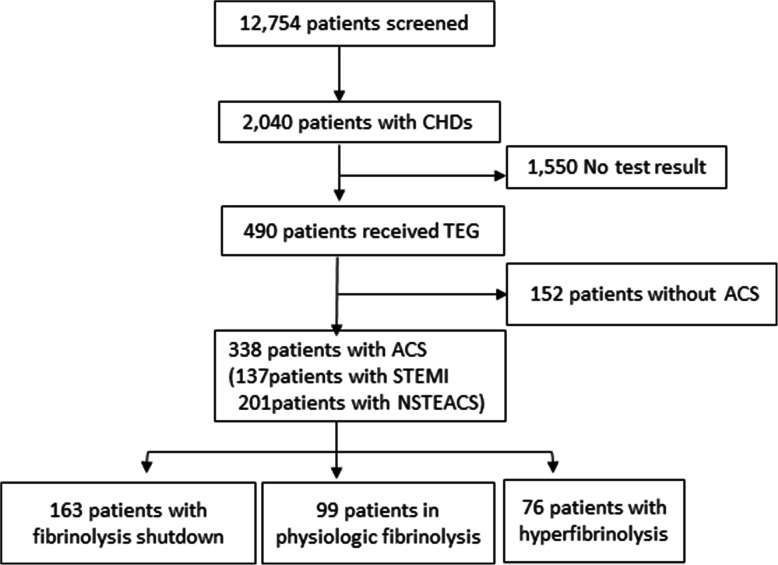
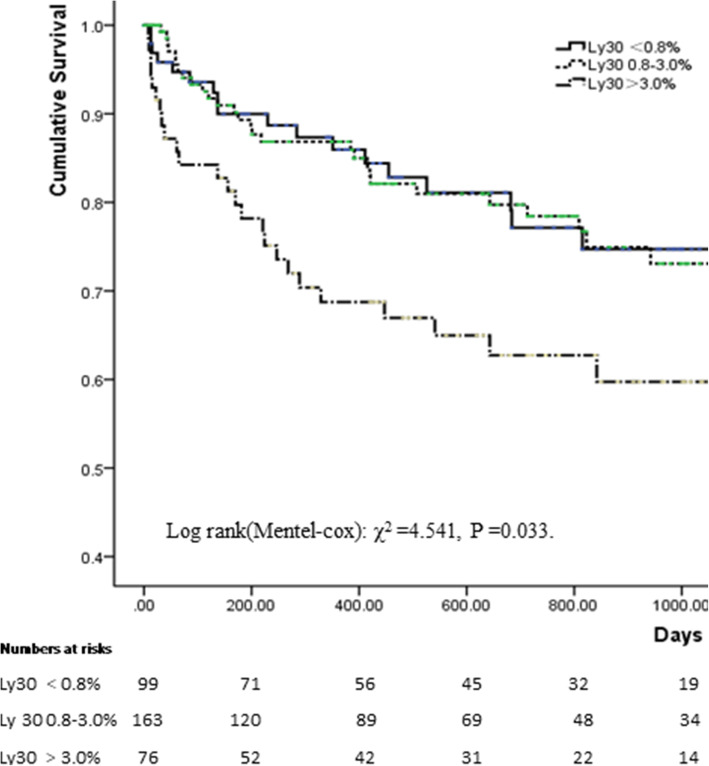
Results: Three hundred thirty-eight patients were finally included with an average age of 62.5 ± 12.8 years old, 273 (80.5%) were males, 137(40.5%) patients were with ST-elevation myocardial infraction. Fibrinolysis shutdown (LY30<0.8%) and hyperfibrinolysis (LY30 >3.0%) were observed among 163 (48.2%) and 76(22.5%) patients, respectively. During a total of 603.2 person·years of follow-up period, 77 MACEs occurred (22.8%). Multivariate Cox regression analysis indicated that LY30 [HR: 1.101, 95% CI: 1.010-1.200, P = 0.028] was independently correlated with the occurrence of MACEs. The hazard ratios pertaining to MACEs in patients with fibrinolysis shutdown and hyperfibrinolysis compared with those in the physiologic range (LY30: 0.8-3.0%) were 1.196 [HR: 1.196, 95% CI: 0.679-2.109,P = 0.535] and 2.275 [HR: 2.275, 95% CI: 1.241-4.172, P = 0.003], respectively.
Conclusions: Fibrinolytic dysregulation is very common in selected patients with ACS, and hyperfibrinolysis (LY30 > 3%) is associated with poor outcomes in patients with ACS.
Keywords: Acute coronary syndrome; Fibrinolysis; Retrospective study; Thrombelastography.
Conflict of interest statement
The authors declare that they have no competing interests.
Figures
References
-
- Ibanez B, James S, Agewall S, Antunes MJ, Bucciarelli-Ducci C, Bueno H, et al. ESC guidelines for the management of acute myocardial infarction in patients presenting with ST-segment elevation. Eur Heart J. 2017;2018(39):119–177. - PubMed
-
- Valgimigli M, Bueno H, Byrne RA, Collet JP, Costa F, Jeppsson A, et al. ESC focused update on dual antiplatelet therapy in coronary artery disease developed in collaboration with EACTS. Eur J Cardio Thorac Surg. 2017;2018(53):34–78. - PubMed
-
- Holcomb JB, Minei KM, Scerbo ML, Radwan ZA, Wade CE, Kozar RA, et al. Admission rapid thrombelastography can replace conventional coagulation tests in the emergency department: experience with 1974 consecutive trauma patients. Ann Surg. 2012;256:476–486. doi: 10.1097/SLA.0b013e3182658180. - DOI - PubMed
Grants and funding
LinkOut - more resources
Full Text Sources
Other Literature Sources
