Oxygen delivery systems for adults in Sub-Saharan Africa: A scoping review
- PMID: 34026051
- PMCID: PMC8109278
- DOI: 10.7189/jogh.11.04018
Oxygen delivery systems for adults in Sub-Saharan Africa: A scoping review
Abstract
Background: Respiratory diseases are the leading cause of death and disability worldwide. Oxygen is an essential medicine used to treat hypoxemia from respiratory diseases. However, the availability and utilization of oxygen delivery systems for adults in sub-Saharan Africa is not well-described. We aim to identify and describe existing data around oxygen availability and provision for adults in sub-Saharan Africa, determine knowledge or research gaps, and make recommendations for future research and capacity building.
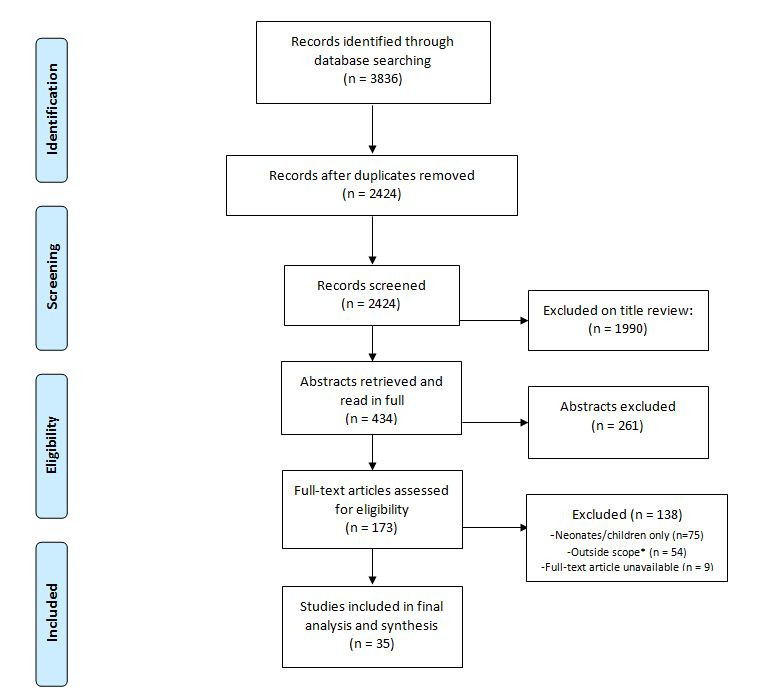
Methods: We systematically searched four databases for articles on April 22, 2020, for variations of keywords related to oxygen with a focus on countries in sub-Saharan Africa. Inclusion criteria were studies that included adults and addressed hypoxemia assessment or outcome, oxygen delivery mechanisms, oxygen availability, oxygen provision infrastructure, and oxygen therapy and outcomes.
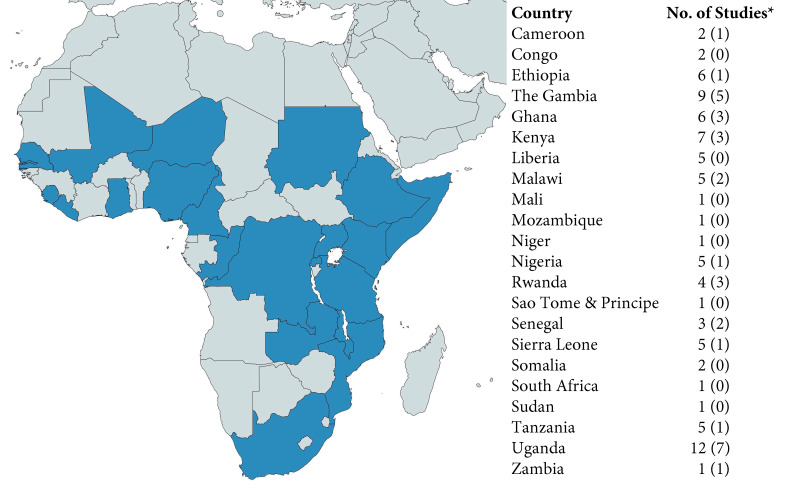
Results: 35 studies representing 22 countries met inclusion criteria. Availability of oxygen delivery systems ranged from 42%-94% between facilities, with wide variability in the consistency of availability. There was also wide reported prevalence of hypoxemia, with most studies focusing on specific populations. In facilities where oxygen is available, health care workers are ill-equipped to identify adult patients with hypoxemia, provide oxygen to those who need it, and titrate or discontinue oxygen appropriately. Oxygen concentrators were shown to be the most cost-effective delivery system in areas where power is readily available.
Conclusions: There is a substantial need for building capacity for oxygen delivery throughout sub-Saharan Africa. Addressing this critical issue will require innovation and a multi-faceted approach of developing infrastructure, better equipping facilities, and health care worker training.
Copyright © 2021 by the Journal of Global Health. All rights reserved.
Conflict of interest statement
Competing interests: Dr Navuluri reports grants from CHEST Foundation outside the submitted work. Dr McCollum reports grants from Bill and Melinda Gates Foundation, Pfizer, Sonavi Laboratories, GlaxoSmithKline, and Save the Children (UK) outside the submitted work. Dr MacIntyre provides consultation for Inspirx Pharma, Hillrom, Ventec, and Vyaire outside the submitted work. The authors completed the ICMJE Unified Competing Interest form (available upon request from the corresponding author), and declare no further conflicts of interest.
Figures
References
-
- Societies FoIR. The Global Impact of Respiratory Disease – Second Edition. Sheffield, European Respiratory Society; 2017.
-
- Report of the Medical Research Council Working Party Long term domiciliary oxygen therapy in chronic hypoxic cor pulmonale complicating chronic bronchitis and emphysema. Lancet. 1981;1:681-6. - PubMed
-
- World Health Organization. WHO Model List of Essential Medicines. 2017. Available: https://apps.who.int/iris/bitstream/handle/10665/273826/EML-20-eng.pdf?ua=1. Accessed: 28 October 2019.
Publication types
MeSH terms
Substances
Grants and funding
LinkOut - more resources
Full Text Sources
Other Literature Sources
Medical
Miscellaneous