


Impact of COVID-19 and intensive care unit capacity on vaccination support: Evidence from a two-leg representative survey in the United Kingdom
- PMID: 34026244
- PMCID: PMC8127519
- DOI: 10.1016/j.jve.2021.100044
Impact of COVID-19 and intensive care unit capacity on vaccination support: Evidence from a two-leg representative survey in the United Kingdom
Abstract
Background: Overcoming coronavirus disease (COVID-19) will likely require mass vaccination. With vaccination scepticism rising in many countries, assessing the willingness to vaccinate against COVID-19 is of crucial global health importance.
Objective: The goal of this study was to examine how personal and family COVID-19 risk and ICU (intensive care unit) availability just before the pandemics influence the acceptance of future COVID-19 vaccines.
Methods: A two-leg survey was carried out for comparing vaccination attitudes pre-and post-COVID-19. UK residents were surveyed in October 2019 about their vaccination attitudes, and again in a follow-up survey in April 2020, containing the previous questions and further ones related to COVID-19 exposure and COVID-19 vaccine attitudes. The study combined survey results with local COVID-19 incidence and pre-COVID-19 measures of ICU capacity and occupancy. Regression analysis of the impact of individual and public health factors on attitudes towards COVID-19 vaccination was performed.
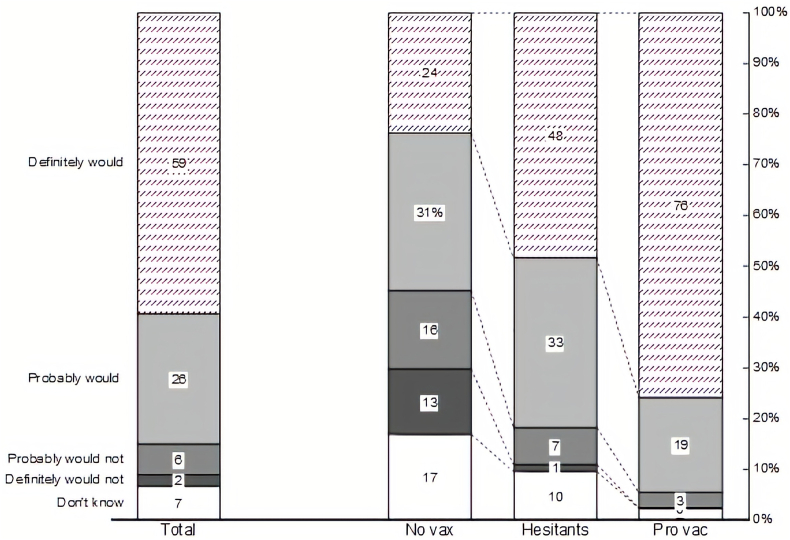
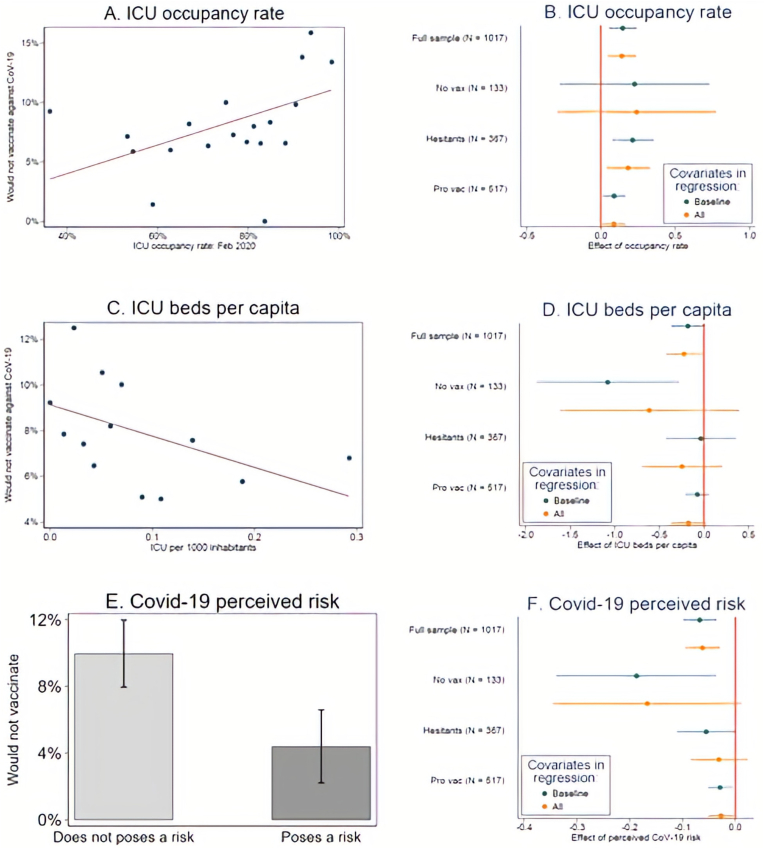
Results: The October 2019 survey included a nationally representative sample of 1653 UK residents. All of them were invited for the follow-up survey in April 2020, and 1194 (72%) participated. The April 2020 sample remained nationally representative. Overall, 85% of respondents (and 55% of vaccine sceptics) would be willing to be vaccinated against COVID-19. Higher personal and family risk for COVID-19 was associated with stronger COVID-19 vaccination willingness, whereas low pre-COVID-19 ICU availability was associated with lower trust in medical experts and lower COVID-19 vaccine support. Further, general vaccination support has risen during the COVID-19 pandemic.
Conclusion: Support for COVID-19 vaccination is high amongst all groups, even vaccine sceptics, boding well for future vaccination take-up rates. Vaccination willingness is correlated with health care availability during the COVID-19 crisis, suggesting a powerful synergy between health care system performance during crisis and the general population's trust in the medical profession - as reflected in vaccination support.
Keywords: COVID-19; Intensive care unit (ICU) capacity; Trust in medical experts; Vaccination hesitancy; Vaccine; Vaccine scepticism.
© 2021 The Author(s).
Conflict of interest statement
The authors declare that they have no known competing financial interests or personal relationships that could have appeared to influence the work reported in this paper.
Figures
References
-
- MacDonald N.E. others, Vaccine hesitancy: definition, scope and determinants. Vaccine. 2015;33:4161–4164. - PubMed
-
- Wellcome Global Monitor . GALLUP; 2018. How Does the World Feel about Science and Health.https://wellcome.org/sites/default/files/wellcome-global-monitor-2018.pdf available at.
-
- Drop in Vaccination Rates in England Alarming Experts. The Guardian; 2019. https://www.theguardian.com/society/2019/sep/26/drop-in-vaccination-rate... available at.
-
- WHO europe Office, vaccines and immunization. Data and statistics. http://www.euro.who.int/en/health-topics/disease-prevention/vaccines-and... available at.
-
- Gostin L.O., Hodge J.G., Jr., Bloom B.R. others, The public health crisis of underimmunisation: a global plan of action. Lancet Infect Dis. 2020;20:e11–e16. - PubMed
LinkOut - more resources
Full Text Sources
Other Literature Sources
Miscellaneous
