


COVID-19 Epidemic in Malaysia: Epidemic Progression, Challenges, and Response
- PMID: 34026696
- PMCID: PMC8138565
- DOI: 10.3389/fpubh.2021.560592
COVID-19 Epidemic in Malaysia: Epidemic Progression, Challenges, and Response
Abstract
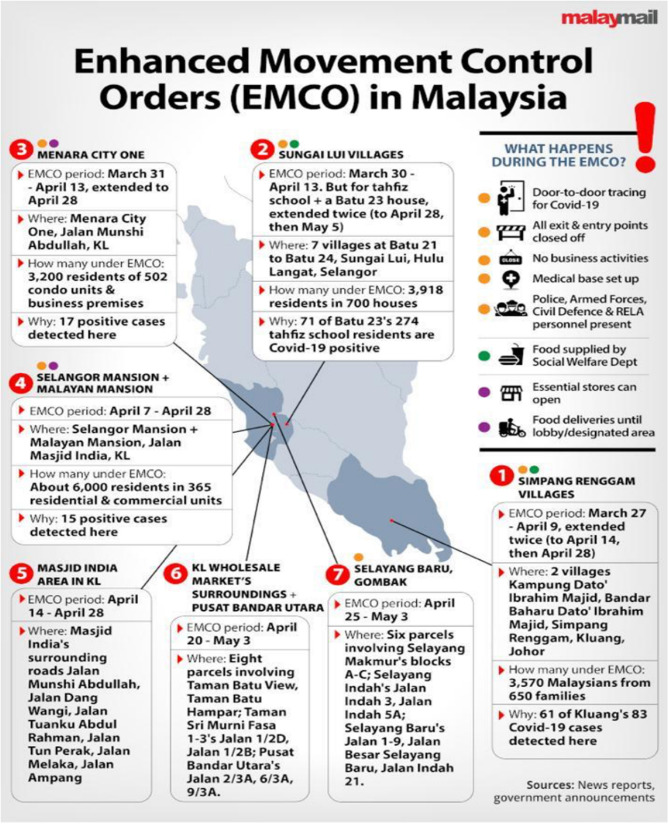
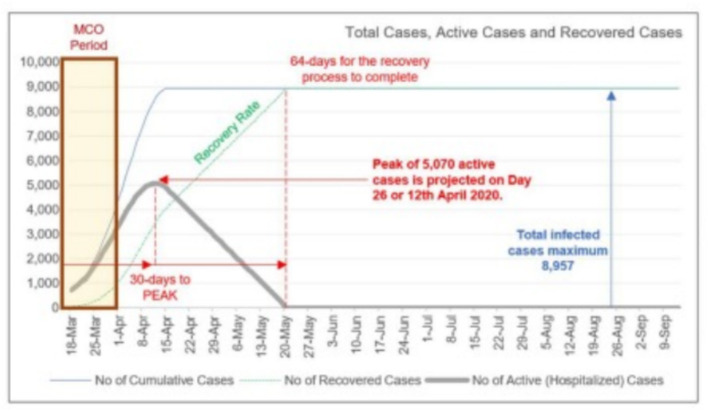
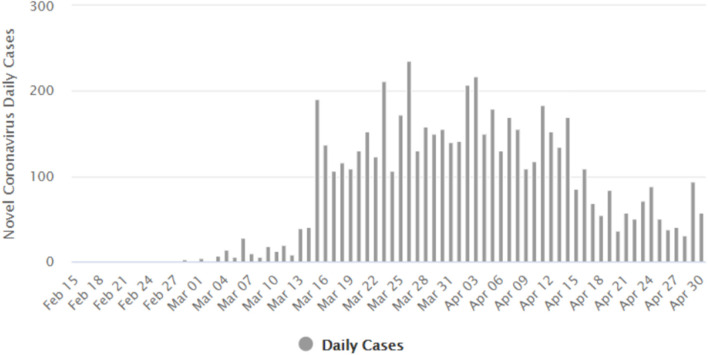
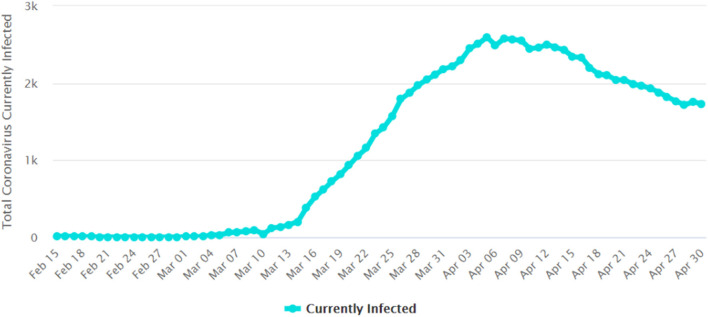
COVID-19 pandemic is the greatest communicable disease outbreak to have hit Malaysia since the 1918 Spanish Flu which killed 34,644 people or 1% of the population of the then British Malaya. In 1999, the Nipah virus outbreak killed 105 Malaysians, while the SARS outbreak of 2003 claimed only 2 lives. The ongoing COVID-19 pandemic has so far claimed over 100 Malaysian lives. There were two waves of the COVID-19 cases in Malaysia. First wave of 22 cases occurred from January 25 to February 15 with no death and full recovery of all cases. The ongoing second wave, which commenced on February 27, presented cases in several clusters, the biggest of which was the Sri Petaling Tabligh cluster with an infection rate of 6.5%, and making up 47% of all cases in Malaysia. Subsequently, other clusters appeared from local mass gatherings and imported cases of Malaysians returning from overseas. Healthcare workers carry high risks of infection due to the daily exposure and management of COVID-19 in the hospitals. However, 70% of them were infected through community transmission and not while handling patients. In vulnerable groups, the incidence of COVID-19 cases was highest among the age group 55 to 64 years. In terms of fatalities, 63% were reported to be aged above 60 years, and 81% had chronic comorbidities such as diabetes, hypertension, and heart diseases. The predominant COVID-19 strain in Malaysia is strain B, which is found exclusively in East Asia. However, strain A, which is mostly found in the USA and Australia, and strain C in Europe were also present. To contain the epidemic, Malaysia implemented a Movement Control Order (MCO) beginning on March 18 in 4 phases over 2 months, ending on May 12. In terms of economic impacts, Malaysia lost RM2.4 billion a day during the MCO period, with an accumulated loss of RM63 billion up to the end of April. Since May 4, Malaysia has relaxed the MCO and opened up its economic sector to relieve its economic burden. Currently, the best approach to achieving herd immunity to COVID-19 is through vaccination rather than by acquiring it naturally. There are at least two candidate vaccines which have reached the final stage of human clinical trials. Malaysia's COVID-19 case fatality rate is lower than what it is globally; this is due to the successful implementation of early preparedness and planning, the public health and hospital system, comprehensive contact tracing, active case detection, and a strict enhanced MCO.
Keywords: COVID-19; Malaysia; coronavirus; movement control order; pandemic.
Copyright © 2021 Hashim, Adman, Hashim, Mohd Radi and Kwan.
Conflict of interest statement
JH, ZH, and SK were employed by the company Provenue Corporation Sdn Bhd. The remaining authors declare that the research was conducted in the absence of any commercial or financial relationships that could be construed as a potential conflict of interest.
Figures
References
-
- World Health Organization . Past pandemics. (2020). Available online at: http://www.euro.who.int/en/health-topics/communicable-diseases/influenza... (accessed May 4, 2020).
-
- Liew KK. Terribly severe though mercifully short: the episode of the 1918 influenza in British Malaya. Mod Asian Stud. (2007) 41:221–52. 10.1017/S0026749X05002180 - DOI
-
- World Health Organisation . Novel Coronavirus (2019-nCoV). Situation Report-1 (2020). Available online at: https://www.who.int/docs/default-source/coronaviruse/situation-reports/2... (accessed April 30, 2020).
Publication types
MeSH terms
LinkOut - more resources
Full Text Sources
Other Literature Sources
Medical
Miscellaneous
