


Novel Cephalosporins in Septic Subjects and Severe Infections: Present Findings and Future Perspective
- PMID: 34026774
- PMCID: PMC8138473
- DOI: 10.3389/fmed.2021.617378
Novel Cephalosporins in Septic Subjects and Severe Infections: Present Findings and Future Perspective
Abstract
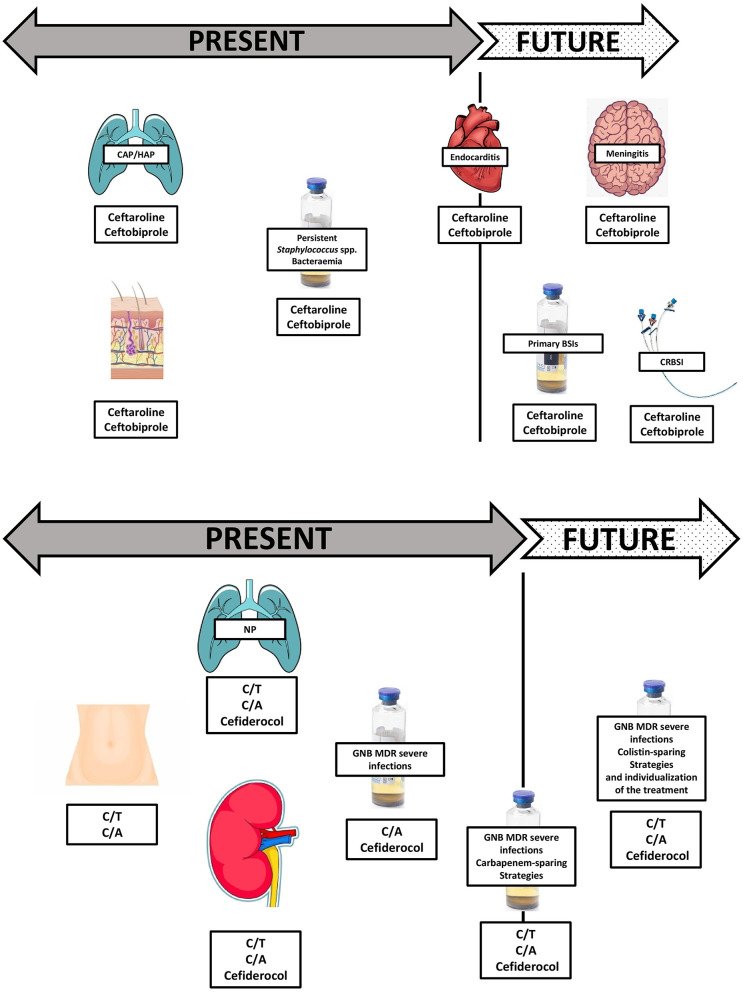
In past decade, cephalosporins have developed significantly, and data regarding novel cephalosporins (i.e., ceftobiprole, ceftaroline, ceftolozane/tazobactam, ceftazidime/avibactam, and cefiderocol) within septic and bacteremic subjects are rising. These compounds generally offer very promising in vitro microbiological susceptibility, although the variability among gram-negative and -positive strains of different cohorts is noticed in the literature. We require further pharmacological data to measure the best dose in order to prevent sub-therapeutic drug levels in critically ill patients. These new compounds in theory are the sparing solution in the Enterobacteriales infection group for different antimicrobial classes such as aminoglycosides notably within endovascular and GNB-bacteremias, as well as colistin and carbapenem-sparing strategies, favoring good safety profile molecules. Moreover, new cephalosporins are the basis for the actual indications to open up new and exciting prospects for serious infections in the future. In future, patients will be addressed with the desirable approach to sepsis and serious infections in terms of their clinical situation, inherent features of the host, the sensitivity profile, and local epidemiology, for which evidence of the use of new cephalosporin in the treatment of severe infections will fill the remaining gaps.
Keywords: blood-stream infections; cephalosporin; multi-drug resistant bacteria; sepsis; severe infections.
Copyright © 2021 Corcione, Lupia and De Rosa.
Conflict of interest statement
The authors declare that the research was conducted in the absence of any commercial or financial relationships that could be construed as a potential conflict of interest.
Figures
References
LinkOut - more resources
Full Text Sources
Other Literature Sources
Miscellaneous
