


Design and execution of a public randomization ceremony to enhance stakeholder engagement within a cluster randomized trial to improve tuberculosis diagnosis in Uganda
- PMID: 34027222
- PMCID: PMC8131570
- DOI: 10.1016/j.conctc.2021.100707
Design and execution of a public randomization ceremony to enhance stakeholder engagement within a cluster randomized trial to improve tuberculosis diagnosis in Uganda
Abstract
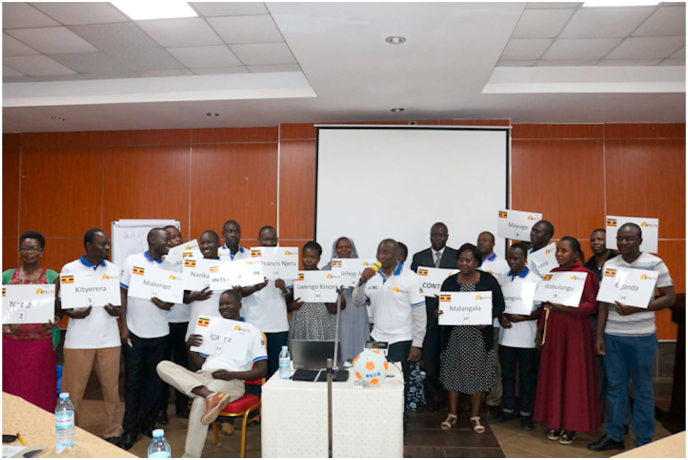
Public randomization ceremonies have been proposed as a strategy to strengthen stakeholder engagement and address concerns and misconceptions associated with trial randomization. However, there are few published examples that describe how to conduct a public randomization ceremony with meaningful stakeholder engagement or how such ceremonies impact stakeholder perceptions about randomization and the randomization process. Cluster randomization for the GeneXpert Performance Evaluation for Linkage to Tuberculosis Care (XPEL-TB) trial was conducted at a public randomization ceremony attended by 70 stakeholders in Kampala, Uganda. Presentations given by the Acting Assistant Commissioner from the Uganda National Tuberculosis and Leprosy Programme and trial investigators emphasized how the trial aimed to further national TB goals, as well as how stakeholders contributed to the intervention design. The purpose and process of randomization were described using simple text and visuals. Randomization was an interactive activity that required participation of stakeholders from each trial site. A survey administered to stakeholders at the end of the ceremony suggested high comprehension of randomization (98%), trust in the randomization process (96%), and satisfaction with randomization outcomes (96%). Public randomization ceremonies should be considered more routinely to engage stakeholders in and address potential concerns about the fairness and impartiality of the randomization process for community-based trials.
Keywords: Cluster randomized trials; Public randomization ceremony; Stakeholder engagement; Trial ethics; Tuberculosis.
© 2021 The Authors.
Figures

References
-
- Newman P.A., Rubincam C. Advancing community stakeholder engagement in biomedical HIV prevention trials: principles, practices and evidence. Expert Rev. Vaccines. 2014;13(12):1553–1562. - PubMed
-
- Rayzberg M.S. Fairness in the field: the ethics of resource allocation in randomized controlled field experiments. Sci. Technol. Hum. Val. 2018;44(3):371–398.
Grants and funding
LinkOut - more resources
Full Text Sources
Other Literature Sources
