


Review
doi: 10.1002/cm.21677.
Epub 2021 Jun 10.
LIM domain proteins in cell mechanobiology
Affiliations
- PMID: 34028199
- PMCID: PMC8603407
- DOI: 10.1002/cm.21677
Item in Clipboard
Review
LIM domain proteins in cell mechanobiology
Cytoskeleton (Hoboken).
2021 Jun.
Abstract
The actin cytoskeleton is important for maintaining mechanical homeostasis in adherent cells, largely through its regulation of adhesion and cortical tension. The LIM (Lin-11, Isl1, MEC-3) domain-containing proteins are involved in a myriad of cellular mechanosensitive pathways. Recent work has discovered that LIM domains bind to mechanically stressed actin filaments, suggesting a novel and widely conserved mechanism of mechanosensing. This review summarizes the current state of knowledge of LIM protein mechanosensitivity.
Keywords: LIM proteins; actin cytoskeleton; adherens junctions; focal adhesions.
© 2021 Wiley Periodicals LLC.
Figures
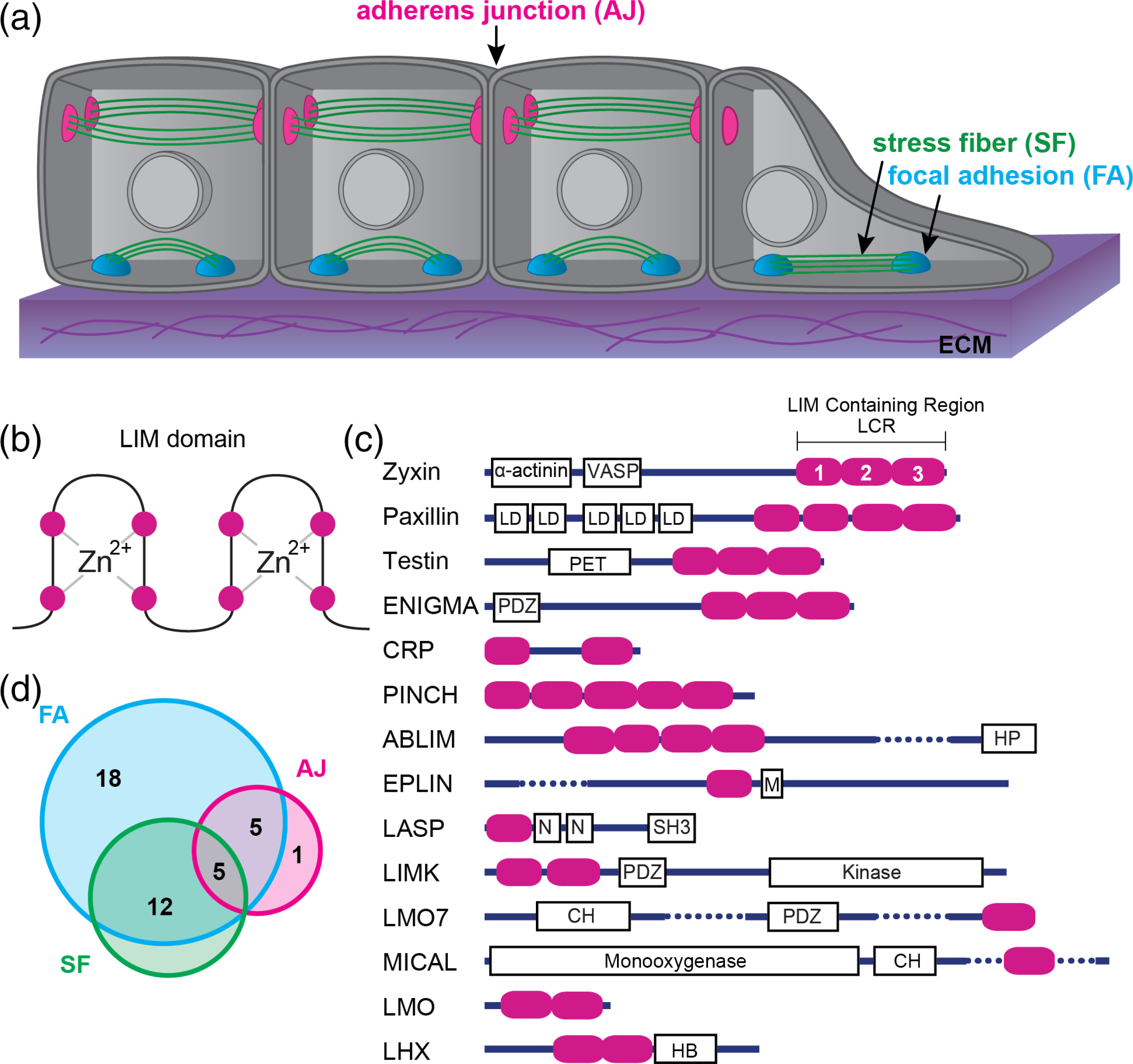
Mechanically stressed cells and LIM domain proteins. (a) Schematic of a layer of epithelial cells on top of an extracellular matrix (ECM). (b) Simple schematic of a LIM domain: Two zinc finger motifs. The magenta circles represent the well-conserved residues (typically cysteine or histidine) that chelate the zinc molecules. The remaining amino acid sequence varies between LIM domains. (c) Domain organization of the 14 classes of LIM domain proteins. Magenta ovals represent individual LIM domains. Dotted lines are used to abbreviate a few rather long structures. Other domain abbreviations: LD, Leucine rich aspartate domains; PET, prickle, espinas, testin; PDZ, membrane anchoring domain; HP, headpiece domain for F-actin binding; M, Myo5B interacting domain; N, nebulin; SH3, Src homology 3; CH, calponin homology; HB, homeobox. (d) Venn diagram showing the overlap of LIM domain proteins that associate with the three main networks: FA, Focal adhesions; AJ, adhesion junctions; SF, stress fibers
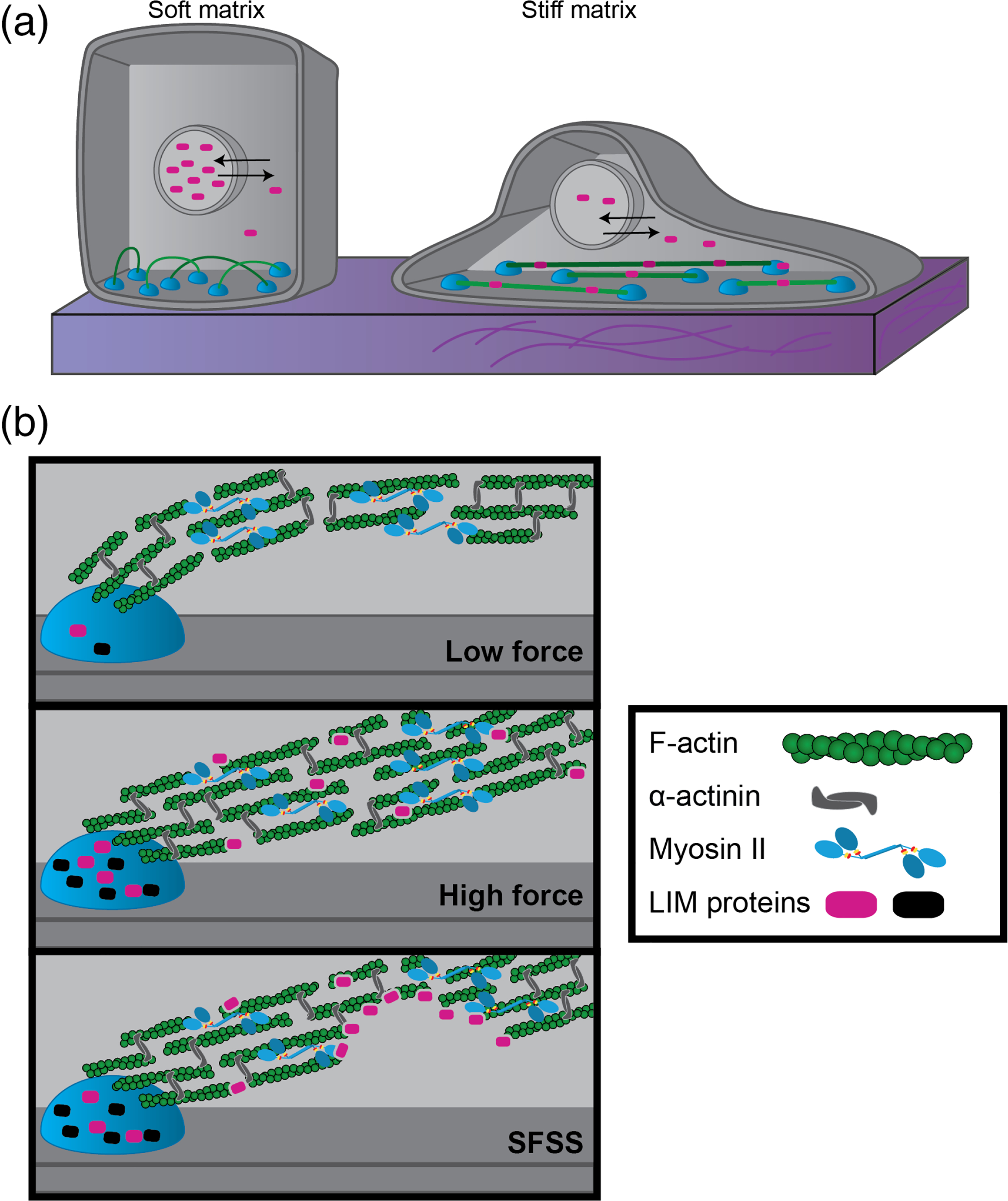
Schematic of LIM domain protein localization in cells. (a) Nuclear shuttling of LIM domain proteins (magenta ovals) occurs when cells spread out on stiff matrices. (b) LIM domain proteins (black and magenta ovals) localize to FAs and SFs under high tension. A subset of LIM domain proteins localizes to stress fiber strain sites (SFSS)
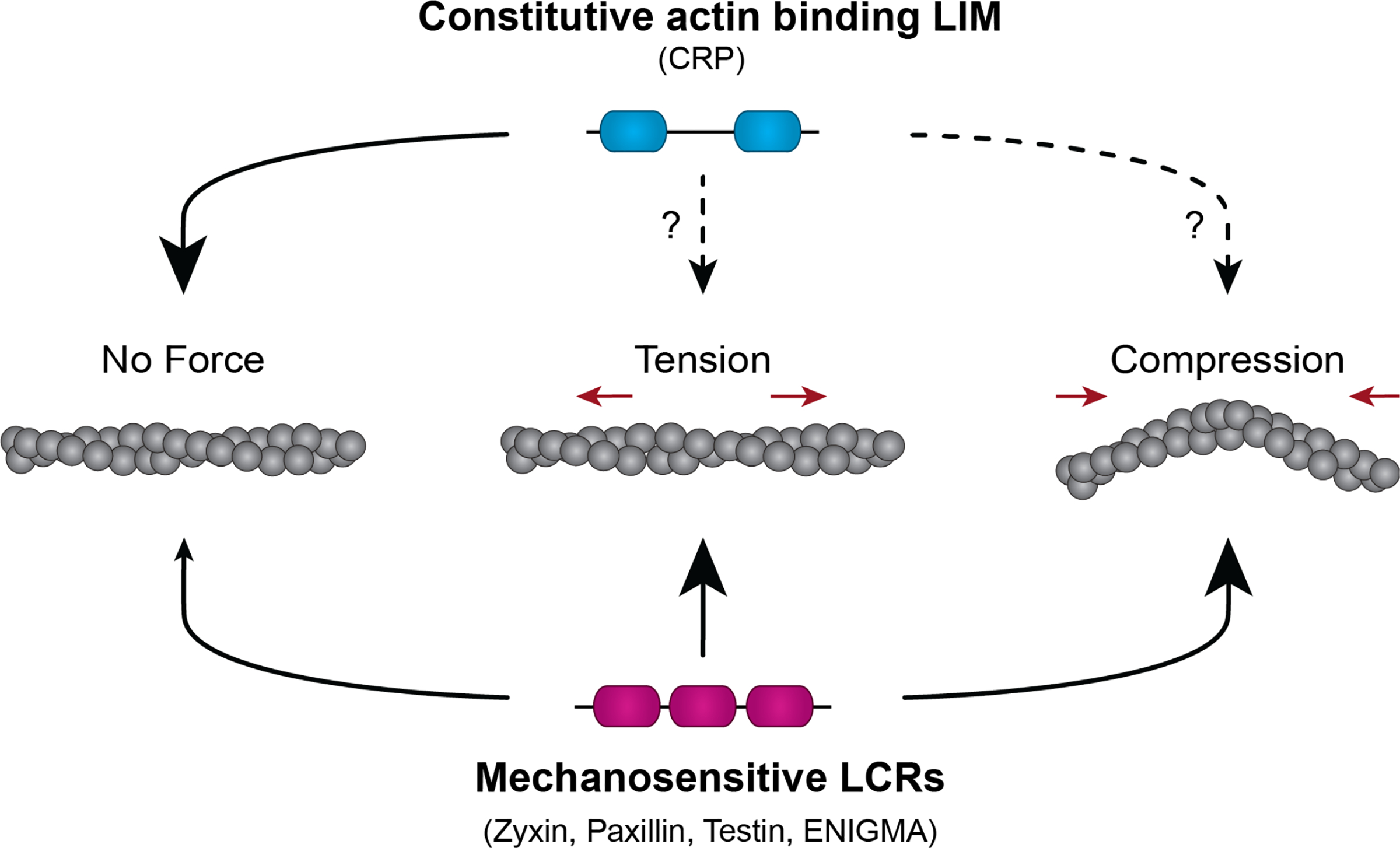
Schematic of mechanosensitive LCR localization to stressed actin filaments. The constitutive actin binding CRP class LIM proteins bind actin filaments in the absence or presence of force. The dashed lines indicate that CRP localization is suspected to occur for stressed actin filaments but has not been fully investigated. Mechanosensitive LIM domain protein LCR constructs bind with high affinity to actin filaments under tension or compression but with low affinity to relaxed filaments (adapted from Winkelman et al., 2020)
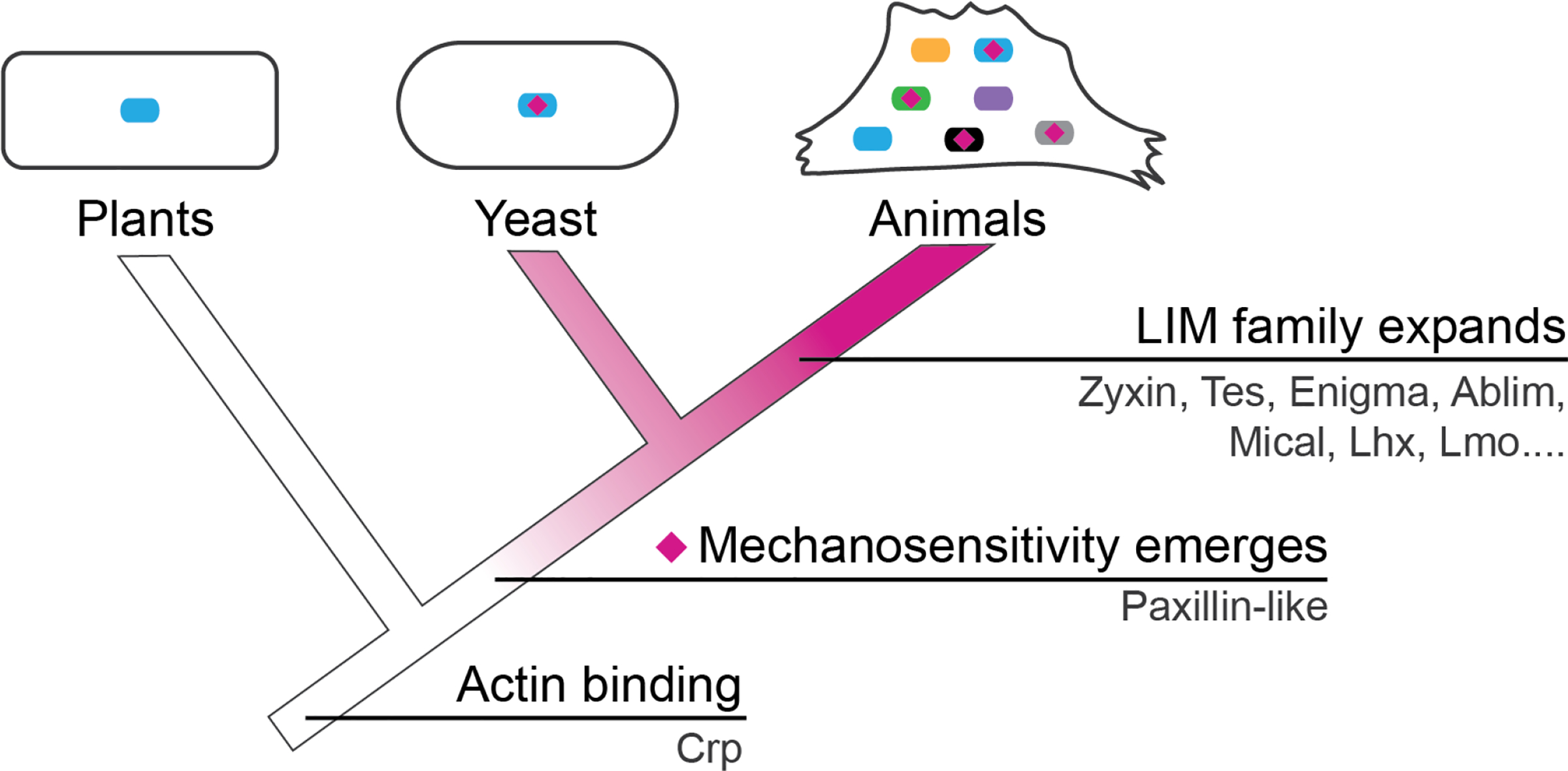
Evolution of LIM domain proteins. LIM domains have evolved over time to become mechanosensitive. The family then expanded to include a diverse population of proteins in mammals (adapted from Winkelman et al., 2020)
References
-
- Brown MC, Perrotta JA, & Turner CE (1996). Identification of LIM3 as the principal determinant of paxillin focal adhesion localization and characterization of a novel motif on paxillin directing vinculin and focal adhesion kinase binding. The Journal of Cell Biology, 135(4), 1109–1123. 10.1083/jcb.135.4.1109 - DOI - PMC - PubMed
Publication types
MeSH terms
Substances
Grants and funding
LinkOut - more resources
Full Text Sources
Other Literature Sources
