


Relationship of clinical measures with humeral torsion in young adults: a pilot study
- PMID: 34028343
- PMCID: PMC8725671
- DOI: 10.1080/10669817.2021.1930861
Relationship of clinical measures with humeral torsion in young adults: a pilot study
Abstract
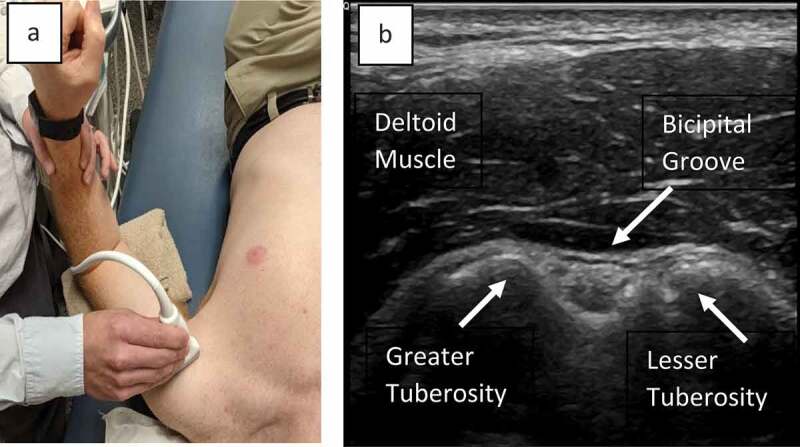
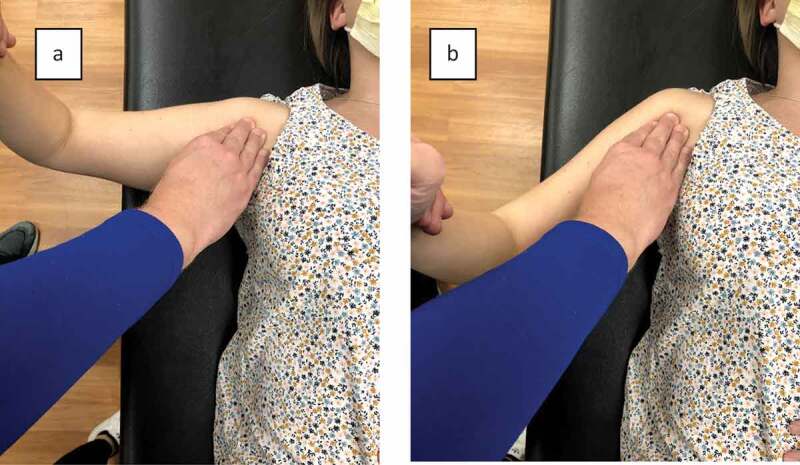
Purpose: Humeral retroversion alters range of motion and has been linked to injury risk. Clinically,palpation of the bicipital groove is used to quantify humeral torsion, but the accuracy of this procedure has not been fully examined. The purpose of this study was to investigate the relationship between clinical and diagnostic ultrasound (US) assessment of humeral torsion while considering shoulder position of the participant and clinical expertise of the examiner.
Methods: Seventeen participants (34 shoulders, 16/17 right handed, 10/17 history of throwing) were recruited. US was assessed by an experienced assessor. Two clinical assessments of humeral torsion were performed by two assessors of different experience (expert and novice). Humeral torsion was assessed at 90 degrees shoulder abduction (Palp90) and 45 degrees shoulder abduction (Palp45). Within assessor intraclass correlation coefficients (ICC (3, 1) were calculated. Correlation coefficients (Pearson's) were generated to determine relationship between clinical and US examination findings.
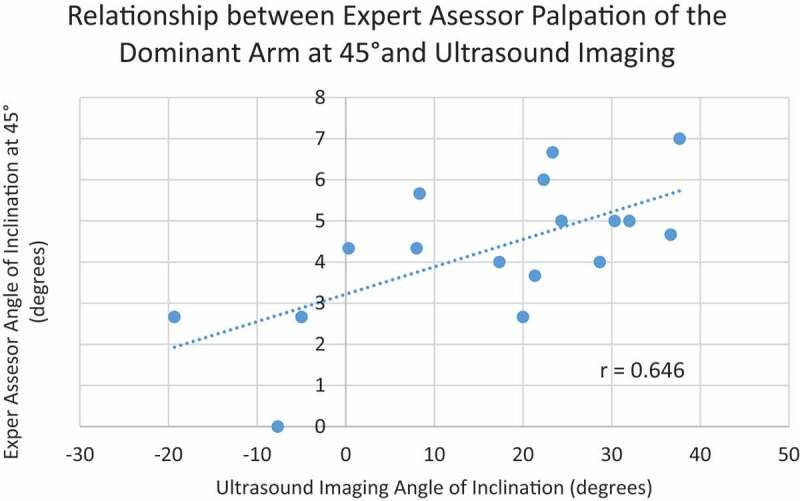
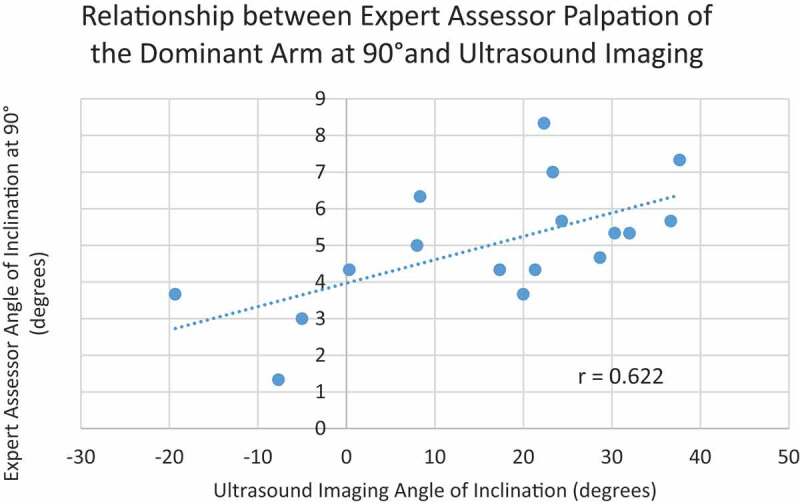
Results: Intra-rater reliability for clinical tests were good (ICCs .73 - .92) for both raters. Of the palpation tests, only the expert assessor was significantly correlated to the US measurement (p<.001) at Palp45 (r = .64) and Palp90 (r = .62). For the expert, there was a significantly lower angle calculated for Palp45 compared to Palp90 (p<.001).
Conclusion: The accuracy of both palpation methods for assessing humeral retrotorsion may depend on the training background of the assessor. Further, the glenohumeral position of the patient during palpation should be consistent for the purposes of repeated testing.
Keywords: Ultrasound; manual therapy; overhead athlete; palpation; shoulder.
Figures
References
-
- Whiteley RJ, Ginn KA, Nicholson LL, et al. Sports participation and humeral torsion. J Orthop Sports Phys Ther. 2009;39(4):256–263. - PubMed
-
- Debevoise NT, Hyatt GW, Townsend GB.. Humeral torsion in recurrent shoulder dislocations. A technic of determination by X-ray. Clin Orthop Relat Res. 1971;76:87–93. - PubMed
-
- Ito A, Mihata T, Hosokawa Y, et al. Injury risk after proximal humeral epiphysiolysis (Little Leaguer’s Shoulder). Am J Sports Med. 2019;47(13):3100–3106. - PubMed
MeSH terms
LinkOut - more resources
Full Text Sources
Other Literature Sources
