


The physiological role of estrogen receptor functional domains
- PMID: 34028522
- PMCID: PMC8611119
- DOI: 10.1042/EBC20200167
The physiological role of estrogen receptor functional domains
Abstract
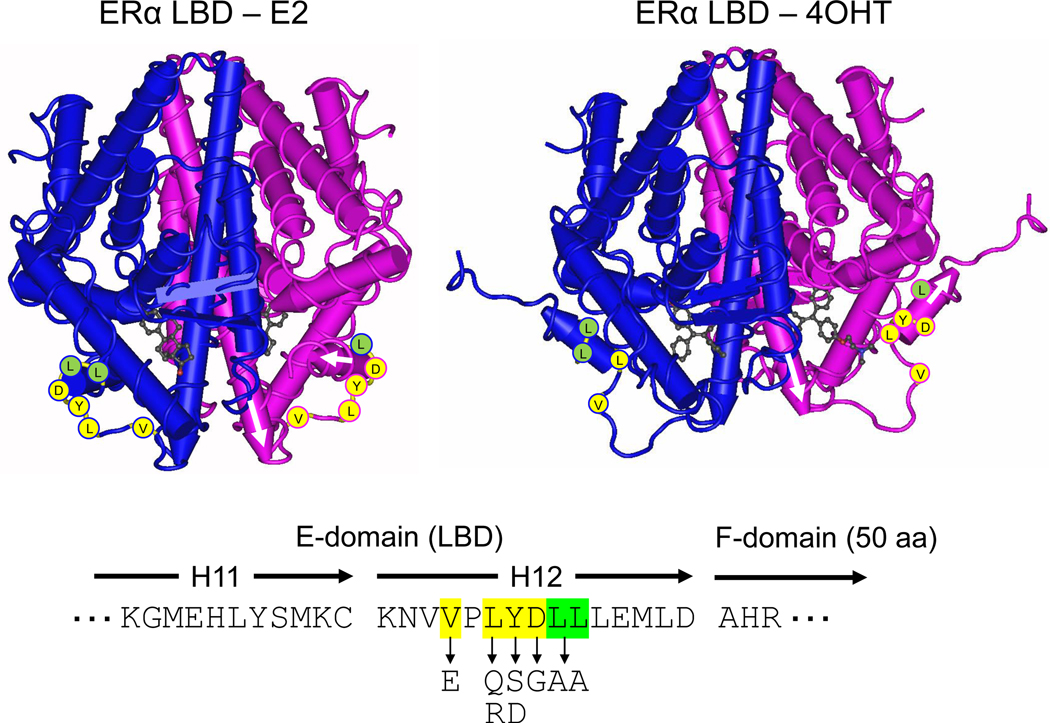
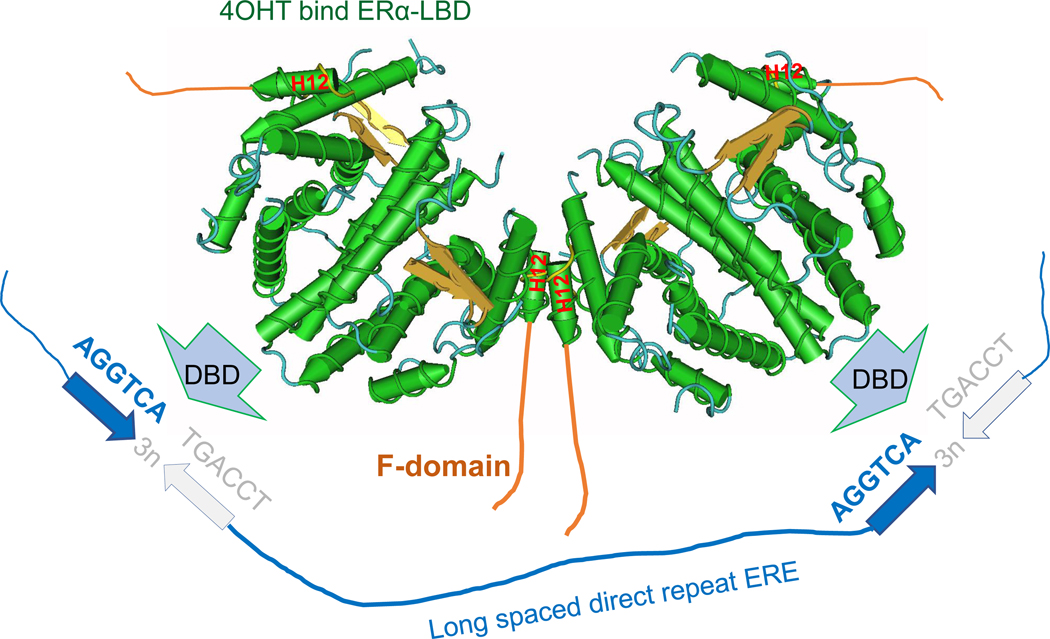
Estrogen receptor (ER) is a member of the nuclear receptor superfamily whose members share conserved domain structures, including a DNA-binding domain (DBD) and ligand-binding domain (LBD). Estrogenic chemicals work as ligands for activation or repression of ER-mediated transcriptional activity derived from two transactivation domains: AF-1 and AF-2. AF-2 is localized in the LBD, and helix 12 of the LBD is essential for controlling AF-2 functionality. The positioning of helix 12 defines the ER alpha (ERα) ligand properties as agonists or antagonists. In contrast, it is still less well defined as to the ligand-dependent regulation of N-terminal AF-1 activity. It has been thought that the action of selective estrogen receptor modulators (SERMs) is mediated by the regulation of a tissue specific AF-1 activity rather than AF-2 activity. However, it is still unclear how SERMs regulate AF-1 activity in a tissue-selective manner. This review presents some recent observations toward information of ERα mediated SERM actions related to the ERα domain functionality, focusing on the following topics. (1) The F-domain, which is connected to helix 12, controls 4-hydroxytamoxifen (4OHT) mediated AF-1 activation associated with the receptor dimerization activity. (2) The zinc-finger property of the DBD for genomic sequence recognition. (3) The novel estrogen responsive genomic DNA element, which contains multiple long-spaced direct-repeats without a palindromic ERE sequence, is differentially recognized by 4OHT and E2 ligand bound ERα transactivation complexes.
Keywords: DNA binding domain; estrogen receptor; estrogen responsive element; ligand binding domain; selective estrogen receptor modulators; transactivation.
© 2021 The Author(s). Published by Portland Press Limited on behalf of the Biochemical Society.
Conflict of interest statement
The authors declare no conflicts of interests.
Figures
References
-
- Gronemeyer H, Gustafsson J-Å, Laudet V. Principles for modulation of the nuclear receptor superfamily. Nature reviews Drug discovery. 2004;3:950–64. - PubMed
-
- Kumar R, Thompson EB. Transactivation functions of the N-terminal domains of nuclear hormone receptors: protein folding and coactivator interactions. Molecular endocrinology (Baltimore, Md). 2003;17:1–10. - PubMed
-
- Blair RM, Fang H, Branham WS, Hass BS, Dial SL, Moland CL, et al. The Estrogen Receptor Relative Binding Affinities of 188 Natural and Xenochemicals: Structural Diversity of Ligands. Toxicological Sciences. 2000;54:138–53. - PubMed
-
- Arao Y, Hamilton KJ, Ray MK, Scott G, Mishina Y, Korach KS. Estrogen receptor α AF-2 mutation results in antagonist reversal and reveals tissue selective function of estrogen receptor modulators. Proceedings of the National Academy of Sciences of the United States of America. 2011;108:14986–91. - PMC - PubMed
Publication types
MeSH terms
Substances
Grants and funding
LinkOut - more resources
Full Text Sources
Other Literature Sources
