


Cerebral visual impairment in CDKL5 deficiency disorder: vision as an outcome measure
- PMID: 34028805
- PMCID: PMC8782241
- DOI: 10.1111/dmcn.14908
Cerebral visual impairment in CDKL5 deficiency disorder: vision as an outcome measure
Abstract
Aim: To characterize the neuro-ophthalmological phenotype of cyclin-dependent kinase-like 5 (CDKL5) deficiency disorder (CDD) and assess visual acuity as a reproducible, quantitative outcome measure.
Method: We retrospectively analyzed clinical data from patients with CDD. Complete neuro-ophthalmological assessments, including visual acuity, were evaluated.
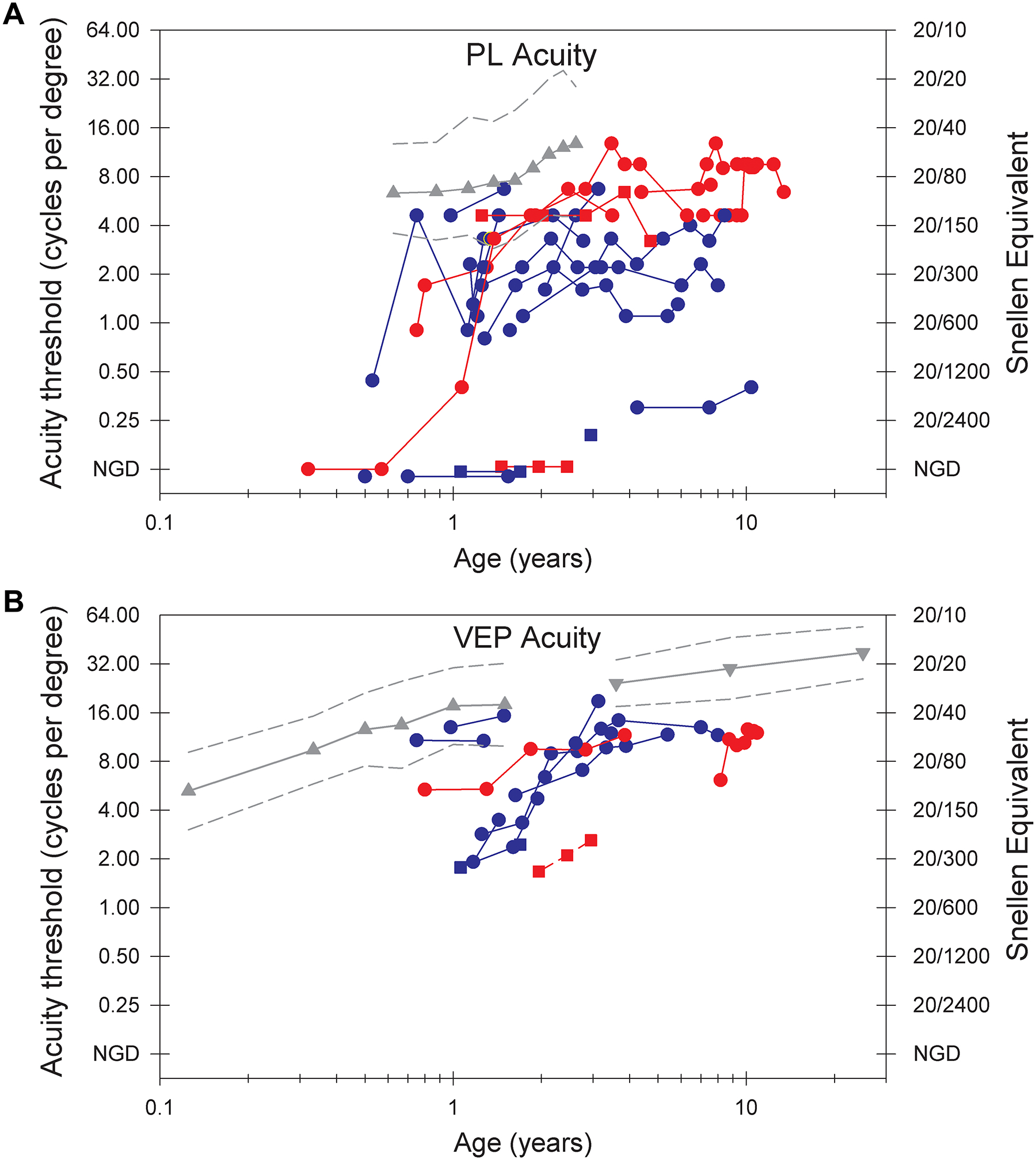
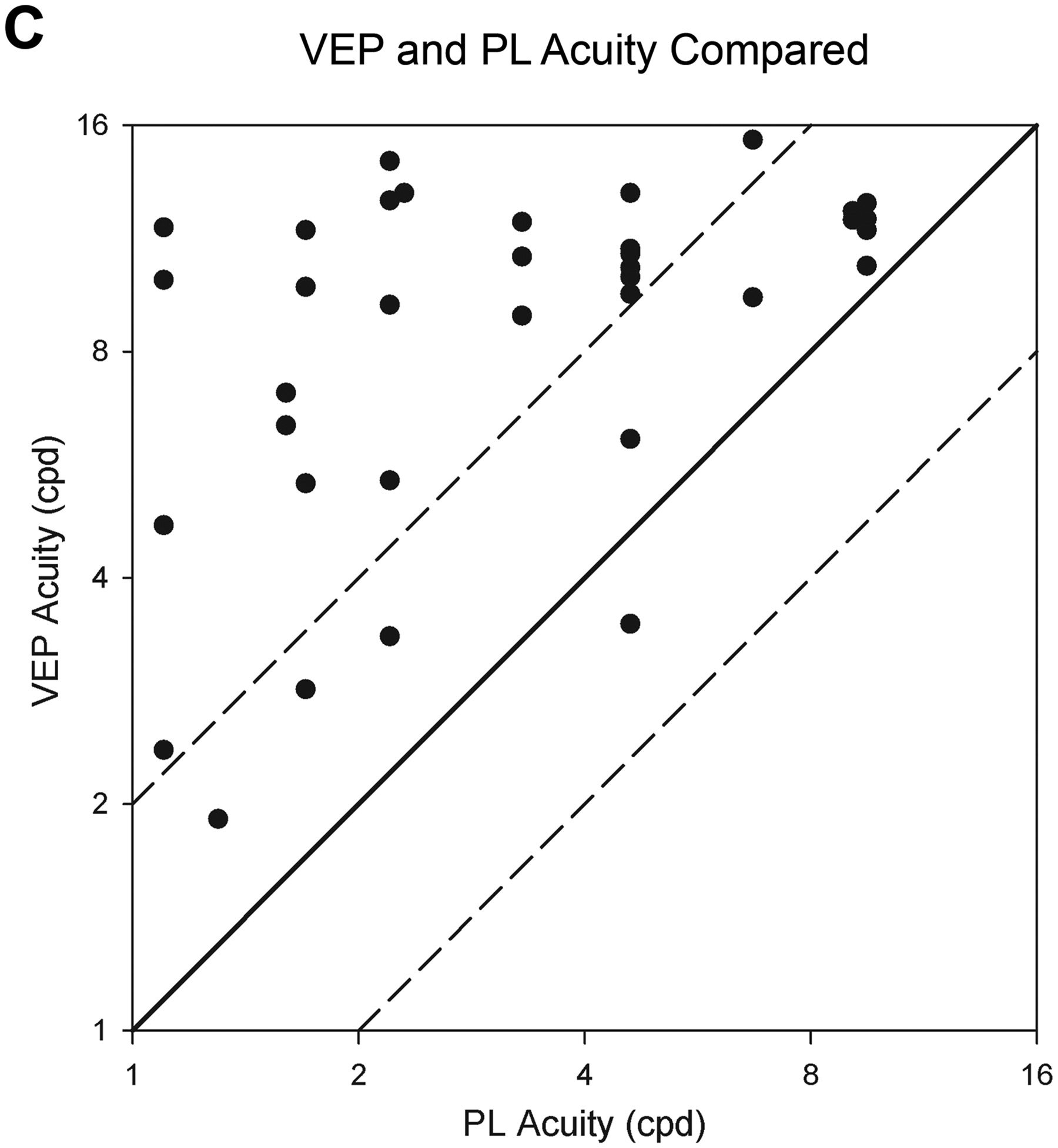
Results: Of 26 patients (22 females, four males; median age 4y, interquartile range 2y 1mo-7y 10mo), cerebral visual impairment (CVI), defined as visual dysfunction in the absence of ocular or anterior visual pathway abnormalities, was diagnosed in all those over 2 years of age. Ophthalmological examinations revealed nystagmus in 10 patients and strabismus in 24 patients. Visual acuity was measured in 24 patients, by preferential looking in all and by sweep visual evoked potential in 13. Visual acuities were lower than age expectations and demonstrated improvement in the first 3 years. Adjusting for age and sex, average preferential looking visual acuity after 2 years of age was higher in patients with intact mobility than in those who were non-mobile.
Interpretation: CVI was observed in patients with CDD. Visual acuity improved over time and correlated with mobility. Visual acuity, as a quantifiable measure of visual function, should be considered as an outcome measure in pre-clinical and clinical studies for CDD. What this paper adds Cerebral visual impairment is highly prevalent in cyclin-dependent kinase-like 5 deficiency disorder (CDD). Visual acuity is a measurable quantitative outcome measure in CDD. Visual acuity in CDD correlates with gross motor ability.
© 2021 Mac Keith Press.
Figures
References
-
- Demarest ST, Olson HE, Moss A, Pestana-Knight E, Zhang X, Parikh S, Swanson LC, Riley KD, Bazin GA, Angione K, Niestroj LM, Lal D, Juarez-Colunga E, Benke TA. CDKL5 deficiency disorder: Relationship between genotype, epilepsy, cortical visual impairment, and development. Epilepsia 2019; 60: 1733–42. - PMC - PubMed
-
- Bahi-Buisson N, Nectoux J, Rosas-Vargas H, Milh M, Boddaert N, Girard B, Cances C, Ville D, Afenjar A, Rio M, Heron D, N’Guyen Morel MA, Arzimanoglou A, Philippe C, Jonveaux P, Chelly J, Bienvenu T. Key clinical features to identify girls with CDKL5 mutations. Brain 2008; 131: 2647–61. - PubMed
-
- Olson HE, Poduri A. CDKL5 mutations in early onset epilepsy: Case report and review of the literature. J Pediatr Epilepsy 2012: 151–9.
Publication types
MeSH terms
Supplementary concepts
Grants and funding
LinkOut - more resources
Full Text Sources
Other Literature Sources
Medical
