


Clinical outcomes and resource utilization after surgical resection with curative intent among patients with non-small cell lung cancer treated with adjuvant therapies in a community oncology setting: A real-world retrospective observational study
- PMID: 34028984
- PMCID: PMC8287010
- DOI: 10.1111/1759-7714.14007
Clinical outcomes and resource utilization after surgical resection with curative intent among patients with non-small cell lung cancer treated with adjuvant therapies in a community oncology setting: A real-world retrospective observational study
Abstract
Aims: Adjuvant chemotherapy has been shown to improve survival in patients with completely resected early-stage non-small cell lung cancer (NSCLC). This study evaluated real-world relapse rates and healthcare resource utilization in patients with stage II-IIIB NSCLC receiving adjuvant therapy in a community oncology setting after complete resection.
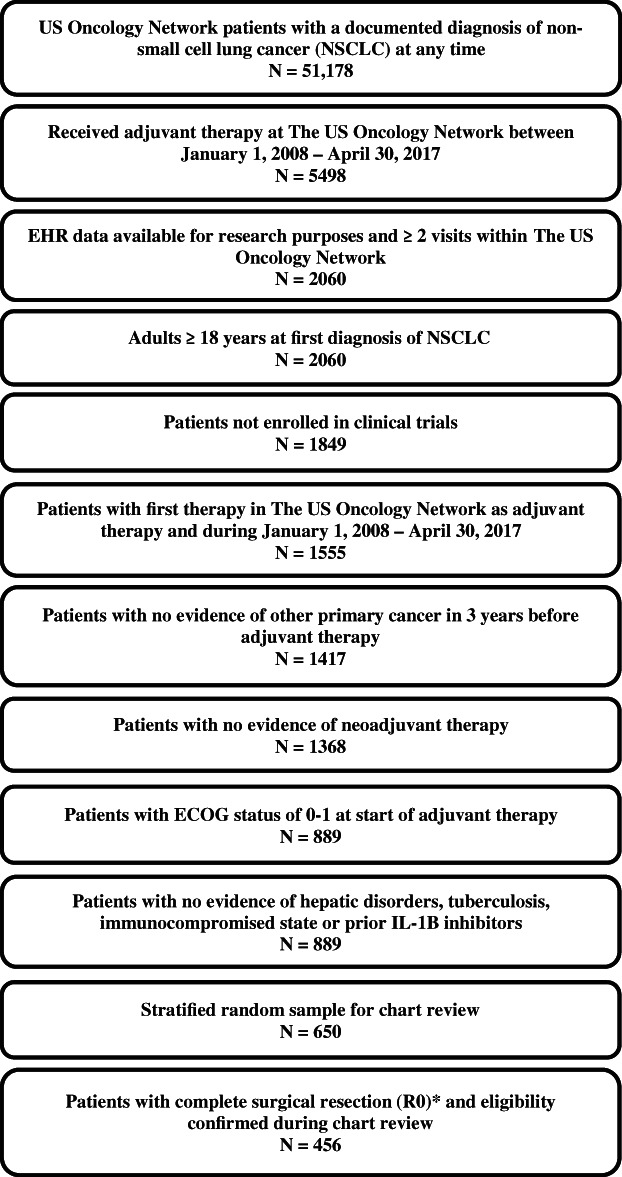
Patients and methods: The study included patients with stage II-IIIB NSCLC and complete resection receiving any adjuvant therapy during 06/2008-04/2017 at US Oncology Network clinics, with follow-up through 04/2019. Primary endpoints were rate of relapse, time to relapse (TTR), disease-free survival (DFS), overall survival (OS), and monthly emergency department (ED) visits and hospitalizations before and after relapse.
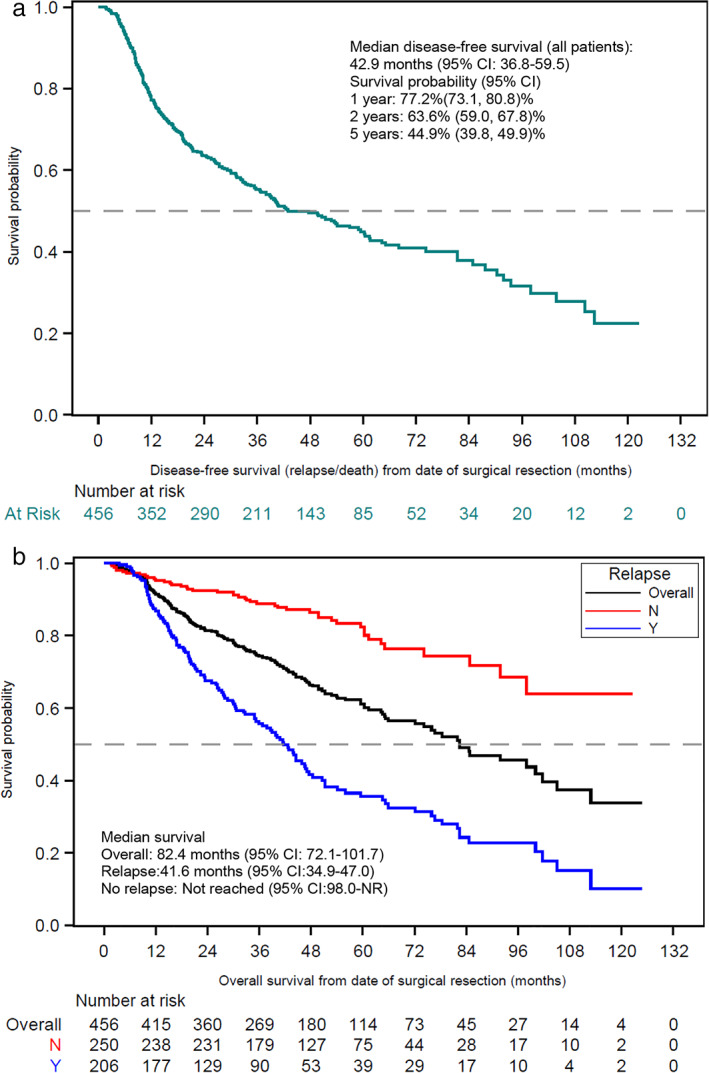
Results: The study identified 456 patients; median age was 66 years, 50% were male. In patients with relapse (45.2%), median follow-up was 31.7 months and median TTR was 13.7 months. Median DFS in the overall population was 42.9 months. Median OS was 82.4 months in the overall population and shorter in patients with relapse than without relapse (41.6 months vs. not reached, p < 0.0001). Patients with relapse had significantly more monthly ED visits (mean [SD] 0.10 [0.24] vs. 0.03 [0.08], p < 0.0001) and hospitalizations (mean [SD] 0.20 [0.43] vs. 0.05 [0.10], p < 0.0001) following relapse than before relapse.
Conclusions: Patients with stage II-IIIB NSCLC treated with adjuvant therapy after complete resection had high relapse rates, reduced survival, and significantly increased healthcare resource use when relapse occurred. New therapeutic options to reduce relapse rates in patients with early-stage NSCLC could reduce healthcare utilization and costs.
Keywords: NSCLC; recurrence; relapse; survival; utilization.
© 2021 Novartis. Thoracic Cancer published by China Lung Oncology Group and John Wiley & Sons Australia, Ltd.
Figures
References
-
- Siegel RL, Miller KD, Jemal A. Cancer statistics, 2020. CA Cancer J Clin. 2020;70:7–30. - PubMed
-
- SEER Cancer Statistics Review , 1975‐2017, National Cancer Institute, Bethesda, MD [Internet]. [updated April 15, 2020; cited September 17, 2020]. https://seer.cancer.gov/csr/1975_2017/
-
- Bradbury P, Sivajohanathan D, Chan A, Kulkarni S, Ung Y, Ellis PM. Postoperative adjuvant systemic therapy in completely resected non‐small‐cell lung cancer: a systematic review. Clin Lung Cancer. 2017;18:259–73. e258. - PubMed
-
- National Comprehensive Cancer Network . NCCN Clinical Practice Guidelines in Oncology: Non‐Small Cell Lung Cancer, V1 (2020) [Internet]. [updated 2 October 2019; cited 20 March 2020]. https://merkelcell.org/wp-content/uploads/2017/10/MCC_v.2.2019-2.pdf
Publication types
MeSH terms
Grants and funding
LinkOut - more resources
Full Text Sources
Other Literature Sources
Medical
Research Materials
Miscellaneous
