


Cutaneous innervation in impaired diabetic wound healing
- PMID: 34029747
- PMCID: PMC8380642
- DOI: 10.1016/j.trsl.2021.05.003
Cutaneous innervation in impaired diabetic wound healing
Abstract
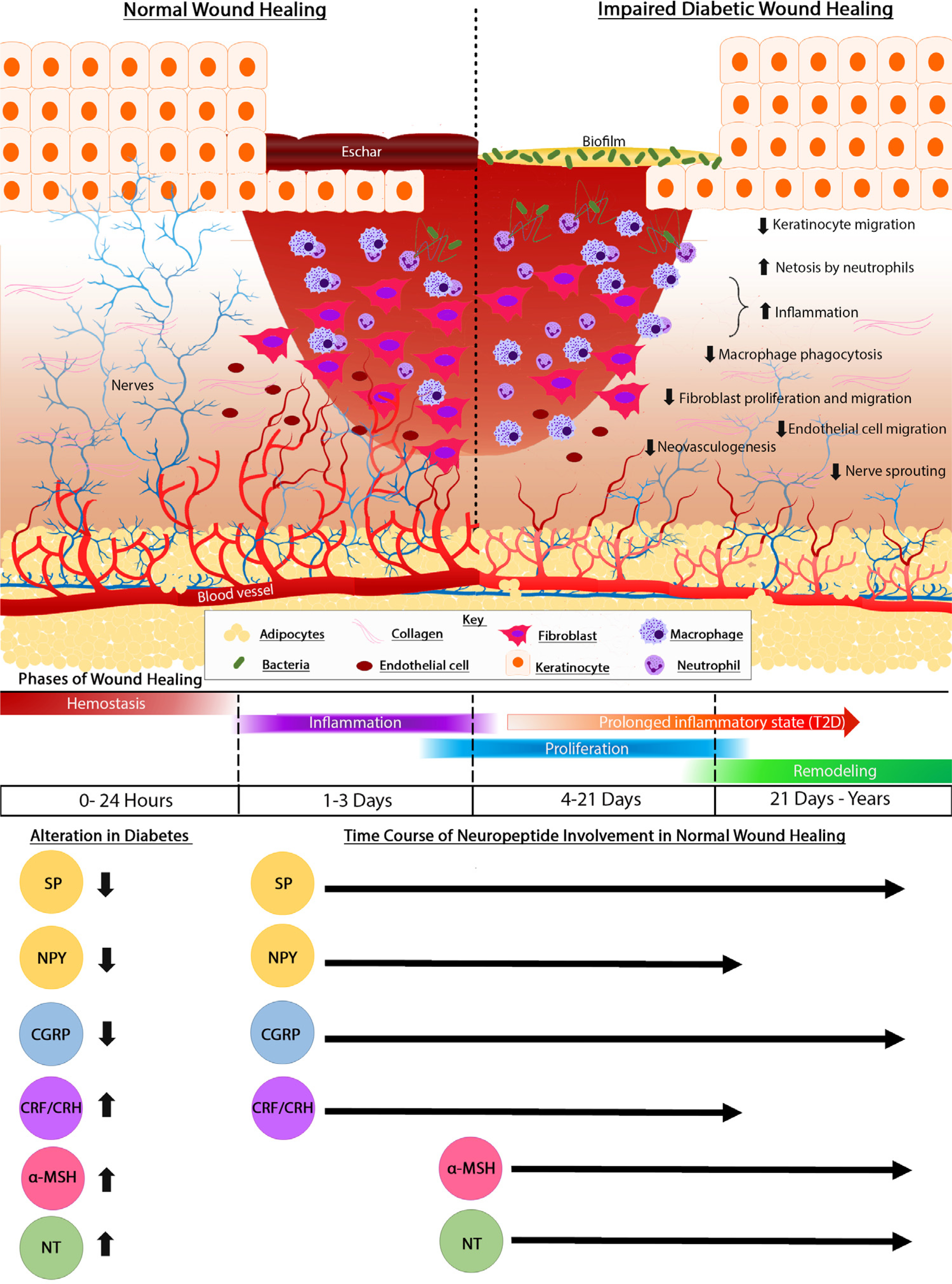
Type 2 diabetes is associated with several potential comorbidities, among them impaired wound healing, chronic ulcerations, and the requirement for lower extremity amputation. Disease-associated abnormal cellular responses, infection, immunological and microvascular dysfunction, and peripheral neuropathy are implicated in the pathogenesis of the wound healing impairment and the diabetic foot ulcer. The skin houses a dense network of sensory nerve afferents and nerve-derived modulators, which communicate with epidermal keratinocytes and dermal fibroblasts bidirectionally to effect normal wound healing after trauma. However, the mechanisms through which cutaneous innervation modulates wound healing are poorly understood, especially in humans. Better understanding of these mechanisms may provide the basis for targeted treatments for chronic diabetic wounds. This review provides an overview of wound healing pathophysiology with a focus on neural involvement in normal and diabetic wound healing, as well as future therapeutic perspectives to address the unmet needs of diabetic patients with chronic wounds.
Copyright © 2021 Elsevier Inc. All rights reserved.
Conflict of interest statement
Declaration of Competing Interest The authors have read the journal's authorship agreement and policy on disclosure of potential conflicts of interest. The authors declare no conflict of interest.
Figures
References
-
- CDC. Estimates of diabetes and its burden in the United States. National diabetes statistics report, 2020. Atlanta, GA: Centers for Disease Control and Prevention, U.S. Dept of Health and Human Services; 2020.
-
- Ogurtsova K, da Rocha Fernandes JD, Huang Y, et al.IDF Diabetes Atlas: global estimates for the prevalence of diabetes for 2015 and 2040. Diabetes Res Clin Pract 2017;128:40–50. - PubMed
-
- Manson JE, Ajani UA, Liu S, Nathan DM, Hennekens CH. A prospective study of cigarette smoking and the incidence of diabetes mellitus among US male physicians. Am J Med 2000;109:538–42. - PubMed
-
- Zimmet P, Alberti KG, Shaw J. Global and societal implications of the diabetes epidemic. Nature 2001;414:782–7. - PubMed
Publication types
MeSH terms
Substances
Grants and funding
LinkOut - more resources
Full Text Sources
Other Literature Sources
Medical
