


Serum checkpoint molecules in patients with IgG4-related disease (IgG4-RD)
- PMID: 34030721
- PMCID: PMC8142499
- DOI: 10.1186/s13075-021-02527-6
Serum checkpoint molecules in patients with IgG4-related disease (IgG4-RD)
Abstract
Background: Immunoglobulin G4-related disease (IgG4-RD) is characterized by increased serum IgG4 concentration and infiltration of IgG4+ plasma cells in the affected organs. The present study aimed to characterize the serum levels of coinhibitory checkpoint molecule, T cell immunoglobulin and mucin-containing-molecule-3 (TIM-3), and its ligand, galectin-9 (Gal-9), among IgG4-related disease in patients with IgG4-RD patients with various organ involvements.
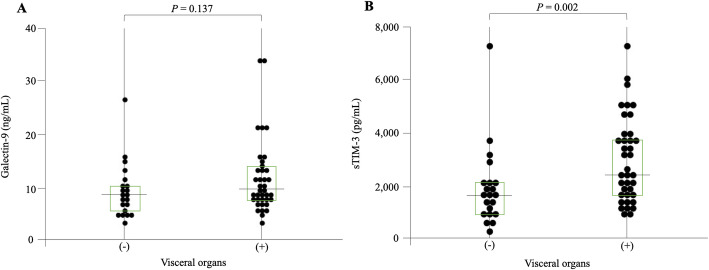
Methods: Serum samples were collected from untreated 59 patients with IgG4-RD, 13 patients with rheumatoid arthritis, and 37 healthy controls (HCs). HCs lacked chronic medical diseases or conditions and did not take prescription medications or over-the-counter medications within 7 days. Patients with IgG4-RD (n = 57) were subdivided into those with visceral involvement (n = 38) and those without visceral involvement (n = 21). Serum levels of Gal-9 and soluble TIM-3 (sTIM-3) were determined using enzyme-linked immunosorbent assay (ELISA). The results were compared with the clinical phenotypes of IgG4-RD.
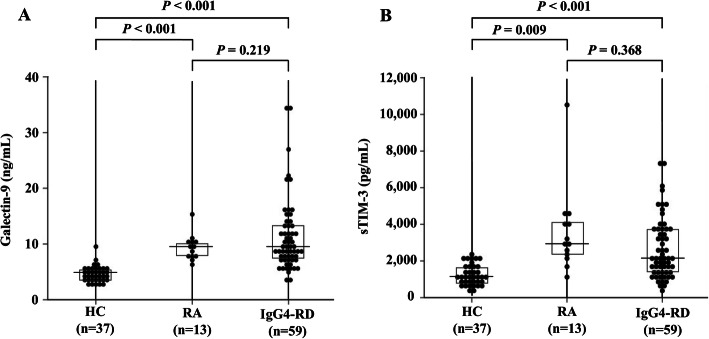
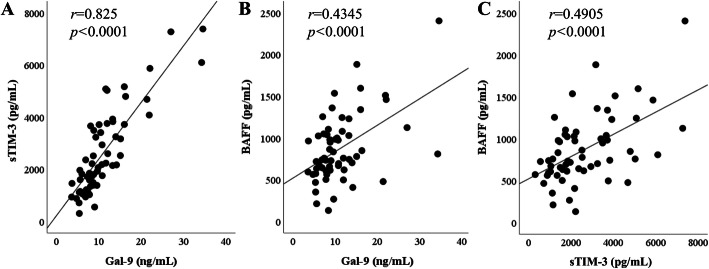
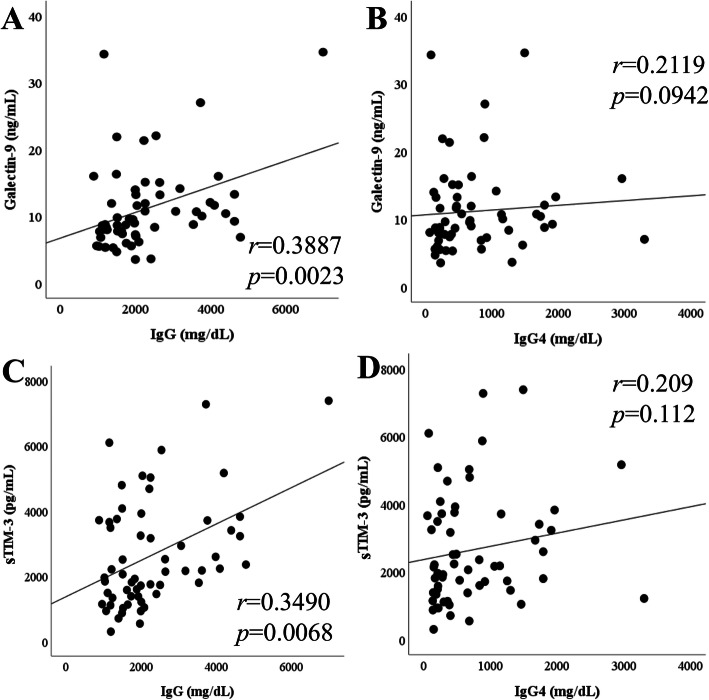
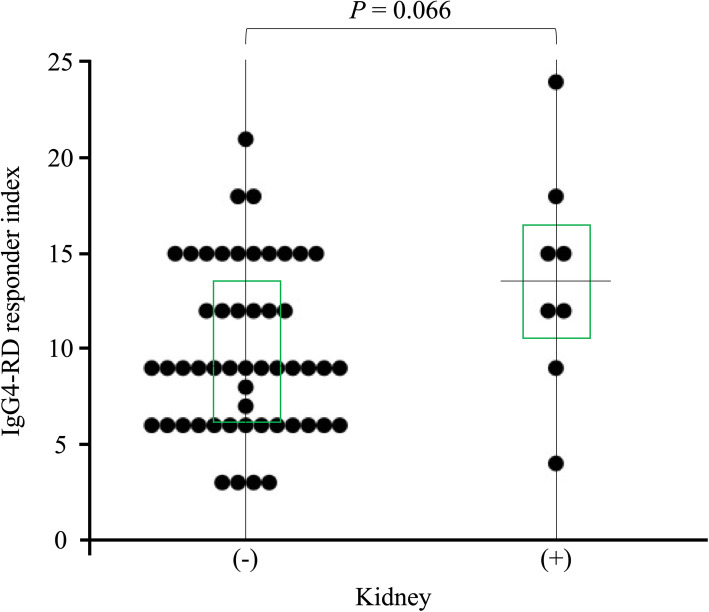
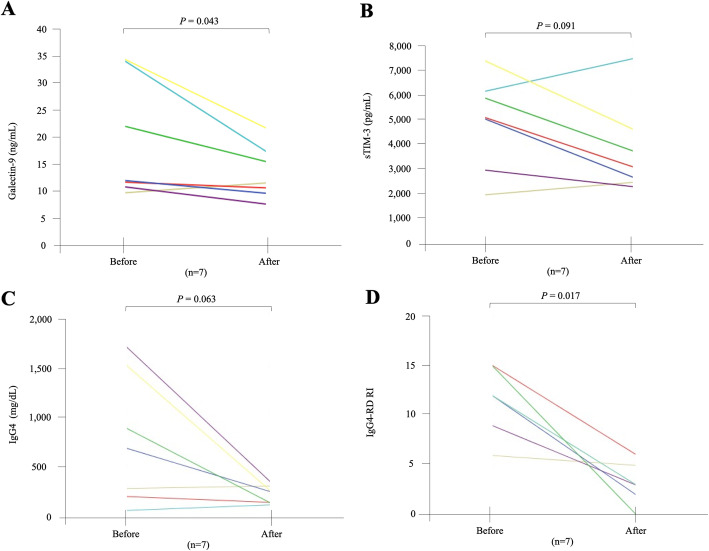
Results: In untreated patients with IgG4-RD, serum levels of Gal-9 and sTIM-3 were significantly higher than in RA patients as well as in healthy controls. There were significant correlations between the serum levels of Gal-9 or sTIM-3 and serum levels of IgG, BAFF, or sIL-2R. However, there was no significant correlation between the serum levels of Gal-9 or sTIM-3 and serum IgG4 concentrations. Serum levels of sTIM-3 were significantly higher in a subset of patients with visceral involvements than in those without visceral involvements. However, there was no significant difference in the serum levels of Gal-9 between IgG4-RD patients with and without visceral involvements, although both Gal-9 and sTIM-3 were elevated in untreated IgG4-RD patients, and the levels of these checkpoint molecules remained unchanged after steroid therapy.
Conclusion: Serum levels of Gal-9 and sTIM-3 were significantly elevated in untreated patients with IgG4-RD. Furthermore, serum levels of sTIM-3 were significantly higher in IgG4-RD patients with visceral involvements. These checkpoint molecules could be a potentially useful biomarker for IgG4-RD and for assessing the clinical phenotypes of IgG4-RD.
Keywords: Galectin-9; IgG4-related disease; Immune checkpoint molecules; T cell immunoglobulin and mucin-containing-molecule-3.
Conflict of interest statement
KM has received research grants from Chugai, Pfizer, and AbbVie. The rest of the authors declare that they have no competing interests.
Figures
References
-
- Yamada K, Yamamoto M, Saeki T, Mizushima I, Matsui S, Fujisawa Y, Hara S, Takahashi H, Nomura H, Kawa S, Kawano M. New clues to the nature of immunoglobulin G4-related disease: a retrospective Japanese multicenter study of baseline clinical features of 334 cases. Arthritis Res Ther. 2017;19(1):262. doi: 10.1186/s13075-017-1467-x. - DOI - PMC - PubMed
-
- Wallace ZS, Mattoo H, Carruthers M, Mahajan VS, Della Torre E, Lee H, Kulikova M, Deshpande V, Pillai S, Stone JH. Plasmablasts as a biomarker for IgG4-related disease, independent of serum IgG4 concentrations. Ann Rheum Dis. 2015;74(1):190–195. doi: 10.1136/annrheumdis-2014-205233. - DOI - PMC - PubMed
MeSH terms
Substances
LinkOut - more resources
Full Text Sources
Other Literature Sources
Medical
Research Materials
Miscellaneous
