


Green synthesis of multifunctional carbon coated copper oxide nanosheets and their photocatalytic and antibacterial activities
- PMID: 34031470
- PMCID: PMC8196103
- DOI: 10.1038/s41598-021-90207-5
Green synthesis of multifunctional carbon coated copper oxide nanosheets and their photocatalytic and antibacterial activities
Erratum in
-
Author Correction: Green synthesis of multifunctional carbon coated copper oxide nanosheets and their photocatalytic and antibacterial activities.Sci Rep. 2021 Aug 13;11(1):16838. doi: 10.1038/s41598-021-96316-5. Sci Rep. 2021. PMID: 34389784 Free PMC article. No abstract available.
Abstract
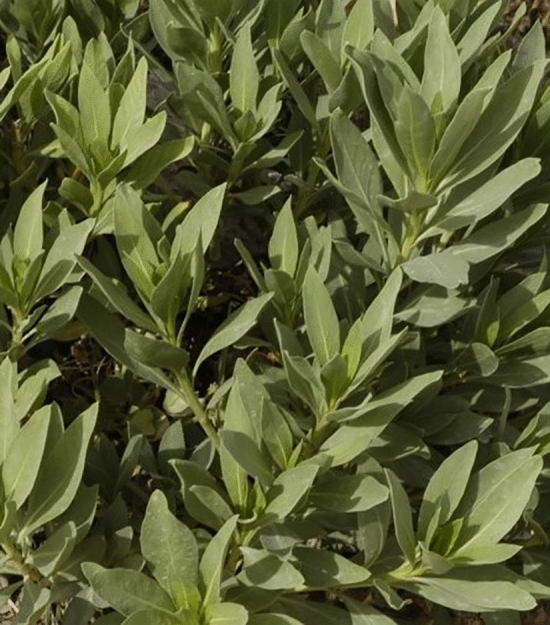
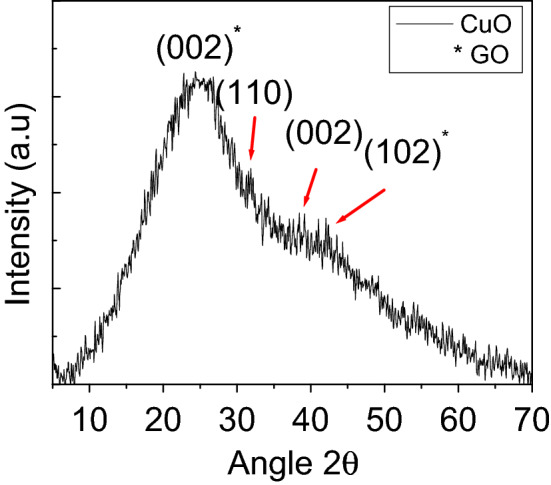
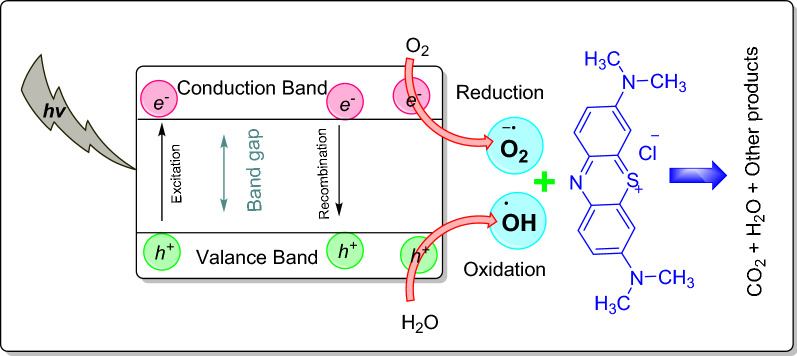
The studies of metal oxides in environmental remediation of chemical and biological pollutants are gaining colossal importance. Herein, we report the facile synthesis of multifunctional copper oxide nanosheets (CuO NS) using an aqueous extract of Rhazya stricta. The phytochemical investigation of R. stricta indicated the presence of saponins, tannins, and reducing sugars, responsible for the reduction and stabilization of CuO NS. A UV-Visible spectrophotometer initially confirmed the fabrication of CuO NS with specific Surface Plasmon Resonance at 294 nm. Field Emission Scanning Electron Microscopy (FE-SEM), Fourier-transform infrared spectroscopy FTIR, and XRD were further used to characterize the CuO NS. The obtained CuO NS were poly-dispersed with an average size of 20 nm. Interestingly these particles were aligned together in 3D cubical sheets layered above each other via self-assembly. The as-synthesized CuO NS showed enhanced antibacterial potential (17.63 mm, overall mean inhibition zone) in comparison to the known antibiotics (11.51 mm, overall mean inhibition zone) against both Solanaceous crop's wilt-causing bacteria (Ralstonia solanacearum and Clavibacter michiganensis). Furthermore, the appreciable photocatalytic potential of CuO NS has also been observed, causing 83% degradation of methylene blue (MB) upon solar irradiation. The synthesis methodology is devoid of any toxic waste or by-products. It could be used to produce eco-friendly CuO nanomaterial for industrial uses.
Conflict of interest statement
The authors declare no competing interests.
Figures



References
-
- Corr SA. Metal oxide nanoparticles. Nanoscience. 2012;1:180–207. doi: 10.1039/9781849734844-00180. - DOI
-
- Mahapatra O, Bhagat M, Gopalakrishnan C, Arunachalam KD. Ultrafine dispersed CuO nanoparticles and their antibacterial activity. J. Exp. Nanosci. 2008;3:185–193. doi: 10.1080/17458080802395460. - DOI
-
- Noshad A, Hetherington C, Iqbal M. Impact of AgNPs on seed germination and seedling growth: A focus study on its antibacterial potential against Clavibacter michiganensis subsp. michiganensis infection in Solanum lycopersicum. J. Nanomater. 2019 doi: 10.1155/2019/6316094. - DOI
-
- Ramyadevi J, Jeyasubramanian K, Marikani A, Rajakumar G, Rahuman AA. Synthesis and antimicrobial activity of copper nanoparticles. Mater. Lett. 2012;71:114–116. doi: 10.1016/j.matlet.2011.12.055. - DOI
Publication types
LinkOut - more resources
Full Text Sources
Other Literature Sources
Miscellaneous
