


Association of Candida albicans and Cbp+ Streptococcus mutans with early childhood caries recurrence
- PMID: 34031498
- PMCID: PMC8144385
- DOI: 10.1038/s41598-021-90198-3
Association of Candida albicans and Cbp+ Streptococcus mutans with early childhood caries recurrence
Abstract
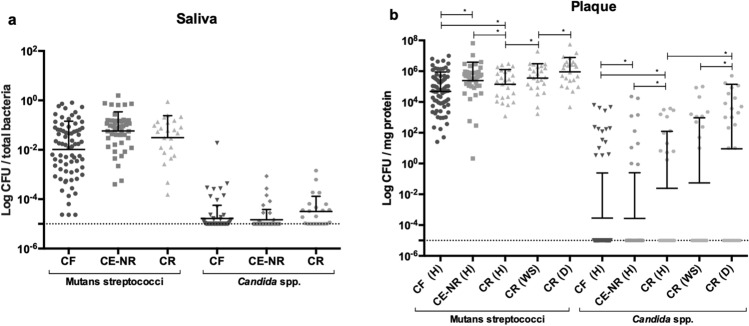
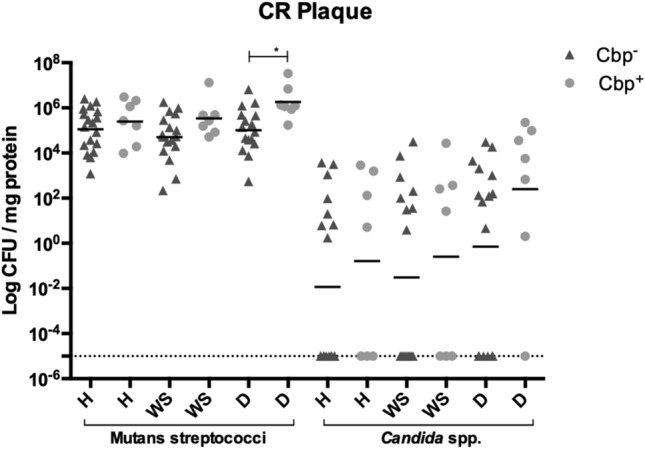
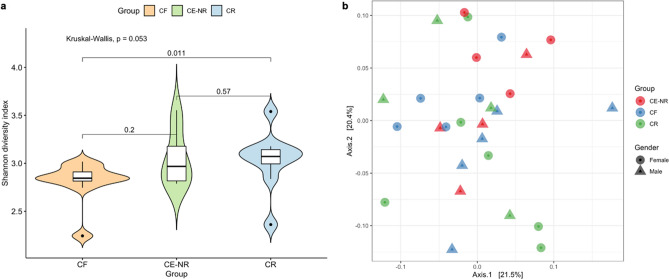
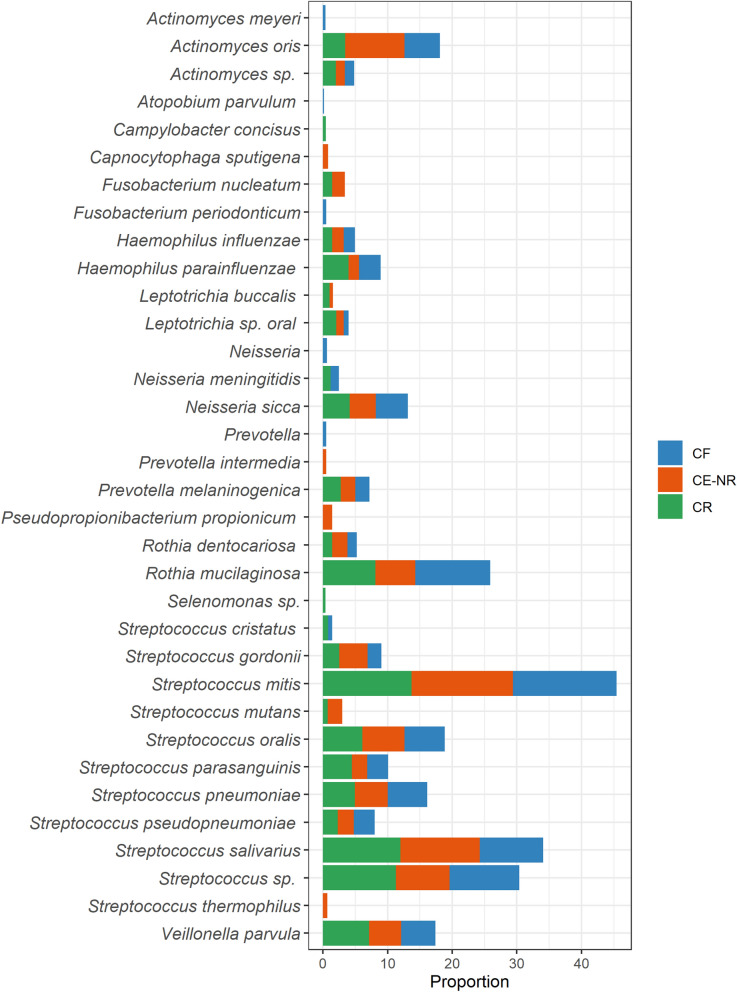
Early childhood caries (ECC) recurrence occurs in approximately 40% of treated cases within one year. The association of Streptococcus mutans and Candida albicans with the onset of ECC is well known. Also, S. mutans strains harboring collagen-binding proteins (Cbps) avidly bind to collagen-rich dentin and are linked to increased caries risk. Here, we investigated the presence of Cbp+ S. mutans and C. albicans in saliva and dental plaque of children with varying caries statuses, and their salivary microbiome. In this cross-sectional study, 143 children who were caries-free (n = 73), treated for ECC with no signs of recurrence after 6 months (n = 45), or treated for ECC and experiencing recurrence within 6 months following treatment (n = 25) were enrolled. Co-infection with C. albicans and S. mutans, especially Cbp+ S. mutans, was strongly associated with caries recurrence. Subjects of the recurrence group infected with Cbp+ S. mutans showed a greater burden of Candida spp. and of Mutans streptococci in dentin than those infected with Cbp- strains. Salivary microbiome analysis revealed that Streptococcus parasanguinis was overrepresented in the caries recurrence group. Our findings indicate that Cbp+ S. mutans and C. albicans are intimately associated with caries recurrence, contributing to the establishment of recalcitrant biofilms.
Conflict of interest statement
The authors declare no competing interests.
Figures
References
-
- American Academy of Pediatric Dentistry. Definition of early childhood caries (ECC). https://www.aapd.org/assets/1/7/d_ecc.pdf (2008).
-
- Berkowitz RJ, Amante A, Kopycka-Kedzierawski DT, Billings RJ, Feng C. Dental caries recurrence following clinical treatment for severe early childhood caries. Pediatr. Dent. 2011;33:510–514. - PubMed
Publication types
MeSH terms
Substances
Supplementary concepts
Grants and funding
LinkOut - more resources
Full Text Sources
Other Literature Sources
Medical
Miscellaneous
