


Pharmacist medication review: An integrated team approach to serve home-based primary care patients
- PMID: 34033661
- PMCID: PMC8148331
- DOI: 10.1371/journal.pone.0252151
Pharmacist medication review: An integrated team approach to serve home-based primary care patients
Abstract
Background: Comprehensive medication review is a patient-centered approach to optimize medication use and improve patient outcomes. This study outlines a pilot model of care in which a remote corporate-based clinical pharmacist implemented comprehensive medication reviews for a cohort of medically complex home-based primary care (HBPC) patients.
Method: Ninety-six medically complex patients were assessed for medication-related problems. Data collected on these patients were: number of chronic conditions, number of medications, appropriate indication for each medication, dose appropriateness, drug interactions, recommendations for medication optimization and deprescribing. The number of accepted recommendations by the HBPC practice was analyzed.
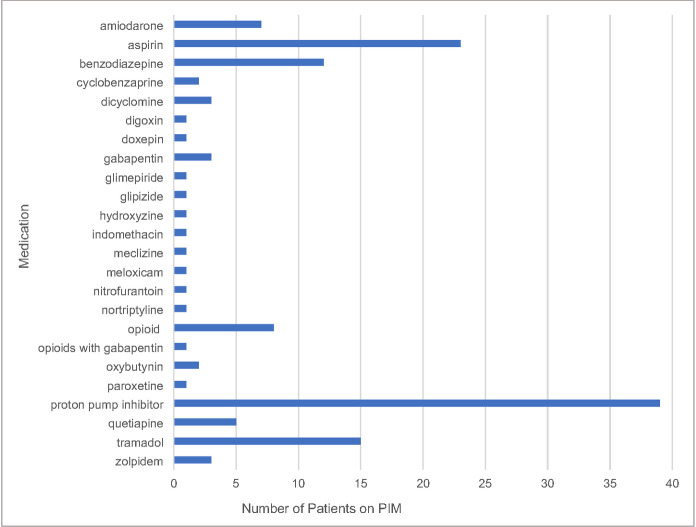
Results: On average, the patients were 82 years old and had 13 chronic conditions. They were taking a median of 17 medications. Over a four-month pilot period, 175 medication recommendations were made, and 53 (30.3%) of them were accepted, with most common being medication discontinuation, deprescribing, and dose adjustments. Sixty-four (66.7%) patients were on a medication listed as potentially inappropriate for use in older adults. The most common potentially inappropriate medication was a proton-pump inhibitor (38.5%), followed by aspirin (24%), tramadol (15.6%), a benzodiazepine (13.5%) or an opioid (8.3%). Eighty-one medications were recommended for deprescribing and 27 medications were discontinued (33.3%). There were 24 recommended dose adjustments and 11 medications were dose adjusted (45.8%). Thirty-four medications were suggested as an addition to the current patient regimen, 2 medications were added (5.9%).
Conclusion: Pharmacist comprehensive medication review is a necessary component of the HBPC healthcare continuum. Additional research is needed to examine whether aligning pharmacists to deliver support to HBPC improves clinical outcomes, reduces healthcare expenditures and improves the patient's experience.
Conflict of interest statement
I have read the journal’s policy and the authors of this manuscript have the following competing interests: NY is an advisor to Heal Inc and research director for Home Centered Care Institute. NY receives stock options from Heal Inc, unrelated to this work. These affiliations and employments do not alter our adherence to PLOS ONE policies on sharing data and materials. We declare no further competing interests.
Figures
References
-
- CMM in Primary Care Research Team. The Patient Care Process for Delivering Comprehensive Medication Management (CMM): Optimizing Medication Use in Patient-Centered, Team-Based Care Settings. 2018; 16.
Publication types
MeSH terms
LinkOut - more resources
Full Text Sources
Other Literature Sources
